Above ground pool foam almost always comes down to one thing: something in the water is reducing surface tension enough that air bubbles from the return jets stop popping on their own. In this guide I walk through the three real causes, body oils and sunscreen, low-quality algaecide, and surfactant-heavy pool products, then explain why a defoamer only hides the problem instead of fixing it. I also cover the enzyme-based treatment that actually breaks down the organic residue, and why your filter cartridge needs more than a hose rinse once foam shows up.
What Above Ground Pool Foam Actually Is
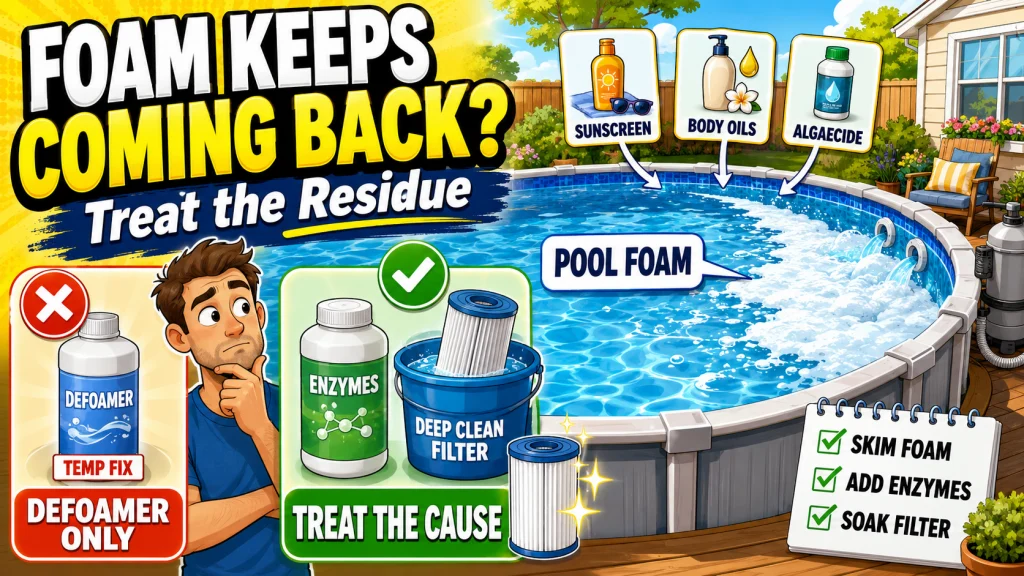
Foam is not the same thing as the small bubbles you see churning around the return jets on a normal day. Those bubbles pop within a second or two because clean water has enough surface tension to break them apart. Foam shows up when something in the water lowers that surface tension enough that the bubbles stop popping and start piling up on the surface instead. That is the whole mechanism, and it explains why foam is a contamination problem, not a chemistry balance problem the way green or cloudy water usually is.
I get calls every summer from owners who assume their chlorine or pH must be off because the water looks wrong. With foam specifically, that is rarely the actual cause. The fix is not another round of pH adjuster. It is figuring out which of three things is sitting in the water and reducing that surface tension in the first place.
The Three Things That Actually Cause Above Ground Pool Foam
In fifteen years of service calls, I have seen foam trace back to one of three sources almost every time. Knowing which one applies to your pool changes what you should do next, so it is worth ruling each one in or out before reaching for any product.
Body Oils, Sunscreen, and Lotions
This is the most common cause by a wide margin, especially in above ground pools that see heavy family use. Sunscreen, lotions, and natural body oils are organic compounds, and they wash off swimmers the moment they get in the water. A pool where kids apply sunscreen right before jumping in accumulates this residue fast, and it builds with every swim session between cleanings. The oils coat the water’s surface and reduce tension in the same general way surfactants make bubbles last longer instead of breaking apart quickly.
Low-Quality Algaecide
Some algaecide products are surfactant-based, meaning the active ingredient itself lowers surface tension as a side effect of how it works. This shows up most often with cheaper algaecide brands, and it is a well-documented issue in pool chemical resources. The good news with this cause is that it is usually temporary. Foam from an algaecide dose typically clears within 24 to 48 hours as the product disperses through the water, and running the pump helps it along.
Pool Products With High Surfactant Content
A handful of store-brand clarifiers, shock products, and all-in-one chemical blends use surfactant carriers to help the active ingredient mix into the water. That surfactant does its job for the product, but it also lowers surface tension in the process. If foam shows up right after adding a new chemical you have not used before, check the label for how the product is formulated before assuming it is a coincidence. If this is the first time you have seen foam and it started right after a new product went in, hold off on adding anything else for a day or two, keep the pump running, and see whether it fades before treating it like a body oil problem that needs an enzyme dose.
| What You Notice | Likely Cause | Typical Timeline to Clear |
|---|---|---|
| Foam builds gradually over days or weeks of regular swimming | Body oils and sunscreen residue | Days, and only after treating the actual contamination |
| Foam appears within hours of adding algaecide | Surfactant-based algaecide | 24 to 48 hours as the product disperses |
| Foam appears right after adding a new chemical product | Surfactant carrier in that product | Varies by product, check the label |
Matching the pattern to the cause saves you from treating the wrong problem. Body oil foam usually does not clear reliably just by waiting, especially if the oils are still sitting in the water and in the cartridge, and that difference matters for what you do next.
Why a Defoamer Is a Temporary Fix, Not a Solution
A defoamer, also called an anti-foam product, works by breaking the surface tension of the foam bubbles that already exist. It clears the visible foam within minutes, which makes it genuinely useful before a swim or a get-together when you need the pool to look right on short notice. What it does not do is remove the organic compounds or surfactants that caused the foam in the first place.
Because the underlying contamination is still in the water, the foam comes back once the defoamer’s effect wears off, sometimes within a day. I tell owners to think of a defoamer as a way to buy a few hours, not a way to close the case on a foam problem. If you find yourself reaching for it week after week, that is a sign the actual cause was never addressed.
Warning: Repeated defoamer use without addressing the underlying oils or surfactants just means paying for a product that treats the symptom on repeat. It will never get ahead of the problem on its own.
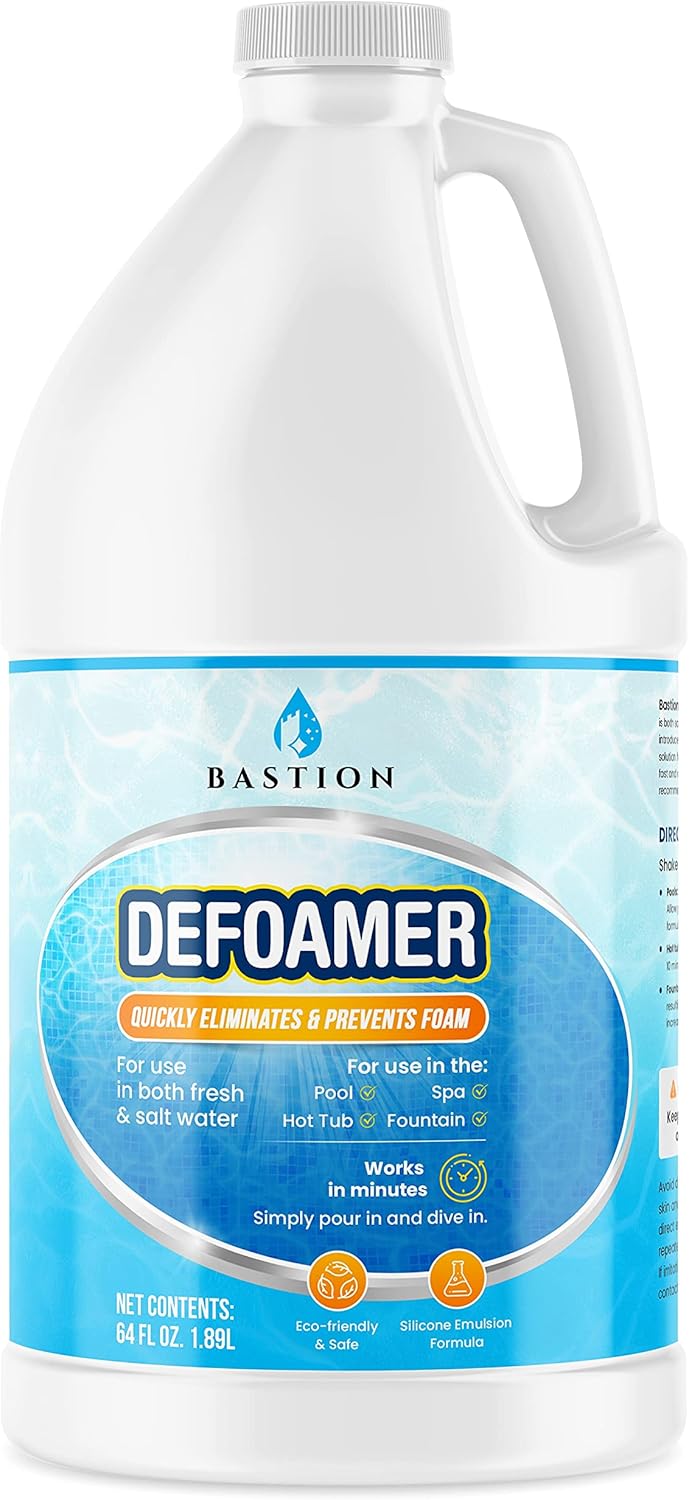
This 64-ounce silicone-emulsion treatment is formulated for pools, spas, hot tubs, fountains, and waterfalls. It is designed to knock down existing foam and help prevent foam from reforming. The liquid formula provides a direct option when quick foam control is needed.
Check On AmazonIf you click this link and buy, we earn a commission at no additional cost to you.
The Correct Fix for Body Oils and Sunscreen Foam
When the cause is organic contamination from swimmers, an enzyme-based pool product is the right tool, not a defoamer. Enzymes work by breaking down the actual organic compounds, the oils and lotions, rather than just knocking down the bubbles sitting on top of the water. This addresses the cause instead of masking it, and it has the side benefit of letting chlorine work more efficiently since it is no longer competing with a layer of oily residue.
After adding an enzyme treatment, run the pump for 24 to 48 hours so the product can circulate through the full pool volume and reach the filter. Most pools show a visibly clearer surface by the end of that window. If the contamination has been building for a while, a heavy swim season with no enzyme treatment or filter attention, replacing 10 to 20 percent of the pool’s water speeds up the process considerably. That partial drain and refill dilutes the organic load directly instead of waiting for the enzymes to work through all of it on their own.
- Add the enzyme product according to the label and keep the pump running continuously for at least 24 hours afterward.
- Skim any surface foam by hand in the meantime rather than waiting for it to disperse on its own.
- If the pool sees heavy daily use, consider a lighter, more frequent enzyme dose instead of one large treatment after the problem is already visible.
- Do not combine a defoamer and an enzyme treatment at the same time. Clear the immediate foam first if you need the pool usable right away, then treat the actual cause afterward.

This 3-liter treatment combines enzyme-based cleaning with phosphate removal for routine pool maintenance. Its enzyme system helps reduce non-living organic buildup, surface oils, and waterline residue. It also works through the filter to reduce phosphates while helping keep the waterline and filter cleaner.
Check On AmazonIf you click this link and buy, we earn a commission at no additional cost to you.
The Filter Cartridge Is Holding Onto the Same Oils
Body oils and sunscreen do not just sit in the water column. A cartridge filter absorbs a portion of that residue as water passes through it, and a plain garden hose rinse does not remove it. The polyester media holds onto oils in a way that plain water cannot break loose, so a cartridge that looks clean after rinsing can still be coated with the same organic film that caused the foam in the first place.
Once you have treated the water itself, clean the cartridge with an actual filter cleaner solution, not just a hose. Soak it according to the product’s instructions, then rinse thoroughly before putting it back in. Skipping this step is one of the most common reasons foam or a related oily film comes back within a week or two of an otherwise correct treatment. The water gets treated, but the filter keeps recirculating the same residue it already absorbed.

This 32-ounce filter cleaning solution is made for cartridge, sand, and DE filters used in pools, spas, and hot tubs. The cleaner uses a 60-minute soaking process rather than requiring an overnight soak. It is designed to improve filter efficiency and help extend filter life through regular cleaning.
Check On AmazonIf you click this link and buy, we earn a commission at no additional cost to you.
How to Keep Foam From Coming Back After You Clear It
Clearing the foam once does not mean it is gone for good, especially if the pool sees regular swimmer traffic. A few habits make the difference between a one-time fix and a foam problem that keeps returning every few weeks.
- Ask swimmers to give sunscreen and lotion a minute or two to absorb before getting in, rather than jumping straight from application to the water.
- On a pool that gets heavy weekend use, a light, more frequent enzyme dose added on a schedule tends to keep organic buildup from reaching the point where foam shows up at all.
- Soak the cartridge in a filter cleaner solution on a regular interval if the pool sees a lot of sunscreen and body oil, not only after foam has already appeared.
- If foam keeps coming back despite treating it correctly, look at your algaecide, clarifier, or all-in-one product choices. A pattern of recurring foam right after routine chemical additions usually points to the product itself, not the pool.
Reaching for a defoamer every time foam returns just resets the clock without fixing anything underneath. Treating the actual cause once, then keeping up with these habits, is what actually keeps it from becoming a recurring chore.
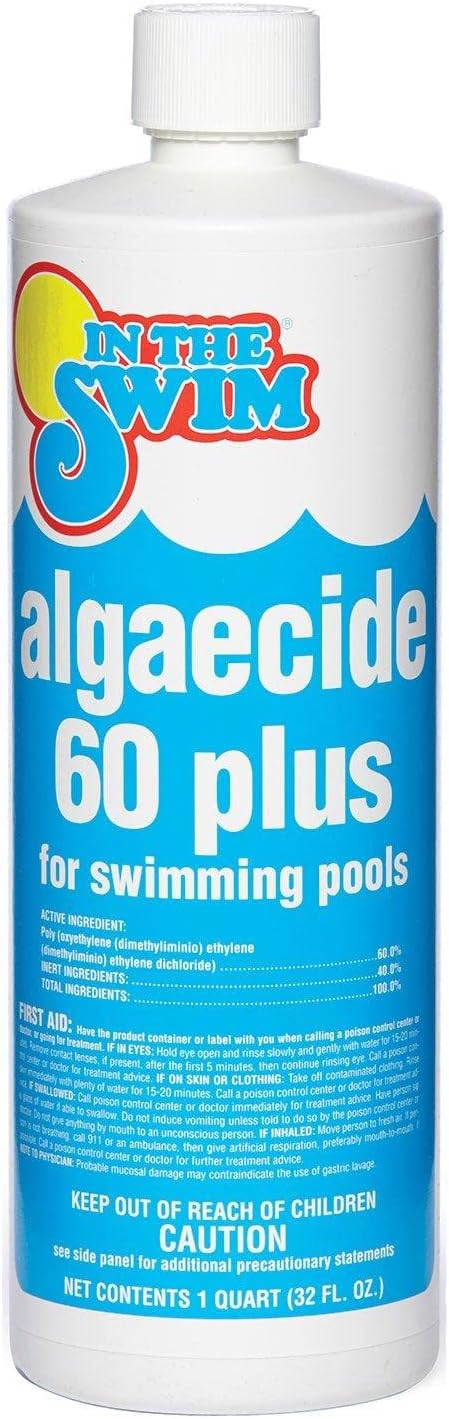
This 1-quart algaecide uses a non-metallic, non-foaming, low-odor formula for above-ground and in-ground pools. It is compatible with chlorine, bromine, biguanide, and salt systems and works across acidic and alkaline pH ranges. The listing recommends 2 to 4 ounces per 10,000 gallons for standard maintenance.
Check On AmazonIf you click this link and buy, we earn a commission at no additional cost to you.
Final Thoughts: Match the Fix to the Actual Cause
Foam trips people up because the instinct is to reach for whatever clears the surface fastest. A defoamer has its place for a same-day fix, but figuring out whether you are dealing with body oils, a surfactant-based algaecide, or a chemical product’s carrier ingredients is what actually gets you out of the cycle. Treat that specific cause, give the filter cartridge the deeper clean it needs, and foam stops being something you fight every few weeks.
If the water itself looks hazy rather than foamy on top, that is a different problem with a different fix, and I cover what actually turns above ground pool water cloudy instead of clear separately. For a broader look at working through other common above ground pool water problems, or for the complete seasonal routine, the full above ground pool maintenance schedule covers what to check throughout the season so foam and similar issues get caught early.
FAQs
🧴 Why is my above ground pool water foamy after swimming?
This is almost always body oils, sunscreen, and lotions washing off swimmers and reducing the water’s surface tension. Heavy swimmer use without an enzyme treatment or thorough filter cleaning lets this residue build up over time.
🧪 Will shocking the pool get rid of foam?
Shocking addresses sanitizer demand, not the organic oils or surfactants causing foam. It will not reliably clear foam on its own. An enzyme-based product targets the actual cause when the foam comes from body oils or sunscreen.
⏱️ How long does algaecide foam take to go away?
Typically 24 to 48 hours as the product disperses through the water. Running the pump continuously during that window speeds up the process.
🧽 Do I need to clean my filter cartridge if I already treated the foam?
Yes. Oils absorbed into the cartridge media do not rinse out with a plain hose. Use a filter cleaner solution and soak the cartridge, or the same residue keeps recirculating and the foam can return.
🚫 Is a defoamer bad for my pool?
Used occasionally before a swim or event, it is fine. Used repeatedly as the only treatment, it just masks the symptom and never resolves the oils, sunscreen, or surfactants causing the foam underneath.
Sources and References
- Foam causes including low-grade algaecides and the temporary nature of anti-foaming agents, from In The Swim’s guide on foamy pool water.
- Confirmation that body oils and sunscreen absorb into cartridge media and require a dedicated cleaning solution rather than a plain rinse, from PoolSupplies.com’s guide to cleaning a cartridge filter.
- Explanation of how sunscreen and body oils create a surface film and add to filter and chemical demand, from PoolBurg’s overview of sunscreen’s impact on pool water.