An above ground pool does not have a dedicated vacuum port the way most inground pools do, so the whole manual vacuuming process runs through the skimmer instead. Get that connection wrong, or skip priming the hose first, and you end up pushing air instead of pulling water, wondering why the vacuum head is barely moving debris. This covers the correct skimmer connection, the priming step people skip, the vacuuming technique that actually clears the floor instead of stirring it up, and the specific situations where an automatic cleaner still leaves work for you to finish by hand.
How to Vacuum an Above Ground Pool Without the Vacuum Port You’re Expecting
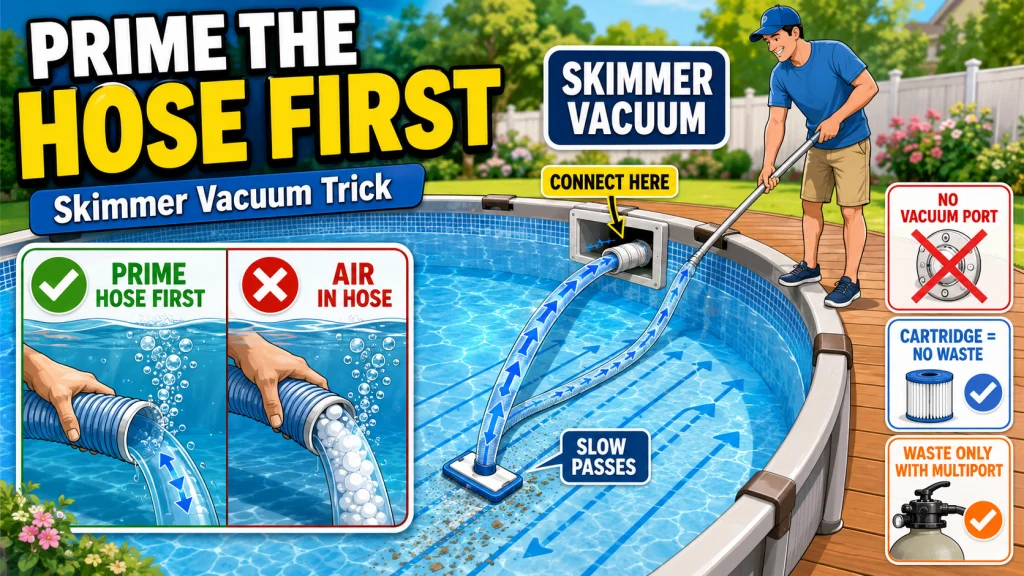
If you have ever vacuumed an inground pool, or read a generic pool guide written with one in mind, the first thing that trips people up on an above ground pool is the missing vacuum port. There isn’t one. Above ground pools pull vacuum suction through the skimmer itself, and if you connect the hose anywhere else or skip a step in the sequence, the vacuum head will sit on the floor doing almost nothing while the pump runs.
I get calls every summer from owners convinced their vacuum is broken because the head “won’t grab” the debris. Nine times out of ten, the hose was never primed, or the connection at the skimmer basket is loose enough to pull in air instead of water. The fix is not a new vacuum. It is doing the connection and technique correctly the first time.
The Skimmer Connection Method
Manual vacuuming on an above ground pool works because the pump is already pulling water through the skimmer. Redirect that suction through a hose instead of the skimmer basket, and the same pump that circulates the pool becomes the vacuum’s power source. The sequence itself is short, but the order matters, and skipping a step is where most first attempts fall apart.
- For a direct skimmer inlet connection, remove the skimmer basket completely before seating the hose.
- Attach the vacuum head to the telescoping pole, then attach one end of the vacuum hose to the vacuum head.
- Feed the other end of the hose toward the skimmer opening, but do not connect it yet.
- Prime the hose (covered in the next section) before that final connection.
- Insert the primed hose end into the skimmer inlet opening, seating it snugly against the opening so it is not pulling in air around the edges.
Once that connection is seated, the pump’s suction pulls water and debris straight through the hose and into the filter. A loose seat at the skimmer is the single most common reason people think their vacuum “lost suction” halfway through a session. It didn’t lose anything. It’s pulling air from the gap instead of water from the pool.

This 30-foot manual vacuum hose has a 1.5-inch diameter and a swivel cuff that connects to the vacuum head, while the non-swivel end connects to the skimmer or vacuum inlet. Its EVA construction is designed to resist UV exposure and pool chemicals, with a spiral-wound build for flexibility and crush resistance. It is made for manual vacuuming, not automatic cleaners.
Check On AmazonIf you click this link and buy, we earn a commission at no additional cost to you.
Before You Start, Confirm Your Setup
A few quick checks before the hose ever touches the skimmer save a lot of frustration once you’re mid-session. The hose needs to connect to the vacuum head, not the pole, and it needs enough length to reach every part of the floor without the far end pulling loose from the skimmer when the head is at the deep end. The vacuum head itself should sit flat against the floor. If it’s tilting, floating slightly, or flipping over as you move it, the wheels or the angle of the pole connection usually need adjusting before you continue.
It also helps to know your filter type going in, sand with a multiport valve or cartridge, since that decision is already made before you ever pick up the pole and it determines whether vacuuming to waste is even on the table later in this article. And if suction starts weak or fades partway through a session that started fine, stop and check the obvious spots before assuming something is broken: reseat the hose in the skimmer, look for air bubbles coming from the connection, and check whether the filter is loaded up enough to be restricting flow. Reprime the hose if any air got back into it, then reconnect and continue.

This weighted triangular vacuum head is designed for cleaning debris from vinyl-liner pools and is suitable for both above-ground and in-ground use. Polypropylene brushes assist with underwater cleaning while the weighted body helps resist floating. A vacuum hose and standard pool pole are required and sold separately.
Check On AmazonIf you click this link and buy, we earn a commission at no additional cost to you.
Priming the Hose Before You Connect It
A vacuum hose full of air will not create suction when it hits the skimmer. That air has to get pushed out and replaced with water before the connection is made, or the first few minutes of vacuuming become a fight against an airlock instead of actual cleaning. This is the step I see skipped more than any other, usually by someone in a hurry to get the head on the floor.
Priming is simple. Submerge the entire hose in the pool, holding the vacuum head end down and low, and let water fill it from that end while air escapes out the open end near the surface. Keep the hose fully submerged the whole time. Once water is running steadily out the open end with no more air bubbles, that end is ready to connect to the skimmer. Connect it quickly so it doesn’t lose the water column and pull air back in before the pump takes over.
Field Note: The setups I get called out for almost always skip priming entirely, or the owner primes the hose, sets it down on the deck for a minute to grab the pole, and the water drains back out before they connect it. If you’re going to prime the hose, connect it to the skimmer immediately after. Don’t let it sit.
The Correct Vacuuming Pattern
Once the connection is holding suction, the temptation is to move the vacuum head quickly to get the job done. That is the opposite of what actually clears the floor. Moving too fast stirs debris up off the bottom faster than the hose can pull it in, and you end up pushing a cloud of fine particles around the pool instead of removing them.
Move the head slowly across the floor in straight, overlapping parallel strokes, the same systematic coverage logic that applies anywhere you’re trying to cover a surface evenly rather than randomly. Overlap each pass slightly with the one before it so you are not leaving thin missed strips between strokes. Work one section of the floor at a time rather than jumping around, and finish a full pass before doubling back to anything you think you missed.
Move the vacuum head quickly back and forth to cover more ground in less time.
Move the vacuum head slowly in overlapping straight passes, letting suction do the work instead of speed.
Slow and overlapping beats fast and random every time on this task. It takes longer per session, but it takes far fewer sessions to actually get a floor clean instead of just circulating the same fine debris around the pool.
Vacuuming to Waste, and Why Not Every Pool Can Do It
Normal vacuuming pulls debris through the hose and into the filter, then returns filtered water back to the pool. That works fine for everyday leaves and light dirt. Heavy algae or fine settled debris is a different problem: pushing that material through the filter can return some of it to the pool before the filter fully catches it, undoing the work you just did.
Vacuuming to waste solves that by bypassing the filter entirely and sending the water straight out the backwash line instead of back into the pool. This is only possible with a sand filter that has a multiport valve, since the “waste” setting on that valve is what redirects the flow. Cartridge filter systems have no equivalent setting and cannot vacuum to waste, full stop. If your pool runs a cartridge filter, plan on vacuuming through the filter as normal and cleaning or replacing the cartridge more frequently after a heavy debris session instead.
| Filter Type | Can Vacuum to Waste? | What to Do Instead if Not |
|---|---|---|
| Sand filter with multiport valve | Yes, using the waste setting | Not applicable |
| Cartridge filter | No | Vacuum through the filter, then rinse or replace the cartridge sooner |
Losing some water down the backwash line is the tradeoff for vacuuming to waste, so it is worth reserving for the situations that actually call for it: heavy algae, fine debris after a storm, or the cleanup that follows a shock treatment, rather than routine weekly maintenance.

This suction-side cleaner is designed for above-ground and on-ground pools and includes a 32-foot hose. Its SmartDrive steering and turbine system help it move across the pool floor while connecting through the pool skimmer suction. The listing shows a 4.0-star rating from more than 2,200 reviews and includes a 1-year warranty.
Check On AmazonIf you click this link and buy, we earn a commission at no additional cost to you.
When Manual Vacuuming Is Still Necessary With an Automatic Cleaner
Owners who already run an automatic cleaner sometimes assume manual vacuuming is no longer part of their routine. It usually still is, just less often. Suction-side cleaners are good at open floor space, but they consistently miss corners and the cove junction where the floor meets the wall. That geometry is hard for any automatic cleaner to reach reliably, and debris settles there over time regardless of how well the rest of the floor gets covered.
A monthly manual pass focused specifically on corners and the wall-floor junction keeps the pool cleaner than relying on the automatic cleaner alone, without turning into a full weekly vacuuming chore. If you are still weighing whether a suction-side cleaner is worth adding to your setup in the first place, what a suction-side automatic cleaner actually covers walks through where that equipment earns its keep and where it consistently falls short.
The other situation that calls for manual vacuuming, even with an automatic cleaner already running, is right after a heavy shock or a SLAM treatment. Dead algae settles to the floor as it clears, and it needs to come out through manual vacuuming to waste rather than getting left for the automatic cleaner to slowly redistribute over the following days.
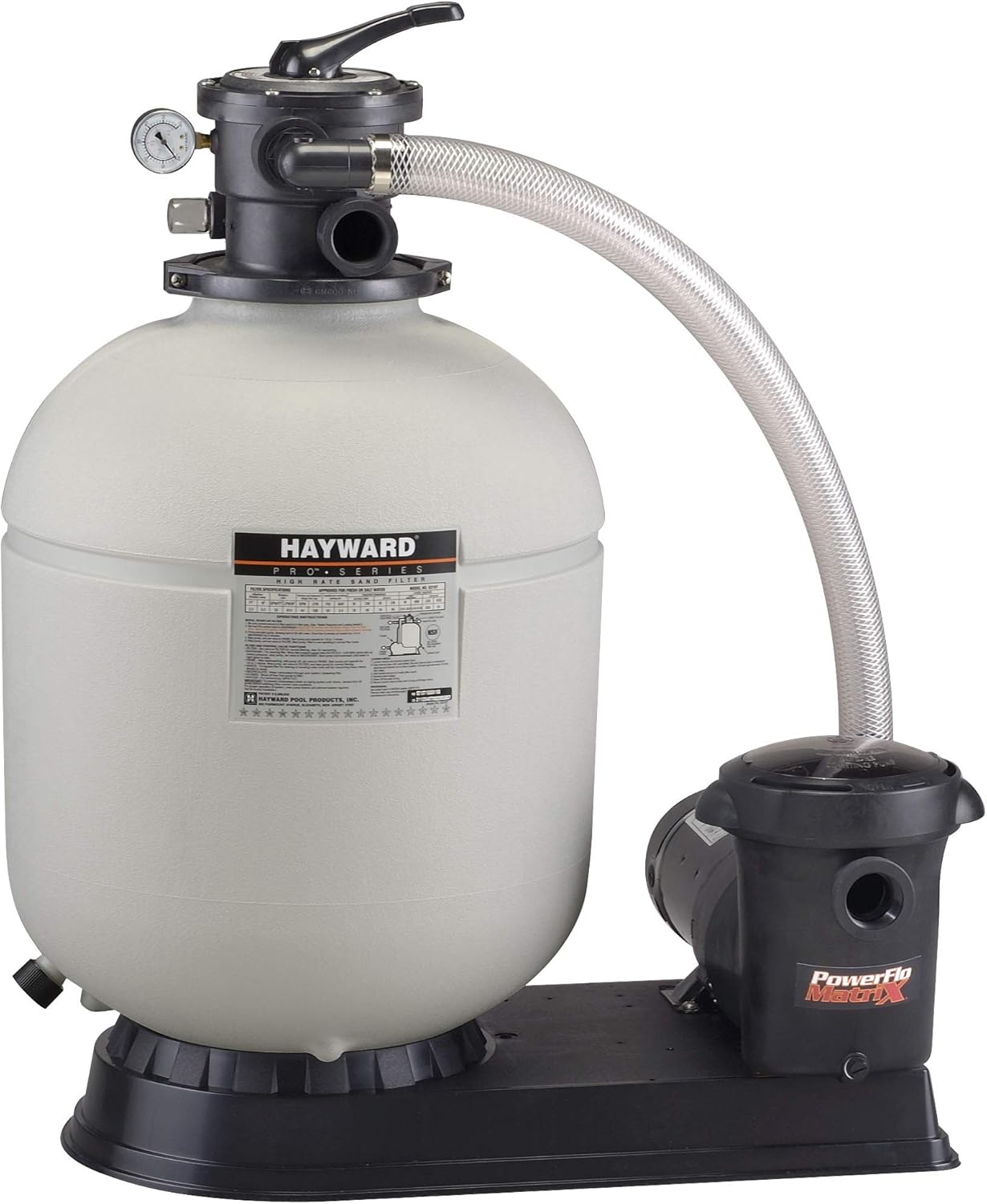
This above-ground pool filter system combines an 18-inch polymeric sand tank, a 1 HP PowerFlo Matrix pump, and a 7-position VariFlo control valve. The valve includes a waste position that bypasses the filter for discharging heavy debris directly from the pool. The system includes a 1.5-inch hose package and uses approximately 150 pounds of filter sand.
Check On AmazonIf you click this link and buy, we earn a commission at no additional cost to you.
Final Thoughts: The Connection Is the Whole Trick
Manual vacuuming on an above ground pool is not complicated once the skimmer connection and priming step are done correctly. Get the hose primed, get it seated snugly in the skimmer, move slowly in overlapping passes, and know whether your filter setup allows vacuuming to waste before you need it for a heavy cleanup. If you’re building out the rest of your cleaning routine beyond just vacuuming, the full rundown of above ground pool cleaning equipment covers where a vacuum fits alongside skimmers, brushes, and automatic cleaners. For broader equipment decisions beyond cleaning, including the pump, filter, and circulation setup, the complete above ground pool equipment guide covers the rest of that picture.
FAQs
🧹 How do you vacuum an above ground pool without a vacuum port?
You connect the vacuum hose directly into the skimmer after removing the skimmer basket. The pump’s existing suction through the skimmer powers the vacuum instead of a separate dedicated port.
💧 Why does my pool vacuum lose suction halfway through?
Usually the hose was not fully primed before connecting, or the connection at the skimmer is loose and pulling in air instead of water. Reprime the hose and reseat it snugly in the skimmer opening.
🐌 Should I move the vacuum head fast or slow?
Slow, in overlapping straight passes. Moving quickly stirs debris off the floor faster than the hose can pull it in, which spreads fine particles around instead of removing them.
🚰 What is vacuuming to waste and can every pool do it?
Vacuuming to waste sends water out the backwash line instead of through the filter, which is useful for heavy algae or fine debris. It requires a sand filter with a multiport valve. Cartridge filter systems cannot vacuum to waste.
🤖 Do I still need to manually vacuum if I have an automatic cleaner?
Usually yes, but less often. Automatic suction cleaners tend to miss corners and the wall-floor cove junction, so a monthly manual pass on those specific spots keeps the pool cleaner than relying on the automatic cleaner alone.
🧪 Do I need to manually vacuum after shocking or a SLAM treatment?
Yes. Dead algae settles to the floor as the water clears, and manual vacuuming to waste removes it directly instead of leaving it for an automatic cleaner to slowly stir back into the water.
Sources and References
- TroubleFreePool’s Pool School reference on post-SLAM cleanup, confirmed for manual vacuuming being required to fully clear settled dead algae after a shock treatment.
- Intex owner’s manual guidance for above ground pool accessories, confirmed for the skimmer-based connection method used on above ground pool vacuum systems.
- Hayward’s multiport valve documentation, confirmed for the waste setting used to vacuum to waste on sand filter systems.