Above ground pool chemistry has one correct set of target ranges, but the guide that came in the box with your pool doesn’t always agree with it. This guide explains where that disagreement comes from, using pH as the clearest example, and routes you to the exact target numbers, the weekly routine for testing and adjusting them, and how to pick a test kit accurate enough to trust. It doesn’t repeat the full range chart here, since that lives in its own dedicated guide with nothing else competing for space on the page.
Why Above Ground Pool Chemical Levels Aren’t as Settled as They Should Be
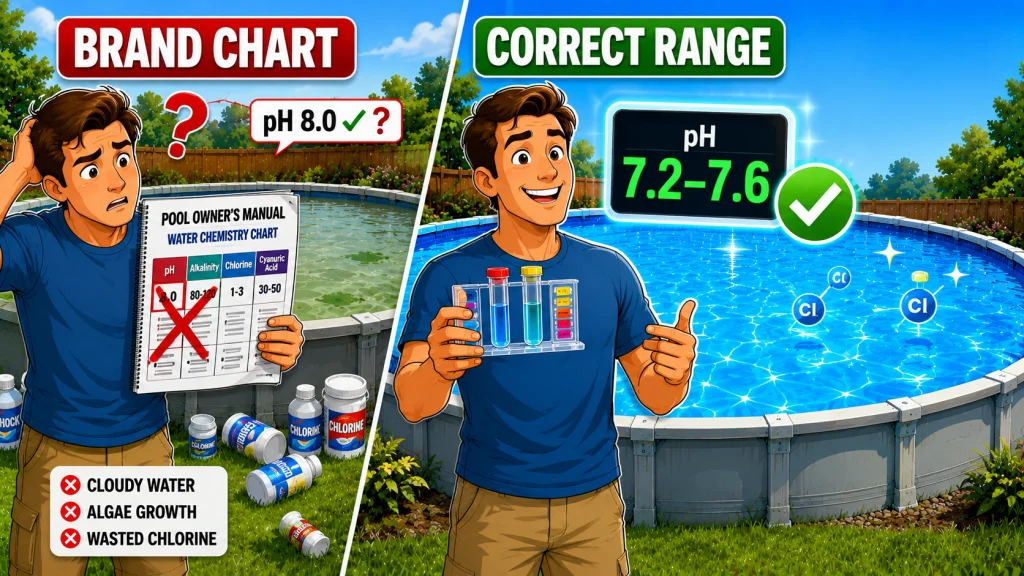
Above ground pool chemical levels should be simple: test the water, compare against a target range, adjust what’s off. This is the first of the four areas covered in the full above ground pool maintenance guide, and it’s the foundation the other three sit on. What complicates it is that not every source agrees on the target range itself, and the disagreement isn’t trivial. Bestway’s own published guide lists a pH sweet spot of 7.2 to 8.0. The range most pool professionals and independent water chemistry sources actually target is 7.2 to 7.6, a noticeably tighter window sitting entirely inside the wider one the brand guide allows.
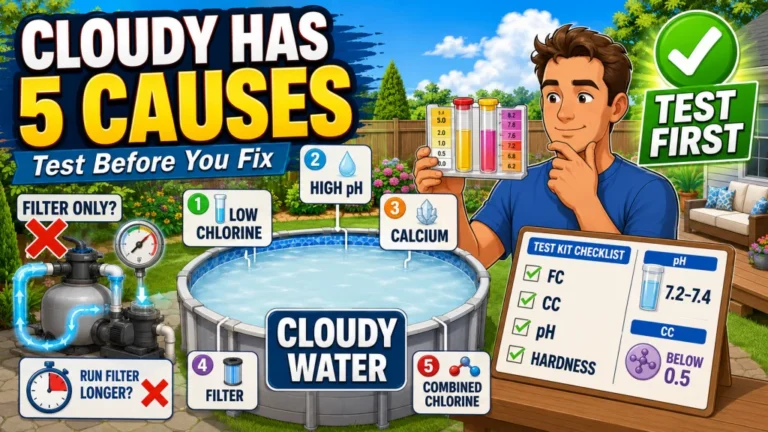
That gap matters more than half a point of pH sounds like it should. Chlorine’s disinfecting power comes from hypochlorous acid, the active form chlorine takes in water, and the share of active chlorine drops noticeably as pH climbs from the low end of that range toward the high end. A pool sitting at the top of the brand-approved window can test with plenty of chlorine on paper while the water is barely being sanitized in practice, which is exactly the kind of mismatch that leaves an owner staring at cloudy or algae-prone water despite following the instructions that came with their pool.

This product lowers high pH levels in pool water, helping restore balanced, healthy water parameters. It protects against scale buildup, offering a safer, easier alternative to muriatic acid with an easy-pour, splash-free design. Keeping pH balanced also helps prevent corrosion and damage to pool equipment and surfaces, reducing maintenance and extending the life of the pool. The Clorox Pool App provides expert-level testing along with personalized product and dosage recommendations.
Check On AmazonIf you click this link and buy, we earn a commission at no additional cost to you.
Why Pool Brands Publish Different Chemistry Guidance in the First Place
It’s worth understanding why this gap exists before assuming someone made a simple error. A pool manufacturer’s owner’s manual usually gets written to work across many climates, water sources, and countries at once, which pushes the published range wider than a range tuned specifically to your tap water and your local sun exposure would need to be. A wide range is also more forgiving for a first-time buyer who’s never tested pool water before, which matters for a company trying to keep new owners from feeling overwhelmed on day one.
None of that makes the wider range correct, it just explains why it exists. Chemistry references built specifically for water treatment, rather than for selling a pool kit, tend to converge on the tighter numbers because their only job is accuracy, not approachability. Guidance also tends to lag behind updated industry practice simply because updating a printed manual across every product line takes time. The result is a gap that’s understandable without being something you should build your own routine around.
Where the Correct Target Ranges Actually Come From
The pH example above is the clearest illustration of a broader pattern: kit-included guides prioritize being broadly safe, not tuned to the tighter range that actually keeps chlorine working at its best. The same kind of gap, sometimes smaller, sometimes larger, can show up in other target numbers too, which is why it’s worth checking your specific readings against a source built for accuracy rather than assuming the chart in your owner’s manual is the last word.
This is deliberately not the place to walk through every corrected number for chlorine, total alkalinity, calcium hardness, and cyanuric acid. Cramming all of that in here would just duplicate a guide that already exists and does that job properly. The full corrected target range for every parameter that matters, plus a clear explanation of why each one differs from what brand guides typically publish, is covered in the chemical target ranges guide for above ground pools.

This test kit checks chlorine, bromine, pH, acid demand, and total alkalinity for proper water chemistry, using a clear-view round test block with integrated color chips for accurate matching. It includes 1 oz solutions of #1 through #3 and 0.5 oz solutions of #4 through #5, with the #1 solution sealed to comply with transportation regulations. Note that #2 Phenol Red differs from standard Phenol Red and should not be interchanged, as this kit is designed for 5-way testing. The manual test kit case comes in black or blue, with identical contents.
Check On AmazonIf you click this link and buy, we earn a commission at no additional cost to you.
Why Knowing the Numbers Isn’t Enough Without a Routine
Knowing the correct target ranges only helps if testing actually happens on a schedule that catches problems while they’re still small. The above ground pools I see turn green fastest aren’t usually owned by people who don’t know the right chlorine range. They’re owned by people who knew it once, tested faithfully for a few weeks, and then let a busy month slide by without checking anything. Chemistry drifts continuously, not on a schedule that waits for you to have free time.
A consistent weekly routine, testing at the right frequency and adjusting parameters in the right order, does more to prevent problems than knowing the exact numbers ever will on its own. The order adjustments happen in matters too, since correcting one number out of sequence can undo progress on another. The full weekly maintenance routine, including how often to test during peak season versus a slow month and the correct order to make adjustments in, is covered in the weekly maintenance routine guide for above ground pools.
Why the Test Kit You Use Changes What “Correct” Means
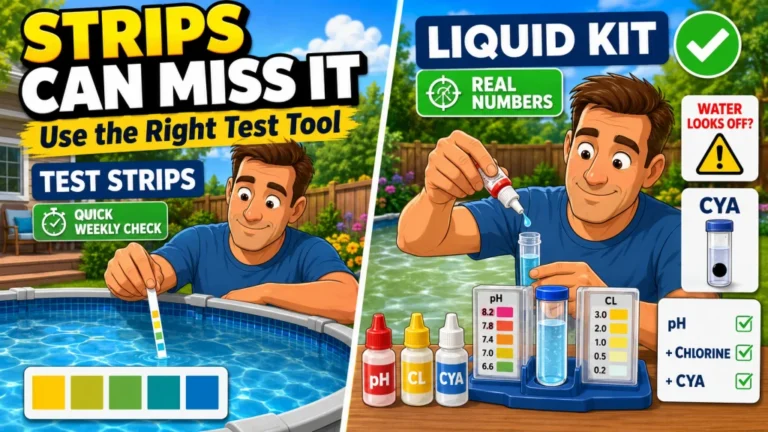
None of the target ranges above mean much if the reading you’re comparing against them isn’t accurate. Test strips and liquid test kits don’t measure with the same precision, and the gap between them is wider than most first-time owners assume. A strip that reads “somewhere in range” on a color chart isn’t giving you the same confidence as a liquid reagent test that produces a specific number, and that difference matters most for the parameters where a small miss has real consequences.
Cost and convenience pull in the opposite direction from accuracy here. That’s exactly why this is worth treating as its own decision rather than grabbing whatever’s cheapest at the store. Which type actually makes sense depends on how precisely you need to know a given number and how often you’re testing. A wrong reading doesn’t just waste a test, it can send you toward the wrong fix entirely, adding a chemical you didn’t need or missing one you did, which costs more in the long run than the price difference between a strip and a liquid kit ever would. The full comparison of strips versus liquid kits, including which parameters tolerate a strip’s precision and which don’t, is covered in the test kit guide for above ground pools.

These test strips check pH, total chlorine, free chlorine, bromine, alkalinity, total hardness, and cyanuric acid using medical industry technology for accuracy comparable to liquid tests. Simply dip the strip, wait 15 seconds, and compare it to the color chart, with no drops or measuring involved. Each color pad uses paper designed to keep colors vibrant and prevent bleeding for reliable readings. AquaChek has over 35 years of experience helping maintain healthy pool and spa water.
Check On AmazonIf you click this link and buy, we earn a commission at no additional cost to you.
Final Thoughts: Question the Number Before You Trust It
The pH example at the top of this guide isn’t a one-off brand mistake to shrug off. It’s a reminder that the guide in the box is written for broad safety, not precision, and above ground pool owners who want consistently clear water are usually the ones willing to check their numbers against an independent standard instead of taking the kit’s chart at face value.
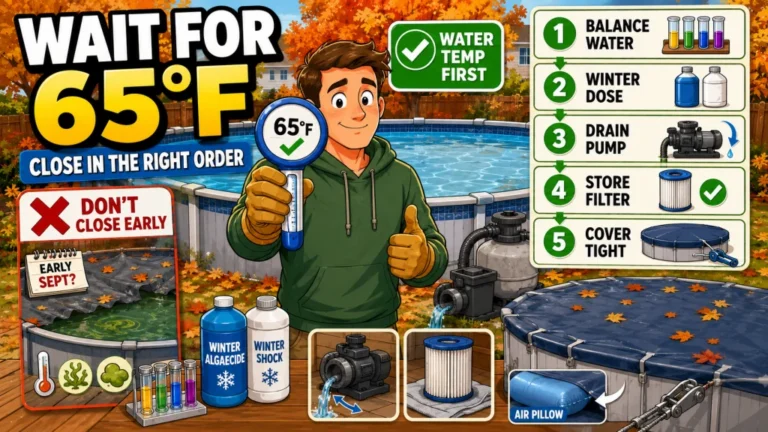
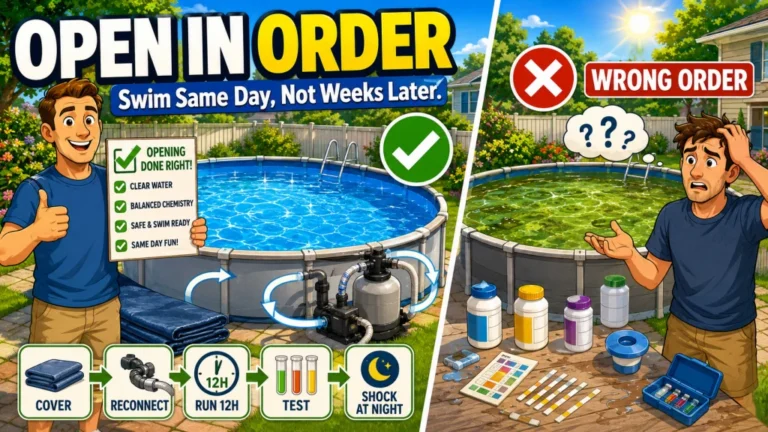
Getting the target ranges and testing routine right is the foundation the rest of above ground pool maintenance sits on. If the water still isn’t behaving even with chemistry in range, that’s a troubleshooting question rather than a chemistry one, and it’s covered in the troubleshooting guide for above ground pools. If instead you’re heading into a close or open for the season, the chemistry considerations shift again, and that’s covered separately in the seasonal guide for above ground pools.
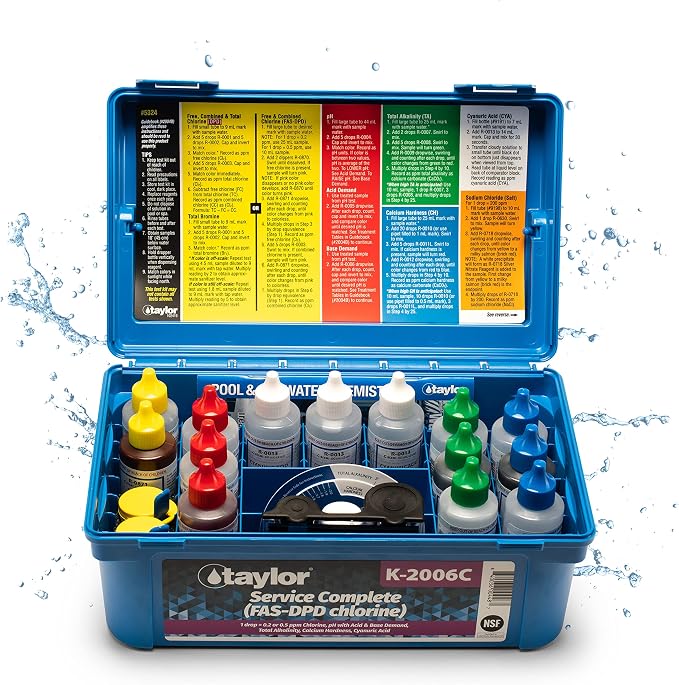
This titration drop-based water testing kit is simple to use and delivers fast, accurate results. It tests for free and total chlorine, bromine, pH, acid and base demand, calcium hardness, total alkalinity, and stabilizer levels. Each kit includes 2 oz reagent bottles for repeated testing. Accurate results help ensure the pool isn't overtreated with chemicals.
Check On AmazonIf you click this link and buy, we earn a commission at no additional cost to you.
Explore Each Chemistry Topic
Each topic above has its own full guide with the exact numbers, schedule, and product comparisons you need.
| Guide | What it helps with |
|---|---|
| Chemical Target Ranges Guide | The corrected number for every parameter, and exactly where brand guides diverge from it. |
| Weekly Maintenance Routine Guide | Testing frequency and the correct order to adjust parameters in. |
| Test Kit Guide | Strips versus liquid reagent kits and which parameters need the more precise option. |
Start with the target ranges guide if you’ve never compared your pool kit’s chart against an independent source. That’s the gap that causes the most confusion.
FAQs
🧪 Is the pH range in my pool’s owner’s manual actually correct?
Not always. Some brand guides list a pH window wider than what pool professionals actually target, which can leave chlorine working far less effectively even when your test reads “in range” on the brand’s own chart.
⚗️ Why does a small pH difference matter so much for chlorine?
Chlorine’s active, disinfecting form becomes a smaller share of the total as pH rises. The difference between the low end and high end of a wide “acceptable” range can mean chlorine working at a fraction of its potential strength, even at the same ppm reading.
📅 How often should I test the water in an above ground pool?
More often than most owners settle into after the first few weeks of ownership. The exact frequency depends on season and use, and it’s covered in the weekly maintenance routine guide rather than here, since it’s a full topic on its own.
🧫 Are test strips accurate enough for above ground pool chemistry?
For some parameters, yes. For others, the imprecision of a color-matched strip can matter, especially where a small miss has real consequences. Which is which depends on the specific parameter, covered in the test kit guide.
Sources and References
The brand guide comparison and chlorine effectiveness figures in this guide are cross-checked against the following:
- A widely used above ground pool brand’s own published chemical level guidance, used for the wider pH range referenced as the brand guide example.
- Chlorine effectiveness by pH level, used for the percentage of active chlorine (HOCl) at different pH readings.
- Hypochlorous acid and pH relationship reference chart, used to confirm the active chlorine percentage decline as pH rises toward 8.0.