Above ground pool seasonal care comes down to three decisions most owners get wrong at least once: closing too early in the fall, draining too much water going into winter, and opening in the spring without a real sequence to follow. Each mistake costs roughly the same thing, an extra week of recovery chemistry, and in the water level case it can go further and put real stress on the pool walls. This guide walks through the timing rule that tells you when to close, why the amount of water you leave in the pool over winter matters more than most people realize, and the opening order that gets a properly closed pool swim-ready in a day instead of a week.
The Three Decisions That Make or Break Above Ground Pool Seasonal Care
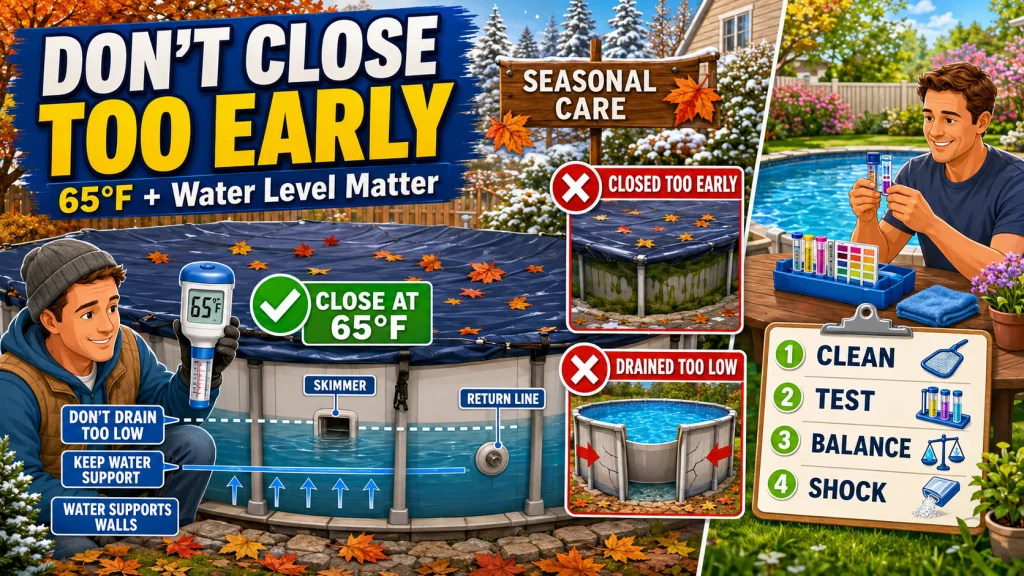
Above ground pool seasonal care comes down to three decision points, and I see owners get at least one of them wrong every single year. The first is closing too early, while the water is still warm enough for algae to keep growing under a sealed cover. The second is draining too much water before winter, which takes away the structural support the walls depend on. The third is opening in the spring without any real order to the chemicals, which turns what should be an afternoon job into days of chasing cloudy water. All three are avoidable once you know the timing, the water level rule, and the sequence, and all three are more common than they should be given how simple each fix actually is.
The rest of this guide covers closing and winterizing, the water level decision that protects your walls, and the spring opening sequence that gets you back in the water fast.
Which Seasonal Stage Are You In Right Now?
Before getting into the detail on each stage, it helps to know where your pool actually stands today. Seasonal care is not one task, it is a handful of different moves depending on what the calendar and the thermometer are telling you.
| Situation | What to do first |
|---|---|
| Fall, water still above 65°F | Keep testing and running the pump as usual, and hold off on closing. |
| Fall, water at or below 65°F | Clean, balance, and shock the pool, then move into the closing sequence. |
| Closing for winter | Lower the water only a few inches below the skimmer and returns, never a full drain. |
| Spring opening | Remove the cover, clean the pool, test the water, then balance, shock, and filter. |
Whichever row matches your pool right now, having the right supplies on hand before you start makes each stage go faster. That generally means a working test kit or thermometer to confirm timing, winterizing plugs and a way to manage water and debris on the cover for closing, and basic cleaning tools plus balancing chemicals for the opening side. None of that requires a specific brand, just having the right category of item ready before you start the sequence below.

TempPro TempAir is a floating wireless thermometer designed for pools, hot tubs, spas, and cold plunges. Its IPX8 waterproof, UV-resistant ABS sensor measures water temperature with accuracy of plus or minus 0.9°F from 32°F to 140°F. RF connectivity reaches up to 500 feet, while the backlit receiver stores 24-hour maximum and minimum readings. It arrives pre-paired with four AAA batteries and a tether string.
Check On AmazonIf you click this link and buy, we earn a commission at no additional cost to you.
Closing and Winterizing: The 65-Degree Rule
The single most common closing mistake I run into is timing, not technique. Owners close the pool the first cool weekend of the year because it feels like the season is over, and algae spends the next two months quietly building up under a cover that was sealed too soon. The rule that actually works is temperature-based, not calendar-based: wait until the water is consistently running at 65 degrees Fahrenheit or lower before you close. Below that point, algae growth slows down enough that a properly closed pool stays clean until spring. Close while the water is still warmer than that and you are sealing an environment algae is happy to grow in all winter.
Once the temperature drops into range, the sequence matters almost as much as the timing. Clean the pool thoroughly first, brushing the walls and vacuuming the floor, because anything left behind becomes food for algae over the winter. Balance pH, alkalinity, and calcium hardness before adding any winterizing chemicals, since unbalanced water can damage the liner and equipment even while the pool sits dormant. Shock the water a few days ahead of closing so the chlorine level has time to settle before you add the final winterizing dose. the full step-by-step closing sequence covers exact product amounts and timing for each stage, which is worth reading in full if this is your first time closing a pool.
Field Note: The service calls I get most often in April all trace back to the same October mistake: the owner closed the pool on the first chilly weekend because it looked like fall, not because the water was actually at 65 degrees. By the time they open it in spring, the water under the cover looks like pea soup, and what should have been an hour of opening work turns into a full weekend of shocking and re-shocking.
Getting the timing right on the front end is the single biggest lever you have over how easy your spring opening turns out to be. But timing alone will not save a pool that was drained too aggressively going into winter, which is where the next decision comes in.
The Water Level Decision: Why Draining Too Much Risks the Walls
Above ground pools are not just holding water. The water is doing structural work. The outward pressure of a full or nearly full pool is part of what keeps the walls upright and the liner stretched into place. Drain the pool down too far, or empty it completely, and that support disappears for the entire winter. Combine that with the weight of snow or ice pressing down on a cover with nothing pushing back from inside, and you have a setup for bowed walls, a liner that never sits flat again, or in a bad case, a wall that buckles under the load.
The correct move is a partial lowering, not a full drain. Bring the water down a few inches below the skimmer and return line so plugs can be installed without water sitting in the plumbing over a freeze, but leave the bulk of the water in the pool. That remaining water is what keeps the walls under the tension they were engineered for.
Draining the pool most of the way, or completely, because it seems like the safest way to avoid ice damage to the plumbing over winter.
Lowering the water level only a few inches below the skimmer and returns, installing winterizing plugs, and leaving the rest of the water in place to keep supporting the walls.
This is where I see the most expensive mistakes, more than closing too early and more than a bad opening sequence combined. A cloudy pool in April is an afternoon of extra chemicals. A collapsed wall or a permanently wrinkled liner is a much bigger repair, and it almost always traces back to someone draining the pool further than it needed to go. why draining too much water collapses above ground pool walls goes deeper into exactly how much to lower the water and what changes if your pool sits in a heavy snow region.
Get the water level right during closing and the pool goes into winter in good shape structurally. What happens next, in the spring, comes down entirely to whether you follow a real chemical sequence or just start dumping chemicals in and hoping.

This two-pack includes 1.25-inch cold-resistant rubber winter plugs for pool return and drain ports. The plugs use stainless steel wing nuts for a secure, rust-resistant fit and are designed to help keep water out of pipes during freezing weather. A T-handle makes installation and removal easier without extra tools. Check the required port size before ordering.
Check On AmazonIf you click this link and buy, we earn a commission at no additional cost to you.
Spring Opening: The Sequence That Gets You Swimming in a Day, Not a Week
A pool that was closed correctly, at the right temperature, with the water level handled properly, should open fast. That assumes the water is not already severely green or contaminated when the cover comes off; a pool that slipped through the closing steps above will need extra shock time no matter how well you follow the opening order. Most of the owners who end up fighting cloudy water for days in the spring skipped the sequence and added chemicals in whatever order the bottles happened to come out of the bag. Opening has an order for the same reason closing does: each chemical changes the conditions the next one needs to work correctly.
Clean the pool first. Remove the cover carefully so debris that collected on top does not fall in, then brush the walls and vacuum the floor before touching a single chemical. Test the water once it is clean, since a winter’s worth of dormancy and rainfall can shift pH, alkalinity, and chlorine substantially from where you left them in the fall. From there, work through the same balancing order used at startup: alkalinity first, then pH, then shock to clear out whatever algae or bacteria built up over the winter, and only after the chlorine level has settled back down do you move into a normal weekly routine.
A short checklist keeps the opening sequence from turning into a guessing game:
- Remove the cover and clean off debris before it falls into the water.
- Brush the walls and vacuum the floor before adding anything.
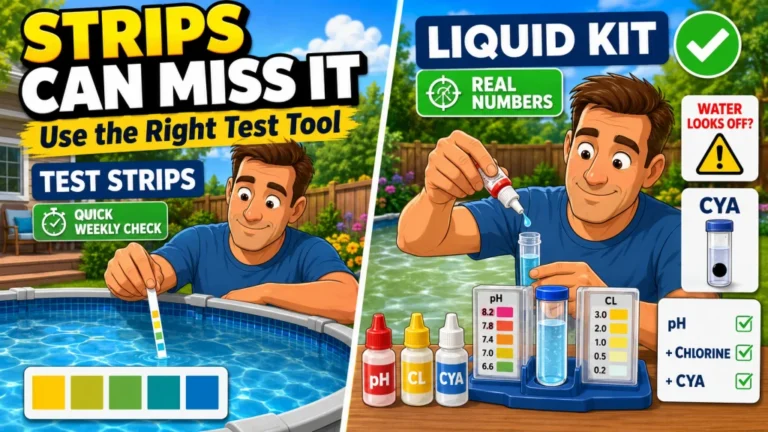
- Test pH, alkalinity, chlorine, and CYA to see where the winter left the water.
- Correct alkalinity, then pH, before adding sanitizer.
- Shock the pool to clear out algae and bacteria from the closed season.
- Run the filter continuously until the water clears and retest before swimming.
Follow that order on a pool that was closed and drained correctly, and it is realistic to be swim-ready within a day of pulling the cover off. the sequence for opening an above ground pool in one day breaks each of those steps down with target ranges and timing between chemical additions.

This granular 6-in-1 pool shock kills bacteria and algae, destroys contaminants, and helps clear dull or cloudy water. The fast-dissolving formula is swim-ready in 15 minutes and works with vinyl, plaster, fiberglass, and tile pool surfaces. Use 1 pound per 12,000 gallons according to the listing. The 12-pack has a 4.7-star rating from more than 4,900 ratings.
Check On AmazonIf you click this link and buy, we earn a commission at no additional cost to you.
Where Seasonal Care Fits Into the Rest of Your Pool Routine
Seasonal care handles the transitions, closing the pool down correctly in the fall and bringing it back in the spring. It does not replace the weekly testing and chemical routine that keeps the water in shape during swim season. If maintaining your weekly chemical levels is still a moving target for you, that is a separate habit worth building alongside the seasonal routine covered here, since a pool that was balanced all summer closes much easier than one that drifted out of range for months.
This guide also does not cover what to do with an already-established chemistry problem, a pool that has gone green mid-season or a chlorine level that will not hold no matter what you add. If that describes your situation right now, diagnosing and fixing an established water chemistry problem is the more relevant starting point, since troubleshooting an active problem calls for a different approach than a seasonal transition. For the complete picture of ongoing above ground pool care, from weekly testing through seasonal transitions, the full above ground pool maintenance guide ties all of these pieces together.

This all-in-one kit tests for free and total chlorine, pH, acid and base demand, total alkalinity, calcium hardness, and cyanuric acid, working with any pool, hot tub, or spa. It includes a carrying case, water comparator, water balance calculator, base demand reagent, color-coded instructions, and a waterproof chemistry guide for quick reference. Taylor test kits are the only testing supplies recommended by the American Swimming Coaches Association, ensuring professional-level accuracy.
Check On AmazonIf you click this link and buy, we earn a commission at no additional cost to you.
Final Thoughts: Timing and Water Level Decide How Easy Spring Will Be
Above ground pool seasonal care is really three decisions: when to close, how much water to leave in the pool, and what order to add chemicals in come spring. Wait for 65 degrees before closing, leave the bulk of the water in place over winter, and follow a real sequence when you open, and most of the seasonal headaches that show up every spring simply do not happen.
If you are staring at a pool that is already cloudy after opening, or walls that look like they took on damage over the winter, do not try to fix everything at once. Sort out the water level and structural side first, then work through the opening chemical sequence in order. From here, each part of that process has its own deeper walkthrough with full numbers behind it.
Explore More Above Ground Pool Seasonal Guides
Here is where each of those deeper walkthroughs lives, with full step-by-step detail for whichever part of the seasonal transition your pool needs right now.
| Guide | What it helps with |
|---|---|
| How to Close an Above Ground Pool | The full closing and winterizing sequence, timed around the 65-degree rule. |
| Above Ground Pool Water Level for Winter | Exactly how much to lower the water level without risking wall or liner damage. |
| How to Open an Above Ground Pool | The spring opening chemical order that gets the pool swim-ready in a day. |
Start with whichever stage your pool is at right now, then work through the others as the season moves along.
FAQs
🌡️ What temperature should I close my above ground pool at?
Wait until the water is consistently running at 65 degrees Fahrenheit or lower. Closing while the water is still warmer than that gives algae room to grow under a sealed cover all winter.
💧 How much water should I drain before winter?
Lower the level a few inches below the skimmer and return line, just enough to install winterizing plugs. Do not drain the pool further than that. The remaining water supports the walls structurally through the winter.
🧱 Can draining an above ground pool too much really damage the walls?
Yes. The outward pressure of the water is part of what keeps the walls upright and the liner stretched into place. Removing too much of that support, especially under the added weight of snow or ice on the cover, can cause bowing or a wall failure.
☀️ When is the right time to open an above ground pool in the spring?
Most owners open once daytime temperatures are consistently above 70 degrees Fahrenheit. Opening earlier just means more maintenance before the water is warm enough to use.
⏱️ Why does my pool opening always take a week instead of a day?
This usually points to chemicals added out of order or a pool that was closed too early or drained too far the previous fall. A clean pool that was closed and drained correctly can typically be swim-ready within a day of following the proper opening sequence.
🧪 Do I need to test the water before adding any spring chemicals?
Yes. A winter of dormancy and rainfall can shift pH, alkalinity, and chlorine significantly from where the pool was closed. Test first so you know what you are actually correcting instead of guessing.
Sources and References
- Family Handyman’s guide to winterizing an above-ground pool, cited for the 65-degree closing rule and the sequence of cleaning, balancing, and shocking before winterizing chemicals go in.
- Leslie’s Pool Supply guide to winterizing an above ground pool, cited for the closing sequence, including stain and scale prevention and the timing of algae control before shock.
- Great Backyard Place’s above ground pool winterizing steps, cited for the explicit warning against fully draining an above ground pool, which can lead to wall collapse.
- Swim University’s guide to opening an above ground pool, cited for the spring opening sequence, including cleaning the pool before testing and balancing the water.