A vinyl repair patch can hold for years, or it can fail again within a month, and the difference almost never comes down to the size of the hole. This guide walks through the above ground pool liner replacement vs repair decision the way I actually make it on a service call: by checking the liner’s age, flexibility, and damage pattern before I ever reach for a patch kit. You will get the age-and-condition framework I use, the specific signs that separate a patchable liner from one that is done, and the correct way to apply an underwater patch so it actually cures. If your liner is under 7 years old and otherwise sound, this will probably save you a replacement. If it is not, better to know that before you spend an afternoon patching a liner that is going to tear again next to the patch.
When a Patch Buys You a Season, and When It Just Delays the Inevitable
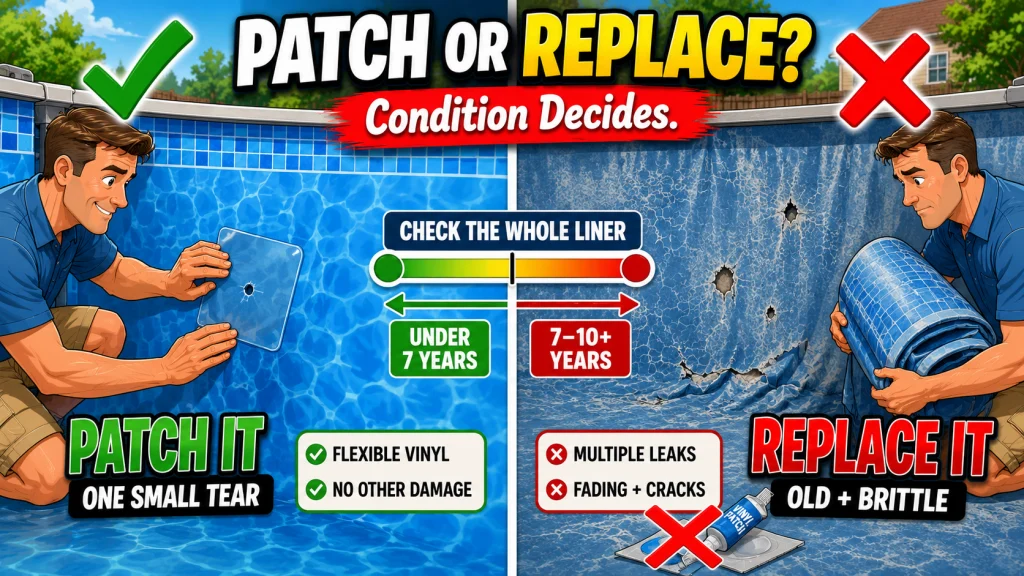
Here is the honest answer to the above ground pool liner replacement vs repair question: the hole almost never decides it. I can patch a 3-inch tear on a 4-year-old liner in fifteen minutes and it will hold until the liner itself ages out years later. I can patch that same size tear on a 9-year-old liner that has gone stiff in the sun, and I will get a call about a new tear two feet away before the end of the month. The patch is the easy part. The judgment call is whether the liner around the patch still has enough life left to hold it.
That is the framework this guide covers: not how to spot a hole, but how to decide whether patching it is actually worth doing. I will walk through the signs that point toward a simple repair, the signs that mean you are replacing the liner regardless of how small the damage looks, and the age-and-condition thresholds I use to stop guessing. Then I will cover the underwater patch method itself, since most owners do not want to drain a full pool to fix a hole below the waterline.
Signs an Above Ground Pool Liner Patch Is the Right Call
A liner patch makes sense when the vinyl around the damage is still doing its job everywhere else. I am looking for a liner that flexes when I press on it, holds its color, and has not developed a second or third problem area somewhere I have not noticed yet. When those conditions hold, the patch is not a stopgap. It is a legitimate fix that can carry the liner to the end of its natural lifespan.
- A single puncture or tear under 4 inches, with no other visible damage elsewhere on the liner.
- Vinyl that is still flexible when you push on it, not stiff, brittle, or showing fine surface cracking.
- A liner under roughly 7 years old with no fading, thinning, or wrinkling beyond normal wear.
- Damage located on the floor or lower wall, away from the bead track and away from skimmer or return fittings, where stress concentrates and a patch has less to fight against.
I have patched plenty of liners that met every one of those conditions, and most of them are still in the ground doing fine. A vinyl repair kit built for underwater use can seal a small leak without draining the pool, which is exactly what most owners want when the damage shows up mid-season. That said, a patch on a liner outside these conditions is really just delaying a decision you are going to have to make anyway, and it is worth knowing that before you spend the afternoon on it.
Field Note: The call I get most often in this category is a homeowner who patched a small tear near a return fitting, had it hold for two weeks, then called about a new leak an inch away. Fittings concentrate water pressure and movement every time the pump cycles. A patch there is fighting stress the rest of the liner does not have to deal with, which is why I steer owners toward a patch on the open floor or lower wall whenever the location gives them a choice.
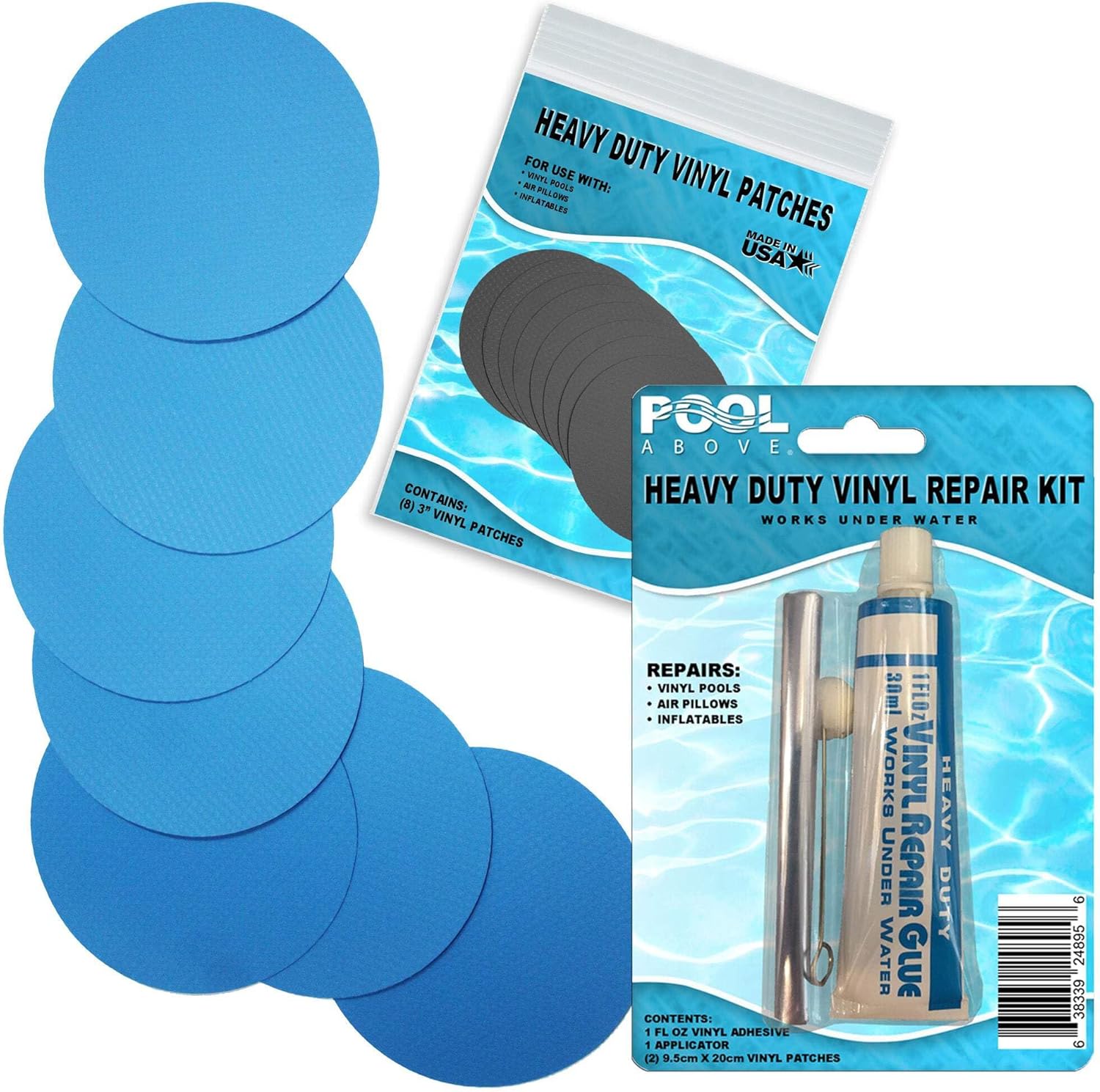
This kit includes eight 2-inch heavy-duty repair patches made from coated 1100-denier polyester canvas, plus a 1-fluid-ounce tube of vinyl adhesive and an applicator. It also includes two transparent vinyl sheets for lighter repairs. The materials are designed for pool liners and other vinyl inflatables, with an application method that can also be used underwater.
Check On AmazonIf you click this link and buy, we earn a commission at no additional cost to you.
Signs You Are Looking at a Replacement, Not a Patch
The signs that point to replacement are less about the hole and more about what the vinyl is doing everywhere else. A liner that has lost its flexibility from years of sun exposure is not going to hold a patch the way a young liner will, no matter how carefully you apply it. I have seen owners patch a brittle liner correctly, by the book, and still get a new tear within a season because the material around the patch had nowhere left to give.
- Vinyl that feels stiff and shows fine surface cracking when gently flexed at an accessible edge, especially near the waterline.
- Noticeable fading or thinning across large sections of the liner, not just around the damage.
- More than one separate damage point, which usually means the material itself has reached the end of its working life rather than having a one-off puncture.
- A liner that is stretching, sagging, or repeatedly slipping out of its track, which points to lost elasticity rather than a single fixable spot.
That last sign deserves its own mention. A liner that keeps pulling loose from the bead track is telling you the material has stretched past the point where it can hold its shape, and that is a structural issue, not something a patch fixes. Age raises the odds of these problems rather than guaranteeing them, but it is still worth tracking. In northern climates with a real winter shutdown, I start checking more carefully for brittleness and fading once a liner passes 10 years. In high-UV southern climates, that same closer look usually starts nearer 7 years, since constant sun exposure accelerates the brittleness that makes a patch unlikely to hold. Either way, the patch kit itself is inexpensive, and cost is never the reason to avoid replacing a liner that has genuinely reached the end of its life.

This 18-by-33-foot oval liner fits a 48-inch pool wall and uses a versatile Unibead design that can install as a J-Hook liner or with a bead receiver. It is made from 100% virgin heavy-duty vinyl with reinforced seams and protection against punctures, UV exposure, and pool chemicals. The liner is also engineered for cold-crack resistance and carries a 1-year manufacturer warranty.
Check On AmazonIf you click this link and buy, we earn a commission at no additional cost to you.
The Age-and-Condition Framework I Actually Use
Most guides hand you a broad liner lifespan or a list of failure signs, but rarely both at once, which still leaves owners without a practical way to weigh age, flexibility, damage pattern, location, and climate together. Here is the framework I use on a service call. Treat the age ranges below as risk thresholds, not hard rules. A liner can beat its range if it has been well cared for, and one can fall short of it in a harsh climate, so always check condition alongside age rather than either one on its own.
| Liner Age and Condition | What I Recommend |
|---|---|
| Under 7 years, flexible, single small tear | Patch it. This is the situation a patch is most likely to hold. |
| 7 to 10 years, showing brittleness or thinning | Replacement is usually the safer call. A patch is more likely to tear again nearby within a season. |
| Over 10 years, northern climate | Plan for replacement, and inspect the vinyl closely before patching. Cumulative freeze cycles and UV exposure have usually taken a toll by this point, even if a patch is still technically possible. |
| Over 7 years, high-UV southern climate | Inspect more carefully than the age alone suggests. Intense sun exposure shortens the safe patch window compared to northern installs, so brittleness and fading tend to show up sooner. |
This is not a rule I invented out of nowhere. It comes from watching the same pattern repeat across hundreds of service calls: a young, flexible liner takes a patch fine, and an older liner that has already been baking in the sun for most of a decade does not, even when the visible damage looks small. If you want more detail on how liner material and thickness affect this timeline in the first place, the full rundown on above ground pool liner types and lifespan covers that ground in more depth than fits here.
How to Apply an Underwater Patch Without Draining the Pool
Once you have decided a patch is the right call, the good news is you do not need to drain the pool to apply it. A vinyl repair patch kit rated for underwater use works both above and below the waterline, and draining the pool to fix a small tear usually creates more problems than it solves, since an empty vinyl liner can dry out, shrink, and pull away from the track faster than most owners expect.
- Clean the damaged area with a soft nylon brush or cloth to clear away dirt, algae, and any buildup so the adhesive has a clean surface to bond to.
- Cut the patch with rounded corners, sized to overlap the damage by at least 2 inches on every side.
- Apply the vinyl patch adhesive to the patch itself, not directly to the liner, then press it firmly over the damage and hold it in place for about 60 seconds, or the hold time listed on your specific kit.
- Leave the area undisturbed. Most kits finish curing within 24 to 48 hours, but check your kit’s instructions since cure time varies by product and by how deep the patch sits below the waterline.
Do not drain the pool to help the patch set. Water pressure is actually working in your favor here, holding the patch flat against the liner while the adhesive cures. I have seen owners drain a section of the pool thinking it would make the repair more secure, and instead they ended up fighting a wrinkled liner once they refilled. Once the patch has cured, keep an eye on the area for a few days. If the edge of the patch lifts, you see a fold or gap forming at its border, or the water level starts dropping again, that usually means the underlying vinyl was already too far gone for the patch to hold, which brings you back to the replacement conversation from the section above.
Key point: If you are patching a liner that is nearing the replacement window on age alone, budget for a full liner replacement in the near future regardless of how well this particular patch holds. Above ground pool vinyl liners typically run 5 to 9 years for soft-sided frame pools and 7 to 12 years for steel-wall pools, and a patch does not reset that clock.
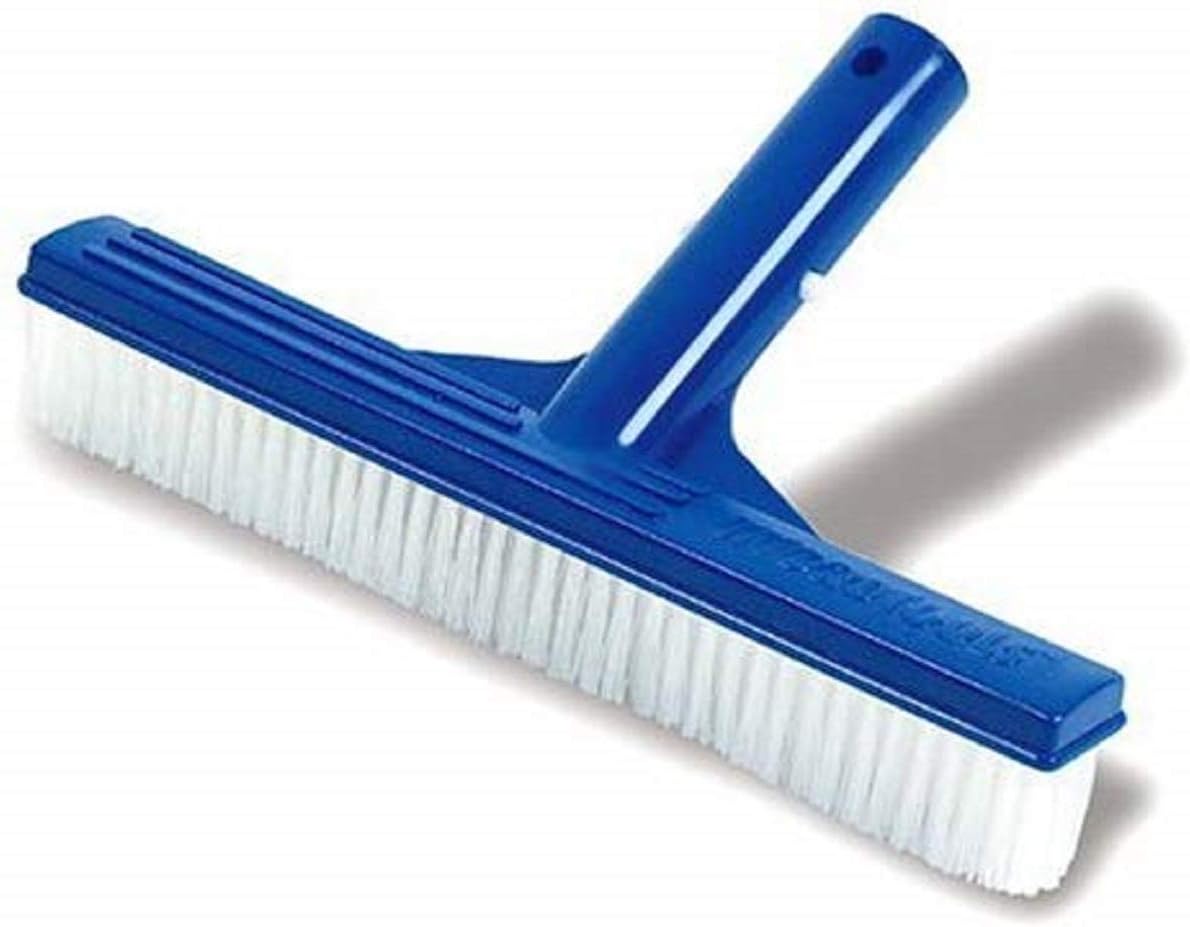
This 10-inch pool brush uses soft nylon bristles that are safe for vinyl liners, tile, and plaster. Its lightweight one-piece molded body is sized for precise cleaning around smaller areas and tight spaces. Dual EZ Clip buttons attach the brush to compatible pool poles, and the design works with both above-ground and inground pools. Hydrotools includes a 1-year guarantee.
Check On AmazonIf you click this link and buy, we earn a commission at no additional cost to you.
Final Thoughts: Let the Liner’s Condition Make the Call, Not the Size of the Hole
The mistake I see most often is an owner judging the repair decision purely by how big the tear looks. A small hole in a brittle, 9-year-old liner is a worse bet than a bigger tear in a liner that is still flexible and under 7 years old. Check the vinyl’s condition first, factor in the liner’s age and your climate, and only then decide whether the patch kit sitting in your garage is the right tool for this particular repair. If the liner passes that check, patch it with confidence and move on with your season. If it does not, it is better to plan the replacement now than to keep chasing new tears around last month’s patch.
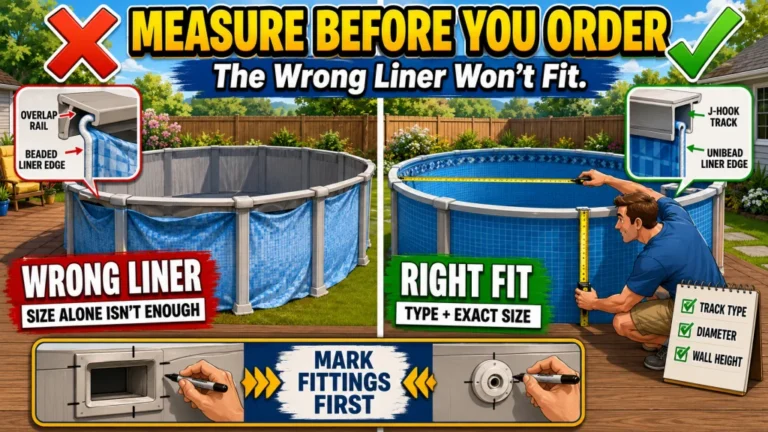
If you are getting ready to replace the liner rather than patch it, getting the measurements right the first time matters more than almost anything else in the process, and measuring your pool correctly for a new liner is worth reading before you order one.

This fiberglass tape provides 100 feet or 30 meters of measuring range with SAE and metric markings. Its open four-arm frame protects the blade while keeping dirt from collecting inside the case, and the lightweight case is designed for easy handling and rewinding. A folding end hook supports true-zero measurements, while the high-visibility case makes the tool easy to locate outdoors.
Check On AmazonIf you click this link and buy, we earn a commission at no additional cost to you.
FAQs
🩹 Can you patch a pool liner underwater?
Yes. A vinyl repair patch kit rated for underwater use bonds below the waterline without draining the pool. Clean the area, apply the adhesive to the patch, press it firmly for about 60 seconds, and let it cure for 24 to 48 hours depending on your kit’s instructions.
📏 How big of a tear can you patch on an above ground pool liner?
A single tear under about 4 inches is a good candidate for a patch, as long as the surrounding vinyl is still flexible. Larger tears, or multiple separate damage points, usually mean the liner is closer to replacement than repair.
🗓️ When should I replace an above ground pool liner instead of patching it?
Replace it once the vinyl feels brittle, shows heavy fading or thinning, or keeps slipping out of its track. Age raises the odds of this too: past 10 years in a northern climate, or past 7 years in a high-UV southern climate, it is worth inspecting the liner closely, since a patch becomes less likely to hold for long at that point.
💲 Is patching a pool liner worth it if I might need a new one soon anyway?
A vinyl repair kit usually costs far less than a new liner, so patching a liner that still has flexible, sound vinyl is worth doing even if replacement is a year or two away. It is not worth doing on a liner that is already brittle, since the patch will likely fail again quickly.
🌡️ Does climate affect how long an above ground pool liner patch will last?
Yes. Intense, consistent UV exposure in southern climates dries out vinyl faster, which shortens the window where a patch will reliably hold. A liner in a northern climate with a proper winter shutdown tends to stay flexible longer, giving patches a better chance of lasting.
🔍 Why did my patched pool liner tear again near the same spot?
This usually means the vinyl around the original damage was already thinning or losing flexibility. A patch bonds to the surface, but it cannot restore elasticity to vinyl that has aged past that point, so a new tear nearby is a sign the liner needs replacing rather than another patch.
Sources
- Royal Swimming Pools’ guide to repairing versus replacing pool liners, for how tear size and liner brittleness affect whether a patch will hold.
- Swimmingpool.com’s above ground pool liner replacement guide, for the stretching, sagging, and track-slipping signs that point to replacement.
- Beatbot’s above ground pool lifespan guide, for how climate and UV exposure shorten the safe repair window on an aging liner.