An above ground pool liner replacement is usually a two-hour job once the right liner shows up on the truck. The part that turns it into a headache is picking the wrong one of the four liner types for your pool’s wall, or writing down a measurement that is off by an inch on a pool where an inch actually matters. This guide walks through the liner types, the measurements that actually decide whether a replacement liner fits, and how to tell when a patch will get you through another season versus when it is time to just order the replacement.
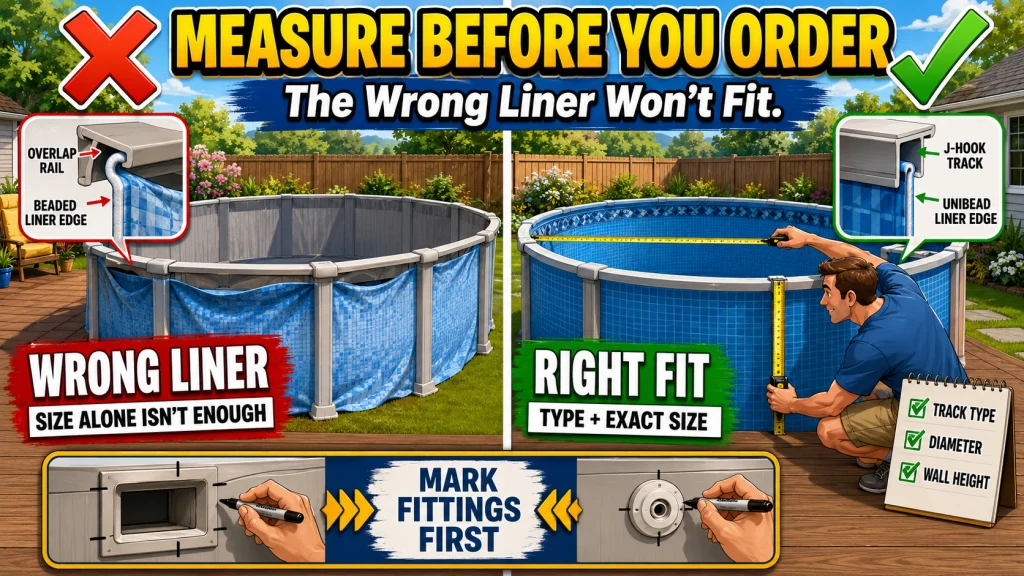
Why the Wrong Liner Shows Up More Often Than You’d Think
I have had more above ground pool liner orders come back wrong than I can count, and it is almost never because the manufacturer shipped the wrong box. It is because the buyer measured for a beaded liner when the pool had an overlap top rail, or rounded the wall height up half a foot because eyeballing felt close enough. Every above ground pool liner has to match two things at once: the wall system it hangs from, and the exact dimensions of the pool. Get either one wrong and the liner either will not seat correctly, will not sit flat against the wall, or ends up short or long once it is in the water. The skimmer and return openings get sorted separately, after the new liner is already seated, so they are not something you need to nail down before you order.
None of this requires guesswork once you know which questions to ask before you order. The wall system tells you the liner type. The pool’s dimensions and wall height tell you the size. Whether you are comparing liner types, preparing for a replacement, or trying to confirm the correct size, the same three decisions come first. Lock those down before you order, and a replacement liner becomes one of the more predictable projects in above ground pool ownership.
The Four Above Ground Pool Liner Types
An overlap liner drapes over the top edge of the pool wall and gets held in place with plastic coping strips, which snap on afterward to hide the folded edge. It is common on traditional steel-wall above ground pools, especially entry-level models, and it is generally less expensive because it does not need to match a specific bead profile. The tradeoff is cosmetic: the folded edge sits above the waterline and is visible from outside the pool, which some owners do not love after living with a cleaner-looking beaded liner.
A beaded liner has a bead formed into its top edge that snaps into a separate bead receiver running along the inside of the wall, most commonly on steel-wall pools built for permanence rather than seasonal takedown. There is no coping strip and no visible fold, just a clean line at the top of the wall. A J-hook liner works differently: the hook is built into the liner itself and hangs directly over the exposed top edge of the pool wall, with no receiver track involved, and it is not interchangeable with a beaded liner even though the two can look similar in a product photo. UniBead is a convertible design that can be installed either way: hung as a J-hook over the wall’s top edge, or with the hook trimmed off so the remaining bead snaps into a bead receiver. It is the option I reach for when I am not sure which system an older pool actually has, or when an owner wants the option to switch between the two down the road.
Field Note: The bulging liner call I get the most is the pool where someone ordered a beaded liner for a wall that only had an overlap rail, then tried to force the fit with binder clips along the top. It looks fine for a few weeks. It never makes it through a full season.
| Wall Style | Liner Type That Fits | What You Must Confirm Before Ordering |
|---|---|---|
| Exposed top edge, coping strips added after | Overlap liner | Pool shape, diameter or length and width, and wall height |
| Bead receiver channel running along the wall | Beaded liner | Bead profile the receiver takes, plus wall height and dimensions |
| Exposed top edge, liner’s own hook hangs over it | J-hook liner | Exact wall height and dimensions, since there is no receiver to hold slack |
| Either exposed top edge or a bead receiver | UniBead liner | Which installation mode you need and whether a bead receiver is present |
Attachment type decides whether a liner fits the wall, but it is not what decides how long that liner lasts. Above ground vinyl liners commonly last about 5 to 12 years under normal conditions, and that range depends far more on sun exposure, chemical balance, installation quality, and water level than on whether the liner is overlap, beaded, J-hook, or UniBead. A pool in full sun with no shade cover will usually land at the shorter end of that range, and a liner that spent a summer running low on water will show wear at the waterline years before the vinyl itself would otherwise give out.
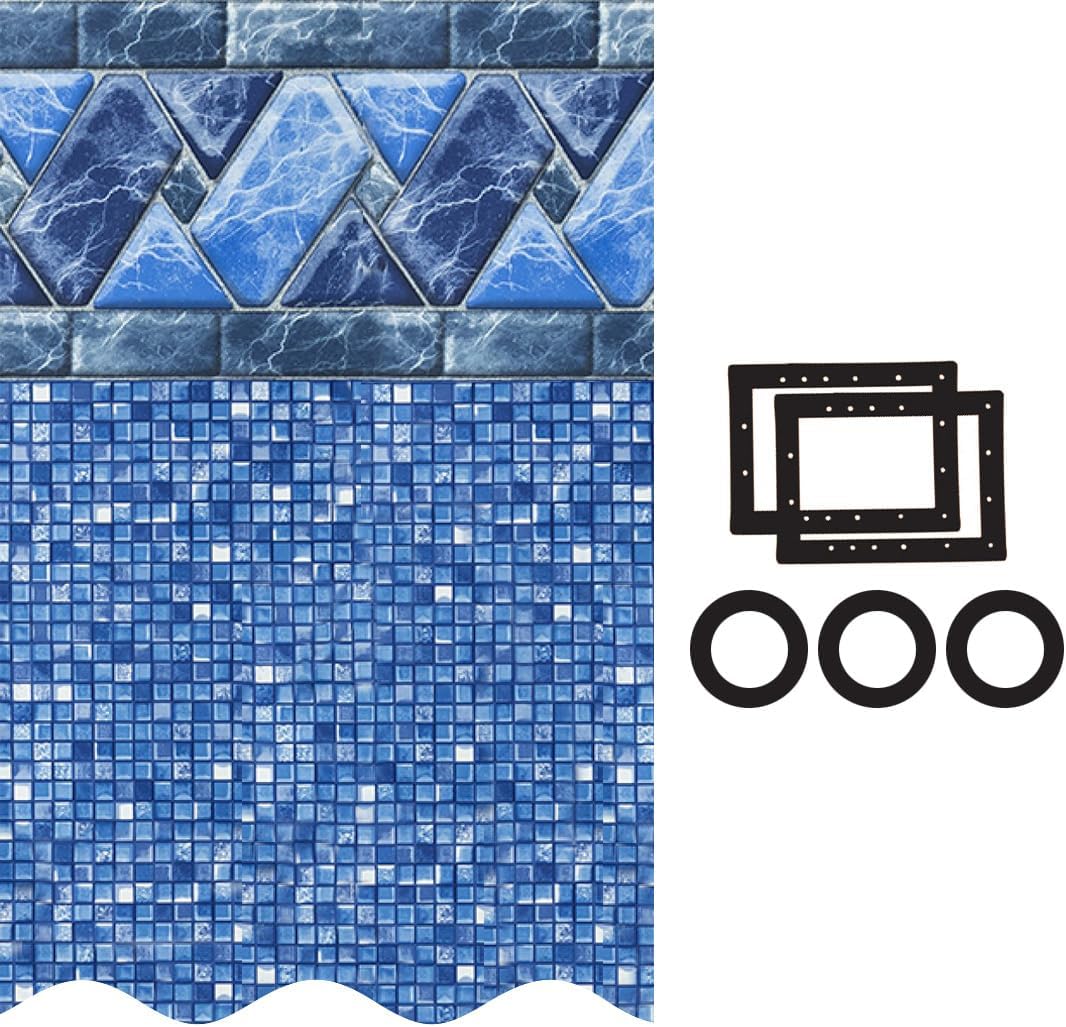
This 24-foot round UniBead liner is made for steel-sided above ground pools with 52-inch walls and flat bottoms. Its 25-gauge vinyl can be installed as a J-hook or converted to a standard bead for a bead receiver. A universal gasket set for the skimmer and return is included.
Check On AmazonIf you click this link and buy, we earn a commission at no additional cost to you.
How to Measure Your Pool for a Replacement Liner
Sizing a replacement liner is less about using a tape measure and more about knowing exactly what to measure. An oval pool needs the interior length and width, and for most standard replacement liners that is enough, since most replacement liners are manufactured to a common corner profile for that pool’s size and brand. Corner radius only becomes something you need to track down yourself on an older pool, a custom shape, or when a manufacturer specifically asks for it, so check the order form before assuming you need it.
Wall height is the measurement people get wrong most often, and it is not taken from the ground. Measure the pool wall itself, from the bottom track up to the top track, and leave out the top rail or cap, since those are not part of the wall height a liner is cut for. On a round pool, measure the interior diameter across the center in two or three directions and use the widest consistent reading, since a pool that has shifted over the years is not always perfectly round anymore, and that difference is worth catching before you order rather than after.
- Pool shape and exact diameter, or interior length and width for an oval
- Round-pool diameter checked across the center in two or three directions
- Wall height, measured on the pool wall itself from the bottom track to the top track, not from the ground and not including the top rail or cap
- Current liner type, confirmed by looking at the actual wall and receiver, not the pool’s original sales listing
Standard replacement liners are generally not ordered with the skimmer and return openings already cut. The liner goes in first, gets seated and partially filled with water so it settles into place, and only then does the faceplate get remounted and the vinyl behind it trimmed to match the existing wall opening. Trying to pre-cut those openings from an old liner’s position before the new one is even installed is a good way to end up with a cut in the wrong spot, so leave that step for after installation and follow the liner manufacturer’s instructions on timing.

This overlap liner is made for 24-foot round above ground pools and fits most 48-inch and 52-inch wall heights. It uses 20-gauge virgin vinyl and is designed to resist pool chemicals and fading. Coping strips are required to secure the liner over the pool wall.
Check On AmazonIf you click this link and buy, we earn a commission at no additional cost to you.
When to Replace the Liner and When a Patch Is Enough
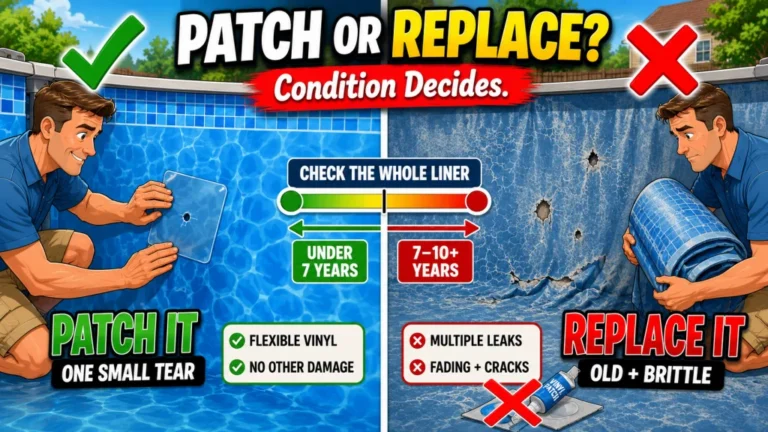
A single small puncture in an otherwise healthy liner almost always calls for a patch, not a replacement. An underwater vinyl patch kit handles a tear from a toy, a stray branch, or a sharp edge on pool furniture, and it can provide a long-lasting repair when the surrounding vinyl is still flexible and the patch is applied correctly. Replacement becomes the right call when the vinyl has gone brittle or is cracking instead of just fading, when a seam is pulling apart, when the bead keeps popping out of the track no matter how many times you reseat it, or when new leaks keep showing up in different spots instead of the same worn area.
Age matters too, but only as a guide, not a rule. A liner near the top of its expected range that develops a second and third leak in the same season is telling you it is done, even if the fabric still looks intact from the deck. One pool I service every spring has kept its original liner for close to eleven years, near the upper end of the usual range for a vinyl liner, because the owner never let the water sit low and always covered it before the first hard freeze. That is the exception that shows why the range is a guide and not a guarantee in either direction.
Patching a new leak every few weeks on a liner that is already past its expected lifespan and showing chalky fading at the waterline, treating each patch as if it resets the clock.
Patching a single isolated tear right away, then budgeting for a full replacement once the liner is near or past its typical range and leaks start appearing in more than one place.
Key point: Expect above ground vinyl liners to last about 5 to 12 years under normal conditions. The replacement liner itself commonly costs about $200 to $800, depending on pool size, attachment type, pattern, and material, not counting any labor if you have someone else install it. Treat any lifespan outside that range as a sign the pool had rougher conditions than average, not as a warranty promise.
Check the pool structure before buying a new liner: A new liner only solves the liner. Before you order, check the wall itself for rust, sharp edges, or bowing, since none of those get fixed by fresh vinyl. Look at the bead receiver or top track for cracks or bends if your pool uses one. Check the cove and base for sinking or exposed debris, since a liner laid over a damaged base tends to fail again quickly. If the wall or base is genuinely compromised, that is a repair or replacement question for the frame itself, not just the liner.
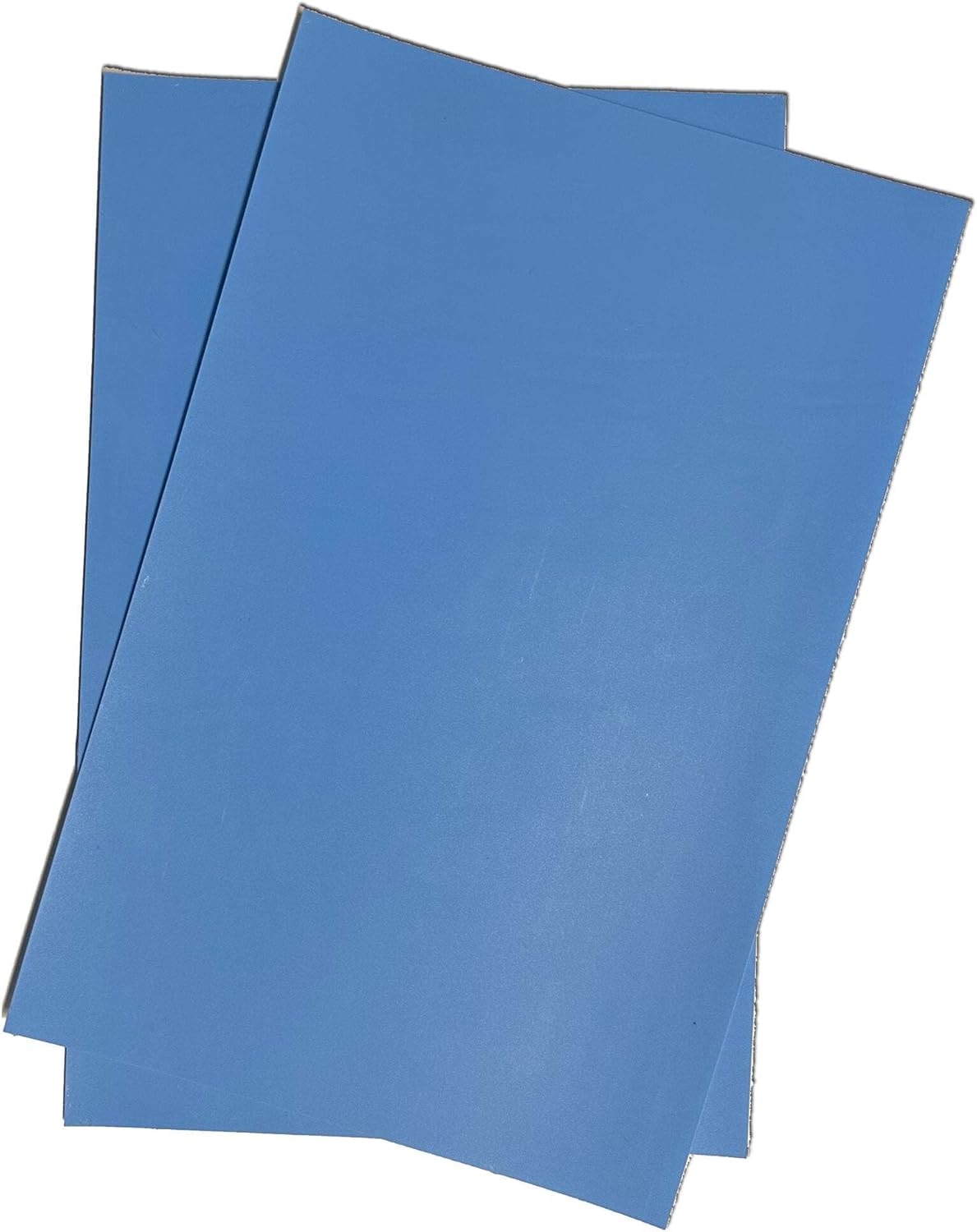
This repair kit includes two peel-and-stick patches measuring 5.5 by 8.5 inches each. The patches are designed for vinyl pool liners and can be applied above or below the waterline without draining the pool. No additional glue or tools are required for application.
Check On AmazonIf you click this link and buy, we earn a commission at no additional cost to you.
Final Thoughts: Order the Liner Once
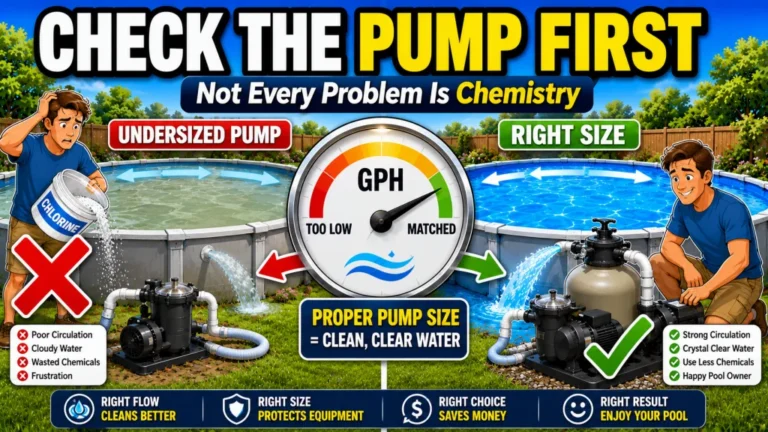
Most liner ordering failures I see trace back to one of two things: the wrong liner type for the wall, or a measurement that was closer to a guess than a number. Confirm which system your wall actually uses before you shop, measure the wall itself rather than from the ground, and use the guidance above to decide whether you are patching a healthy liner or buying time on one that is already done. A liner is only one piece of what keeps an above ground pool running the way it should, and it works alongside the rest of the setup rather than on its own. If you have not looked at the rest of what an above ground pool needs to run well, the full equipment buying guide covers how the liner, pump, filter, and cover all fit together. Poor circulation can make stable water chemistry harder to maintain, which may contribute to premature liner wear over time, so it is worth checking your setup against how to size a pump and filter for your pool. And if the liner trouble is showing up on a pool that was never leveled or coved correctly in the first place, that usually gets fixed at the root by revisiting the ground prep and assembly steps rather than by ordering liner after liner.

This 19-pack provides 77 feet of HDPE pool cove coverage for pools up to 24 feet round or 16 by 32 feet oval. The cove creates a consistent wall-to-floor profile to help protect the liner from stretching, ballooning, and punctures. Peel-and-stick backing allows tool-free installation on a clean, dry surface.
Check On AmazonIf you click this link and buy, we earn a commission at no additional cost to you.
Explore More Above Ground Pool Guides
Each of these goes deeper into one piece of the liner decision covered above.
| Guide | What it helps with |
|---|---|
| Above Ground Pool Liner Types | A closer look at overlap, beaded, J-hook, and UniBead liners, including how to tell which one your pool actually has. |
| How to Measure an Above Ground Pool for a Liner | Step-by-step measuring for round and oval pools, including wall height and the common mistakes that cause a poor fit. |
| Liner Replacement vs Repair | A closer breakdown of which leak patterns and wear signs point to a patch versus a full replacement. |
Start with whichever one matches where you are right now, whether that is confirming a liner type, taking measurements, or deciding if a patch will hold.
FAQs
🏊 How do I know which liner type my above ground pool needs?
Inspect the top edge of the pool wall. Vinyl folded over the wall and held by coping strips indicates an overlap liner. A liner bead inserted into a separate receiver indicates a beaded liner. A hook formed into the liner itself and hanging directly over the wall indicates a J-hook or UniBead installation.
📏 What measurements do I need before ordering a replacement liner?
Interior diameter for a round pool, or interior length and width for an oval, plus wall height measured on the wall itself, from the bottom track to the top of the metal wall. Corner radius is only needed if the order form or manufacturer specifically asks for it.
💰 How much does an above ground pool replacement liner typically cost?
The replacement liner itself commonly runs $200 to $800, depending on pool size, attachment type, pattern, and material, not counting installation if you hire it out. Larger pools and steel-wall liners tend to sit at the higher end of that range.
🔧 Can I patch a liner instead of replacing the whole thing?
Yes, if it is a single isolated tear in a liner that is otherwise flexible and not faded. An underwater vinyl patch kit works well for that. Widespread chalking or repeated new leaks are signs a patch will not hold for long.
⏳ How long does an above ground pool liner actually last?
Typically about 5 to 12 years, assuming the water level was kept up and the pool was closed properly each winter. Full sun exposure, low water, and skipped chemical maintenance tend to shorten that range.
🧊 Does letting the water level drop hurt the liner?
Yes. A liner exposed above the waterline dries out and fades faster than one that stays submerged, and that section usually becomes the first place a leak develops. Keeping the water level near the skimmer opening is one of the simplest ways to protect the liner long term.
Sources
- Intex manufacturer specifications for above ground pool liner and frame compatibility.
- Bestway manufacturer specifications for steel-wall pool liner sizing and track type.
- TroubleFreePool community discussions on liner wear patterns, patching, and replacement timing.