An above ground pool winter cover is built to survive a full season of weather, not just keep leaves out for a weekend, and in a cold climate it only does its job properly when it is paired with an air pillow underneath it. This guide covers what a winter cover actually protects against, the tradeoff between solid and mesh covers, how the cable and winch system holds the cover in place without deck anchors, and why the air pillow matters more than most owners realize once the water starts to freeze. If you are closing your pool for the season, this is the system that gets you to a clean opening in spring instead of a green one.
An Above Ground Pool Winter Cover Is Not a Tarp
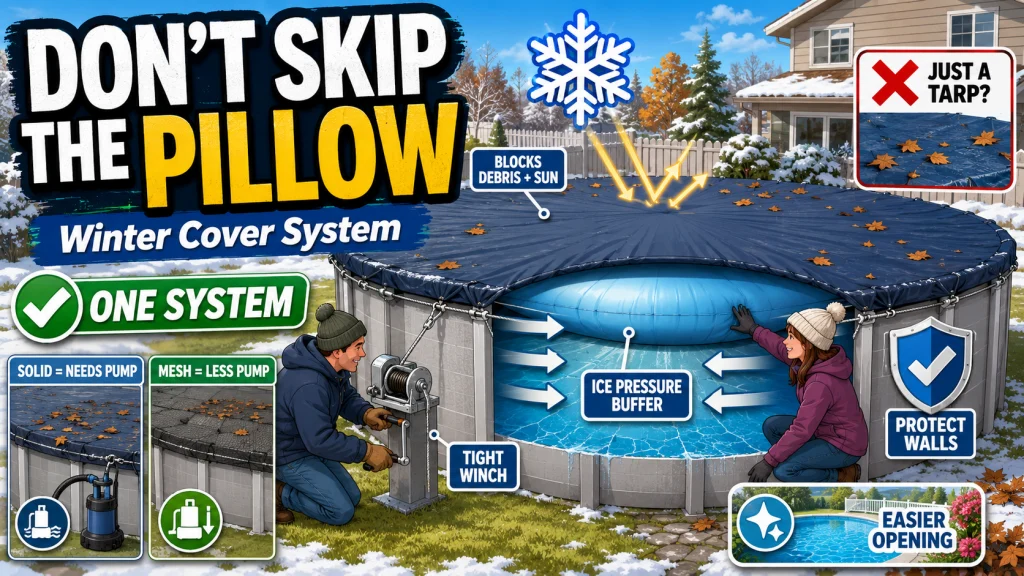
I get calls every fall from owners who think any heavy tarp will get them through winter. An above ground pool winter cover is a different piece of equipment entirely. It is engineered to block debris and sunlight while holding up against snow load, wind, and freeze-thaw cycles for months at a time, not just keep the surface tidy for a few weeks. For cold climates, the cover works alongside an air pillow placed inside the pool beneath it, and skipping that pillow is one of the most common closing mistakes I see.
Get the cover and the pillow right, and spring opening is a matter of pumping off some rainwater and doing a chemical startup. Get it wrong, and you are looking at a torn cover, a stressed pool wall, or a green pool waiting for you under a cover that never should have been doing the job alone.

This solid polyethylene winter cover fits a 15-foot round above ground pool and measures 19 feet across for a 4-foot overlap. A 10 x 10 scrim, heat-sealed seams, black underside, and metal grommets spaced every 2 feet provide off-season protection from sun, snow, ice, wind, and debris. It includes a vinyl-coated cable and metal winch and carries a 12-year limited warranty.
Check On AmazonIf you click this link and buy, we earn a commission at no additional cost to you.
What an Above Ground Pool Winter Cover Actually Does
Winter covers for above ground pools are made from heavy polyethylene or woven polypropylene, both built to hold up against sun, snow, and wind over a full off-season rather than a few weeks of light use. The main job is controlling debris and sunlight while managing winter precipitation. A solid cover blocks water completely, while a mesh cover lets water drain through instead of pooling on top. Blocking sunlight matters more than most owners expect, because light can still contribute to algae problems during the off-season, especially if the pool was not closed with balanced water, and a pool that sat under full sun all winter is usually the one that opens green in spring.
A properly installed winter cover means a faster, cleaner spring opening. Instead of scooping out a season’s worth of leaves and shocking a pool that turned into a small pond over the winter, you are removing a cover that did its job and starting the season with water that is close to ready. That difference alone is worth taking the installation seriously instead of treating it as an afterthought before the first freeze.
Solid vs Mesh Winter Covers
Solid covers block all water and debris completely, which sounds like the obvious win until you factor in what happens with rain and snowmelt. Standing water on top of a solid cover adds real weight, and that weight strains both the cover material and the pool wall it is attached to. A solid cover needs a cover pump to remove accumulated water regularly through the winter, which means it is not a set-it-and-forget-it option.
Mesh covers solve the standing water problem by letting water pass through instead of pooling on top, which eliminates the need for a cover pump entirely. The tradeoff is that fine debris and some sunlight pass through along with the water, which means more algae-promoting light reaches the pool than with a solid cover. Neither option is universally better. It comes down to whether you are willing to check a cover pump periodically through the winter or would rather do a bit more cleanup at opening.
| Cover Type | Water Handling | Maintenance Through Winter | Sunlight Blocked |
|---|---|---|---|
| Solid | Blocks all water; sits on top | Requires a cover pump to remove standing water | Complete |
| Mesh | Water passes through | No pump needed | Partial |
Note: If you go with a solid cover, checking it after every significant rain or snowmelt is not optional. A cover pump left unchecked for weeks is how I end up getting called about a caved-in cover or a pool wall under more stress than it was built for.

This 75-watt submersible pool cover pump moves up to 850 gallons per hour and uses a sturdy ABS shell with IPX8 waterproofing. It includes a 16-foot anti-twist drainage hose, three nozzle adapters, and a 25-foot power cord. Built-in temperature control helps prevent dry burning when water runs low, while screened sides increase water intake.
Check On AmazonIf you click this link and buy, we earn a commission at no additional cost to you.
How the Cable and Winch System Holds the Cover in Place
Above ground pool winter covers attach with a cable threaded through grommets around the cover’s perimeter, cinched down by a winch that tightens the cable against the pool wall. This is a different system from the deck anchors used on inground safety covers, and it works because an above ground pool’s wall gives the cable something to pull against all the way around. A cover that is not pulled tight enough will sag, collect water in the low points, and age faster than one that is properly tensioned from the start.
I always tell owners to walk the full perimeter after tightening the winch, not just check it from one side. An uneven tension around the wall is the most common reason a cover shifts or develops a low spot within the first month of a cold-climate closing.

This kit pairs a 100-foot plastic-coated steel cable with a 2.9-inch aluminum ratchet winch for above ground winter covers. The 2-millimeter cable fits round, oval, or rectangular pools with circumferences under 100 feet and threads through cover grommets for seasonal tightening. The butterfly-style winch is rated for about 95 kilograms of pulling force and is intended for temporary outdoor use.
Check On AmazonIf you click this link and buy, we earn a commission at no additional cost to you.
The Air Pillow: Why Cold Climate Pools Need One
An inflatable air pillow placed at the center of the pool, underneath the winter cover, has one specific job in cold climates: managing the pressure that comes from ice formation. When the water in the pool freezes, that ice expands, and the expansion pushes outward against the pool wall from the inside. Without something to absorb that pressure, the expanding ice pushes directly on the wall itself.
The air pillow acts as a compressible buffer. Instead of the wall taking the full force of ice expansion, the pillow compresses first, relieving the pressure and keeping the ice from collecting solidly against one section of the wall. I have seen pools closed without a pillow come out of winter with a visibly bowed wall section, and it is almost always traceable back to skipping this one piece of equipment.
Field Note: The owners who skip the air pillow almost always do it because it looks like an optional extra floating in the box next to the actual cover. It is not optional in a cold climate. It is the piece doing the structural work while the cover handles debris and sunlight.
Sizing the Air Pillow Correctly
The general rule I use is that the air pillow should cover roughly 25% of the pool’s surface area. For a 15-foot round pool, that works out to a 4-by-4-foot air pillow. Undersize the pillow and it cannot provide adequate pressure relief across the pool, which defeats the purpose of using one at all.
Larger pools need proportionally larger pillows, and if you are unsure which size fits your specific pool, matching the pillow to roughly a quarter of your pool’s surface area is the number to work from rather than guessing based on the pool’s diameter alone. A pillow that is too small will still inflate and float, but it will not be doing the job it is there for once the ice starts pushing back.

This 4-by-4-foot pool pillow is made from 0.4-millimeter-thick cold-resistant PVC and is rated for temperatures down to -10°F. Four reinforced grommets and an included 50-foot PVC rope help keep it centered beneath the cover. A spiral 3-in-1 valve supports fast inflation and air retention, and the pillow folds down for seasonal storage.
Check On AmazonIf you click this link and buy, we earn a commission at no additional cost to you.
How to Judge a Winter Cover Before You Buy
Solid versus mesh is the first decision, but it is not the only thing that determines whether a cover survives the season. I look at a handful of details before I trust any cover to hold up through a full winter, and most of them have nothing to do with the price on the label.
Match the cover to your actual pool diameter, but look for enough overlap to reach comfortably around the wall and down past the top rail. A cover cut too close to the exact pool size ends up straining at the grommets the moment the winch is tightened. Reinforced edges and grommets matter more than most buyers expect, since the cable and winch system puts continuous tension around the entire perimeter all winter, and a thin, unreinforced edge is usually the first place a cover tears. UV-resistant material is worth checking too, since the cover sits outside in direct sun for months even during the off-season, and a cover that is not rated for that exposure degrades faster than the season requires. If you are going with a solid cover, factor the cover pump into your buying decision rather than treating it as a separate afterthought purchase. And in a windy yard, tension matters as much as material: a cover that fits loosely will flap and sag regardless of how heavy the material is. Do not judge a cover on “heavy duty” wording alone. Look at the material weight, edge reinforcement, grommet spacing, overlap, and what hardware is actually included before you decide.

This mesh winter cover is sized for a 15-foot round above ground pool and measures 18 feet across, providing a 3-foot overlap. Its 10 x 10 polyethylene scrim weighs 3.1 ounces per square yard and lets water pass through, reducing winter maintenance. The cover includes a winch and cable, is designed for snow and ice protection, and carries a 10-year warranty.
Check On AmazonIf you click this link and buy, we earn a commission at no additional cost to you.
Closing Checklist for the Cover and Pillow System
Before you consider the pool closed for the season, run through these steps:
- Confirm the cover material and size match your pool diameter, with enough overlap to reach the grommets around the full perimeter
- Decide between a solid cover with a cover pump or a mesh cover with no pump requirement, based on how often you can check the pool through winter
- Thread the cable through all perimeter grommets and tighten the winch evenly around the full circumference, not just from one side
- Inflate the air pillow to roughly 25% of the pool’s surface area and center it before securing the cover over it
- Check the cover and, if solid, the cover pump after every significant rain or snowmelt through the winter
Final Thoughts: Don’t Buy the Cover Alone If Your Water Freezes
If you live where the pool water actually freezes, skipping the air pillow to save a few dollars is the kind of shortcut that shows up as a bowed wall next spring. Budget for both pieces together, check the fit and reinforcement details before you buy, and check the cover through the winter rather than assuming it is fine once it is tightened down.
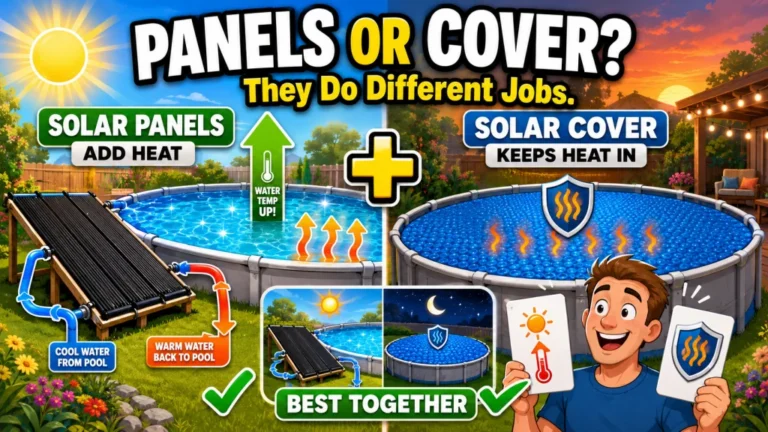
If you have not settled on which cover style fits your pool yet, the full rundown of above ground pool cover types for every season walks through how a winter cover compares to the covers you would use the rest of the year. And if closing gear is just one piece of a bigger equipment list you are still working through, the complete equipment checklist for above ground pool owners is worth reviewing before winter closing day arrives. A solar cover, by comparison, is built to warm the water during swim season, not to survive a winter freeze, so if you are trying to decide between the two, how a solar cover works during the swimming season explains why it is not a substitute for winter closing equipment.
FAQs
❄️ Do I really need an air pillow under my winter cover?
In a cold climate where the water freezes, yes. The pillow absorbs the pressure created by ice expansion so the pool wall does not take that force directly.
🌂 Should I get a solid or mesh winter cover?
Solid covers block more sunlight and debris but need a cover pump to remove standing water. Mesh covers need no pump but let some sunlight and fine debris through. Choose based on how often you can check the pool through winter.
🔧 How do winter covers attach to an above ground pool?
Through a cable threaded around the cover’s perimeter grommets, tightened with a winch against the pool wall. This holds the cover without needing deck anchors.
📏 What size air pillow do I need for my pool?
Roughly 25% of your pool’s surface area. For a 15-foot round pool, that is approximately a 4-by-4-foot pillow. Larger pools need a proportionally larger pillow.
🍂 Will a winter cover stop my pool from turning green?
A properly installed cover blocks most of the sunlight that feeds algae, which makes spring opening far easier, but it works best paired with correct chemical levels before closing.
Sources and References
- lesliespool.com: cable and winch attachment system and solid cover pump requirement for above ground pool winter covers, confirmed August 2022.
- swimmingpool.com: air pillow function in relieving ice expansion pressure against the pool wall.