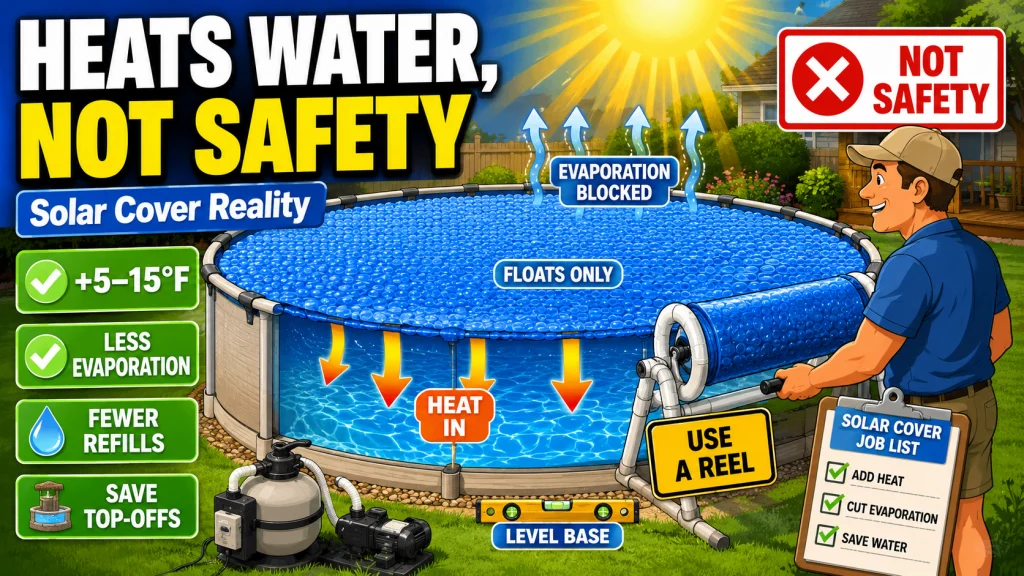
A solar cover can raise above ground pool water temperature by 5 to 15 degrees Fahrenheit in direct sun and cut evaporation loss by thousands of gallons a year, which matters a lot if you’re filling from a well. What it cannot do is keep anyone safe. A floating solar cover is not rated to hold weight, and treating it like a safety barrier is one of the more dangerous assumptions a pool owner can make. This guide walks through what a solar cover for your above ground pool actually does, what it doesn’t, and how to run one without turning it into a daily chore.
What a Solar Cover Actually Does for Your Pool
An above ground pool solar cover earns its keep in two ways, and most buyers only know about one of them. The heat gain is the part everyone asks about: expect roughly a 5 to 15 degree Fahrenheit increase in water temperature with consistent sun exposure, depending on your climate and how many hours a day the pool sits uncovered versus covered. The part people miss is evaporation. A pool loses a surprising amount of water to evaporation on its own, and a solar cover cuts that loss dramatically, which is real money and real water if you’re on a well or paying for municipal fill-ups.
Here’s what a solar cover will not do, and I want to say it early rather than bury it at the bottom of the article: it will not keep a child or a pet safe if they wander into the pool area unsupervised. That’s not a footnote. It’s one of the three things every above ground pool owner needs to understand before they buy one, and I’ll get into exactly why later in this guide.
How a Solar Cover Heats the Water
A solar cover is a sheet of UV-transmitting polyethylene bubbles, basically an oversized version of packing bubble wrap engineered to sit on water and let sunlight through. The bubbles trap heat right at the surface of the pool during the day, and that heat transfers down into the water instead of radiating off into the air the way it does on an uncovered pool. It’s a passive system. There’s no pump, no wiring, nothing to plug in. The cover just sits on the water and does its job as long as the sun is doing its part.
The nighttime piece matters just as much as the daytime piece, and it’s the part a lot of owners don’t think about. Once the sun goes down, an uncovered pool loses heat fast, mostly through evaporation off the surface. A solar cover on at night traps that warmth instead of letting it evaporate away, so the pool holds onto more of the heat it gained during the day. Independent testing across multiple above ground pool setups has documented meaningful temperature gains in sunny climates when the cover is used consistently, which lines up with what I’ve seen on pools I’ve set up for owners chasing a longer swim season.
None of this works if the cover sits in the shed instead of on the water. The gain only shows up when the cover stays on the pool for most of the hours nobody is swimming, which is the tradeoff every solar cover owner has to accept.
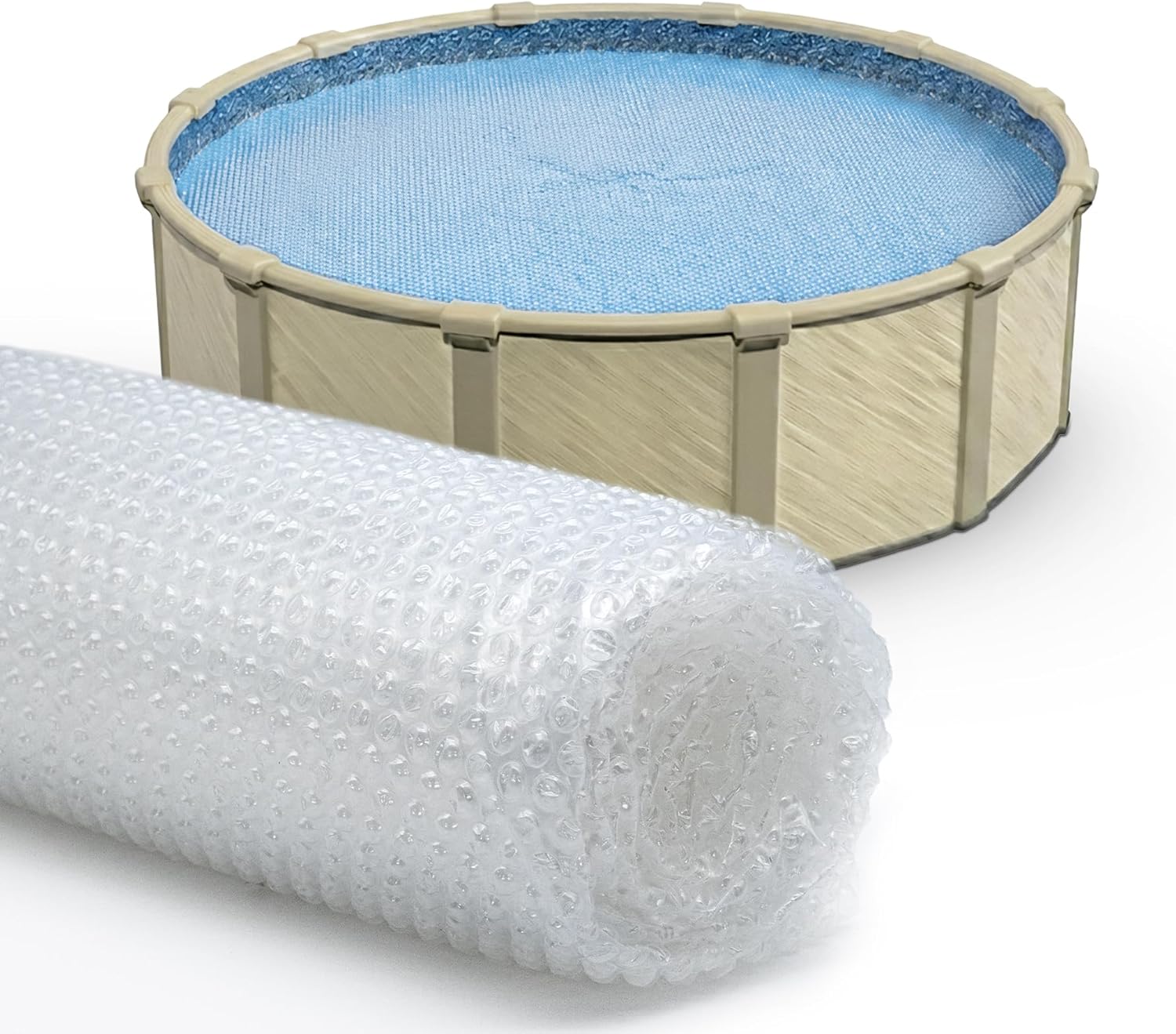
This 18-foot round 12-mil solar cover uses the sun's energy to warm pool water by up to 15 degrees Fahrenheit. It is designed to retain heat after sunset and reduce evaporation by up to 95 percent. The cover also blocks leaves and debris and can be trimmed around protrusions for above-ground or inground pools.
Check On AmazonIf you click this link and buy, we earn a commission at no additional cost to you.
Realistic Temperature Expectations, Not Marketing Numbers
Set your expectations at 5 to 15 degrees Fahrenheit, and understand that the number you land on depends heavily on your specific setup. A pool that sits in full sun for eight or more hours a day in a warm climate will land toward the high end of that range. A pool shaded for half the day, or located somewhere with shorter, cooler summers, will land toward the low end, and that’s normal, not a sign the cover isn’t working.
The measurement that actually matters is the morning-to-evening gain, not some theoretical peak number pulled from a lab. If your pool starts the day at 74 degrees and you’re at 82 by late afternoon after a sunny day with the cover on, that’s the real-world number to judge the cover by. Overnight retention is the other half of the equation. A pool that holds its afternoon temperature into the evening swim, instead of dropping ten degrees by dinner, is where a solar cover earns its cost over a full season rather than just one warm afternoon.
I’d rather tell a buyer the honest range up front than let them expect a hot tub. A solar cover extends your comfortable swim season and takes the edge off cool mornings. It does not turn an above ground pool into heated water on demand, and anyone selling it that way is setting you up to be disappointed by August.

This wireless floating thermometer is designed for pool, hot tub, and spa water and uses an IPX8 waterproof ABS sensor housing. It measures from 32 to 140 degrees Fahrenheit with stated accuracy within 0.9 degrees Fahrenheit. Wireless readings can be checked from up to 500 feet away.
Check On AmazonIf you click this link and buy, we earn a commission at no additional cost to you.
The Evaporation Benefit Most Buyers Never Consider
Evaporation is where a solar cover pays for itself even in a season where the temperature bump doesn’t feel dramatic. An uncovered pool can lose a substantial amount of water to evaporation over a full season, and every gallon lost has to be replaced, along with the chlorine, stabilizer, and other chemicals dissolved in it. A solar cover cuts that evaporation loss significantly, with documented savings landing somewhere in the range of 1,000 to 5,000 gallons a year depending on pool size, climate, and how consistently the cover gets used.
This matters more than most people realize if you’re filling from a well instead of a municipal line. Well water carries its own mineral load, and every refill is a chance to knock your chemical balance sideways again after you just got it dialed in. Cutting evaporation with a solar cover means fewer top-offs, which means fewer chemistry corrections, which means less time standing over a test kit trying to figure out why your pH, alkalinity, or calcium hardness shifted again.
- Less water lost to evaporation means fewer refills from the hose or well
- Fewer refills means fewer chemical corrections after each top-off
- Retained heat at night reduces the temperature swing that drives faster evaporation
- Consistent cover use compounds the savings over a full season, not just a few days
Add the water savings to the heat gain and the case for a solar cover gets a lot stronger for owners who are tired of topping off the pool every week during peak summer. But those savings only matter if you remember what the cover is actually for: comfort and water retention, not protection.
What a Solar Cover Does Not Do: It Is Not a Safety Cover
This is the part I need every reader to actually absorb, not skim past. A floating solar cover is not rated to support weight, and it should never be treated as a barrier that keeps anyone out of the water. The claim that a solar cover prevents drowning is flagged as dangerously false in pool safety guidance, and for good reason: a bubble cover floating on the surface can look solid enough to stand on from a few feet away, especially to a small child, and that appearance is exactly what makes it risky.
If a child or pet falls onto a solar cover, the cover doesn’t hold them up. It can actually make the situation worse by trapping them beneath the surface, out of sight, in a spot where a parent glancing out the window might assume the pool is simply covered and empty of activity. That combination, a surface that looks safe and isn’t, is worse in some ways than an open pool where the danger is at least visible.
Important: A solar cover is a heating and evaporation tool, not a safety device. If you need a barrier that actually keeps unsupervised access out of the pool, that’s a completely different product built for that purpose, and I go through what actually qualifies in the above ground pool safety cover guide.
Keep the two categories separate in your head and in your buying decision. A solar cover and a safety cover solve different problems, and no above ground pool owner should assume one does the other’s job just because both sit on top of the water.
Why Most Owners End Up Buying a Reel Too
A full-size solar cover is heavier and more awkward than it looks in the store photo, especially once it’s wet. Folding and dragging a cover off a 15 or 18-foot pool by hand gets old fast, and it’s the number one reason I see solar covers get used for the first two weeks and then abandoned in a corner of the yard for the rest of the season. A reel solves that. It sits at the pool edge and lets you roll the cover on and off in a couple of minutes instead of wrestling it into a soggy pile.
A reel isn’t mandatory for every setup. A smaller pool with an owner who doesn’t mind the extra effort can get by without one. But for pools over roughly 400 square feet of surface area, or for owners with any physical limitation that makes lifting a wet, folded cover difficult, a reel stops being a convenience and starts being the difference between a cover that actually gets used and one that becomes an expensive tarp in the shed.
Think about your own habits honestly before you skip the reel. The evaporation and heat gains covered earlier only happen when the cover is actually on the water, and a cover that’s too much hassle to put back on after every swim won’t deliver either benefit consistently.
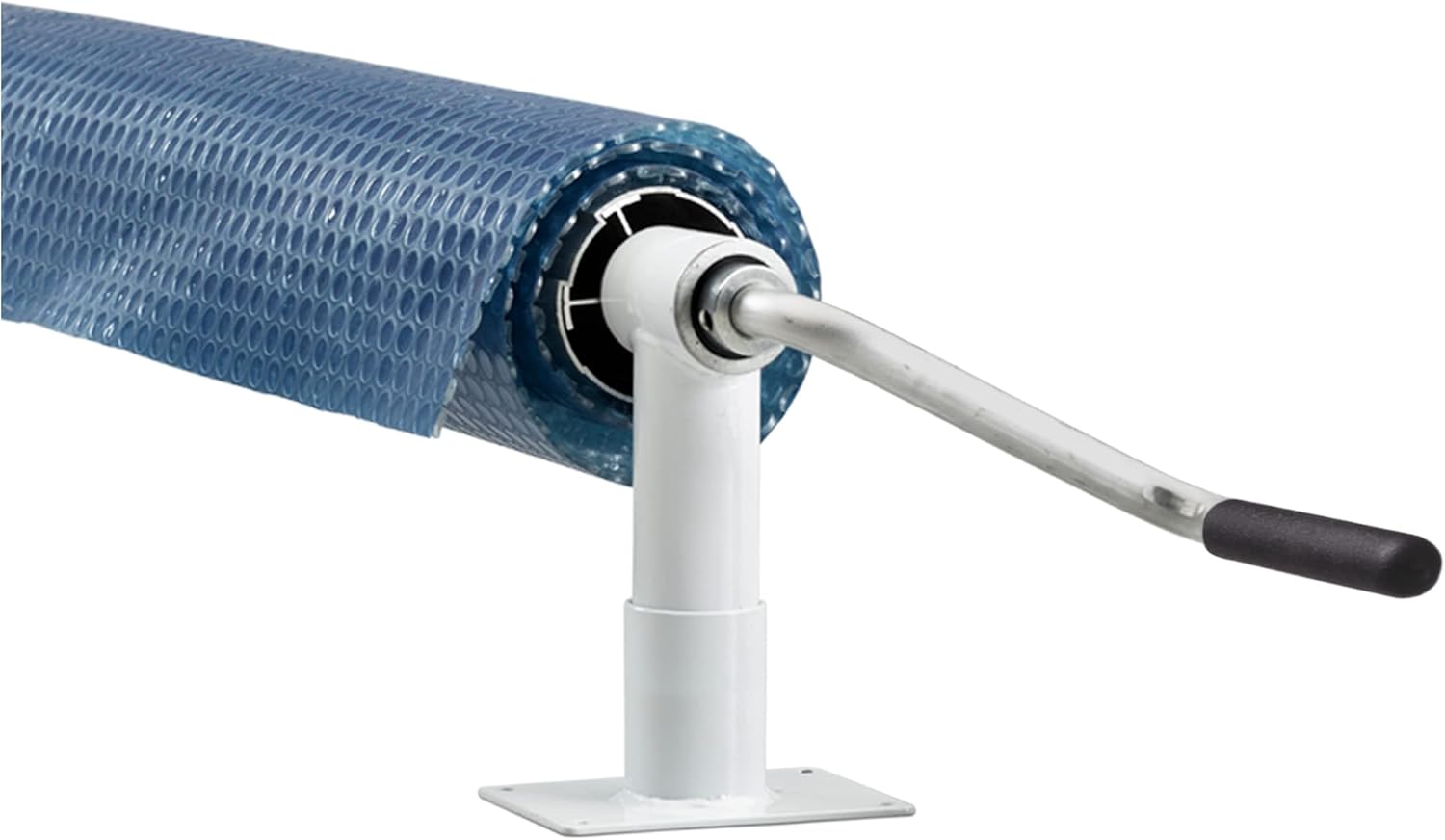
This aluminum solar cover reel is sized for above-ground pools up to 18 feet wide and works with round or oval pools. Handles at both ends allow one-person operation, while included straps, tabs, and mounting hardware secure the cover to the reel. The solar cover itself is not included, and the reel is backed by a 5-year warranty.
Check On AmazonIf you click this link and buy, we earn a commission at no additional cost to you.
How to Choose the Right Solar Cover for Your Pool
Once you’ve decided a solar cover fits your setup, the actual buying decision comes down to a handful of practical choices rather than picking whatever’s cheapest on the shelf. Getting these right is the difference between a cover that gets used all season and one that ends up folded in the shed by July.
- Match the pool shape first: round, oval, or rectangular, and size it as close to your actual water surface as possible since most covers can be trimmed down but not stretched to fit.
- Weigh thickness against handling: an 8 mil cover is light and easy to pull on and off by hand but wears out faster, a 12 mil cover is a reasonable middle ground for most owners, and a 16 mil cover lasts longer but gets heavy fast without a reel.
- Pick color based on what you actually want: clear covers let more direct sunlight through for daytime heat gain, while darker blue covers hold heat a bit better overnight and cut down on UV and chlorine breakdown.
- Always float it bubble side down. The bubbles need to sit against the water to trap heat correctly, and putting it on backward cuts the heating effect noticeably.
- Don’t leave the cover baking dry on the deck between uses, and hold off putting it back on right after a shock treatment until chlorine levels come back down, since high chlorine breaks the material down faster than normal exposure.
None of these choices need to be perfect on the first try. Most owners land on the right combination after a season of trial and error, but starting with the right thickness and color for your climate saves you from replacing a cover that never should have worn out that fast.

This 18-foot round solar cover uses 16-mil polyethylene, the brand's thickest design, with wide seams for durability and tear resistance. It helps warm pool water, retain heat overnight, and reduce evaporation. The cover can be trimmed around ladders, steps, or custom contours and is designed for both above-ground and inground pools.
Check On AmazonIf you click this link and buy, we earn a commission at no additional cost to you.
Final Thoughts: Treat It as a Comfort Upgrade, Not a Safety Plan
A solar cover is a genuinely useful piece of equipment for stretching your swim season and cutting down on water and chemical costs, and it earns its place on most above ground pools that see regular use. It handles heat and water retention well. It does not protect anyone from falling in, and that distinction matters more than any temperature number in this guide.
If safety around the pool is the concern driving your search, that’s a separate purchase entirely, not an upgrade to what a solar cover already does. For the full lineup of cover options and how they fit together on an above ground pool, the above ground pool cover guide is the right next stop, and if you’re weighing this against other equipment for the season, the above ground pool equipment guide covers how a solar cover fits into the rest of your setup.
FAQs
☀️ Does a solar cover actually heat the pool?
Yes, typically by about 5 to 15 degrees Fahrenheit with consistent sun exposure. The exact gain depends on your climate, how many hours of direct sun the pool gets, and how consistently the cover is used.
💧 How much water does a solar cover actually save?
Documented savings land in the range of 1,000 to 5,000 gallons a year depending on pool size and climate. That adds up fast for owners filling from a well or paying for municipal water.
🚸 Is a solar cover safe to leave on the pool with kids around?
No. A solar cover is not a safety device and should never be treated as a barrier. It can create a false sense that the pool is inaccessible while actually increasing entrapment risk if someone steps or falls onto it.
🔄 Do I need a reel for my solar cover?
Not always, but it’s strongly recommended for pools over roughly 400 square feet or for owners who find lifting a wet, folded cover difficult. Without a reel, a lot of solar covers stop getting used after the first few weeks.
🌙 Does a solar cover help overnight, or only during the day?
Both. During the day it traps heat from the sun, and at night it slows the heat loss that would otherwise happen through evaporation, which helps the pool hold its temperature into the evening.
Sources and References
- Solar cover water temperature increase of 5 to 15 degrees Fahrenheit referenced from SolarTechOnline’s above ground pool testing data.
- Evaporation savings of 1,000 to 5,000 gallons per year referenced from SolarTechOnline’s pool evaporation research.
- Solar cover reel recommendation for pools over 400 square feet referenced from SolarTechOnline’s equipment guidance.
- Correction of the solar cover drowning-prevention myth referenced from PoolGuard USA’s pool safety resources.