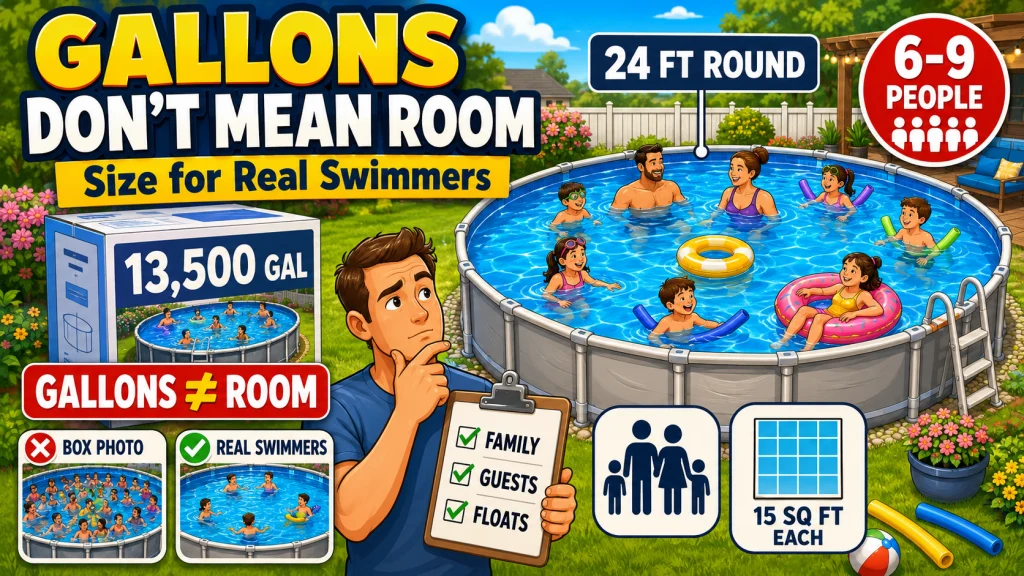
Most family pool size charts use manufacturer volume numbers, not how many people can actually swim comfortably. A 24-foot round pool holds around 13,500 gallons, but comfortable swimming capacity for that same pool is closer to 4 to 6 adults, or 6 to 9 people once kids and casual floaters are mixed in. Figuring out the right above ground pool size for family use means separating the gallon number from the real swimming room, and I use a simple surface area formula on every install to give homeowners that realistic number before they buy. This article walks through that formula, the sizes I recommend for different family setups, and the depth details that change how a pool actually feels once it’s full.
What the Box Photo Doesn’t Show You About Family Pool Size
Picking the above ground pool size for family use almost always starts with a box photo showing four or five people having a great time in the water. That photo is doing marketing work, not sizing work. I have set up plenty of first pools where the owner picked the diameter based on that photo, then called me a month later asking why it feels crowded with four people in it.
The honest way to size a pool for your family is to separate two questions the box never actually answers: how much water does the pool hold, and how much usable swimming surface does it give real bodies. A 10-foot round pool holds about 1,185 gallons, which sounds like a real amount of water until you realize that volume is adequate for two young kids splashing around, not four adults trying to float on rafts. I will walk through the formula that actually predicts swimming room, then give you the sizes I recommend based on what I have installed and what owners tell me works once summer hits.
Why Gallon Capacity Doesn’t Match Real Swimming Room
Gallon capacity exists for a different job entirely. It is what a pump technician and a chemical chart care about, since dosing and turnover rate are both calculated off water volume. It was never built to answer a family’s actual question, which is how many people can be in the water at once without bumping elbows. A pool can hold thousands of gallons and still feel tight the moment three or four adults get in with a float, a floating cooler, and a couple of pool noodles.
I have installed the same 15-foot round pool for a family expecting to fit six people comfortably, and for a couple with two toddlers who thought that size looked small for them. Both pools held the identical amount of water. The difference was that one family sized the pool for their actual daily group, and the other sized it off a mental picture of what “15 feet” sounds like. The gallon figure never changes between those two installs. What changes is whether the buyer understood what that volume actually translates to once real bodies are moving around in it.

This 12-foot round pool holds 1,710 gallons at 90% capacity and uses a corrosion-resistant steel frame for stability. The durable 3-ply liner adds puncture resistance and structural support. A filter pump is included, and the pool uses a no-tool frame system for straightforward backyard assembly.
Check On AmazonIf you click this link and buy, we earn a commission at no additional cost to you.
The Formula That Actually Predicts Above Ground Pool Capacity
The pool industry standard for comfortable swimming capacity is roughly 15 square feet of surface area per swimmer. A 15-foot round pool has about 177 square feet of surface area, which on paper works out to somewhere around 12 people. Nobody actually swims a 15-foot pool with 12 people in it. In practice, once you factor in floats, a couple of kids doing cannonballs, someone standing near the ladder, and the general habit of people spreading out rather than treading water shoulder to shoulder, 4 to 6 adults is the realistic comfortable number for that size.
This is the calculation most beginner buying charts skip entirely, and it is the reason so many families end up disappointed with a pool that technically holds enough water. When I walk a homeowner through this math beside the pool site, I ask them to picture their actual gathering: is it usually two kids and two parents, or does it regularly turn into six or seven people including neighbors and cousins? The surface area formula only works if you are honest about who shows up, not who the box photo assumes shows up.
Above Ground Pool Sizes by Family Type
Once you apply the surface area formula across the common pool diameters, a pattern shows up that matches what installers and long-running pool communities have been recommending for years. The chart below reflects the sizes I actually point families toward based on how many people regularly use the pool and whether they want room to swim or mostly want a place to cool off and lounge.
| Family situation | Recommended size | Comfortable swimmers |
|---|---|---|
| 2 to 3 people, young children | 12 to 15-foot round | 3 to 4 |
| Family of 4 who want to actually swim | 18-foot round minimum | 4 to 6 |
| Family of 4 to 6 who want swimming and lounging | 21 to 24-foot round | 6 to 9 |
| Families who want lap swimming | 15×30 oval or larger | 4 to 6, lap-focused |
Note: The “comfortable swimmers” column already accounts for real use. It is not the raw 15 square feet per swimmer math applied straight, since that raw math overstates capacity once floats, toys, and normal spacing are factored in. A 15-foot pool works out to roughly 12 people on paper and 3 to 6 in practice, and the chart uses the practical number, not the theoretical one.
This isn’t a rule carved in stone. It’s a starting filter, adjusted for how people actually use a home pool versus how they use it in theory. If your family leans toward big group gatherings on weekends, treat the “comfortable swimmers” column as your baseline crowd, not your maximum. A more complete breakdown of every diameter option, including depth and shape tradeoffs, is covered in our full walkthrough of how above ground pool sizes are measured and compared, which is worth reading before you commit to a diameter.
Key point: Quick decision rule if you’re stuck between two sizes: a family of 4 should treat 18 feet as the floor, not the target. 21 feet gives adults real room to swim rather than just float, and 24 feet is the right call once weekly guests become part of the normal pool day. When yard space and budget allow it, buying the larger of two sizes you’re considering causes far less regret than buying the smaller one, since the pattern I see every season is owners running out of room, not owners wishing they had bought smaller.

This 15-foot pool uses puncture-resistant 3-ply PVC with a tool-free composite T-Joint frame. The included cartridge filter pump provides 1,000 GPH filtration. The set also includes a removable coated-steel ladder, pool cover, and ground cloth for a more complete backyard setup.
Check On AmazonIf you click this link and buy, we earn a commission at no additional cost to you.
Depth Changes How Crowded a Pool Feels
Diameter gets most of the attention, but depth affects capacity too, just not in the way people expect. Above ground pools typically come in 48, 52, or 54-inch wall heights, and the actual water level usually sits a few inches below that once you account for the skimmer cutout. At 48 inches of wall height, most adults cannot stand fully upright with their head clear of the water, which is by design. These are swimming pools built for floating, treading, and casual movement, not wading pools where everyone stands around chest-deep.
I bring this up because families sometimes assume a deeper pool automatically means more room for people. It doesn’t, not in the surface area sense. What deeper water does is change how the space is used: kids stay closer to the shallow feel near the wall, adults tend to occupy the center, and floats need more clearance underneath before they bottom out. If your family is planning anything closer to lap swimming or flip turns, you need length more than depth, which usually means an oval pool at least 30 feet long rather than a deeper round one.
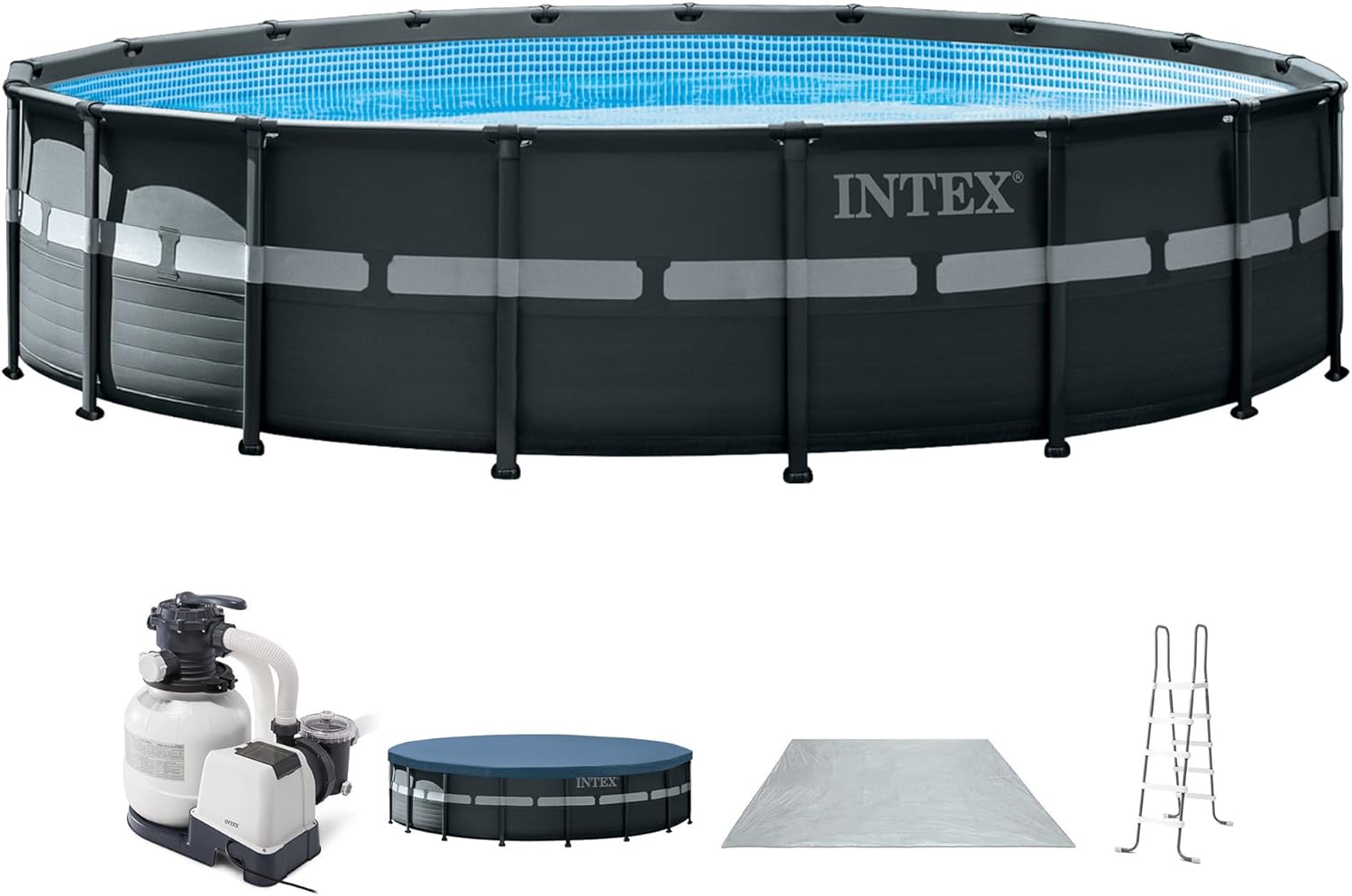
This 18-foot round pool holds 6,981 gallons and combines a galvanized steel frame with a 3-ply polyester-mesh and PVC liner. The set includes a 2,100 GPH sand filter pump, ladder, pool cover, and ground cloth. Its Easy Lock frame requires no locking pins or tools, and the liner, frame, and filter pump carry a 2-year warranty.
Check On AmazonIf you click this link and buy, we earn a commission at no additional cost to you.
The Size-Regret Pattern I See Every Season
Field Note: The most common regret I hear from second-time buyers isn’t about the pump or the liner. It’s “I wish we had gone one size up.” Families size the pool for their current household, then discover that the pool becomes the neighborhood gathering spot the first warm weekend, and suddenly the 15-footer that seemed generous on paper is hosting eight kids at once.
This pattern shows up consistently across owner communities and forums where people compare notes on what they would change. Someone buys a 15-foot pool sized for their family of four, the pool works fine for solo family use, and then it turns into the default hangout spot for the block. A year later they are pricing out a second, larger pool instead of having bought the right size the first time. If your budget allows it, size toward the larger end of what your yard and wallet can handle rather than the exact minimum for your household today.
- Count your actual regular group, not just the people living in the house.
- Add a buffer size if your yard regularly hosts neighbors, cousins, or your kids’ friends.
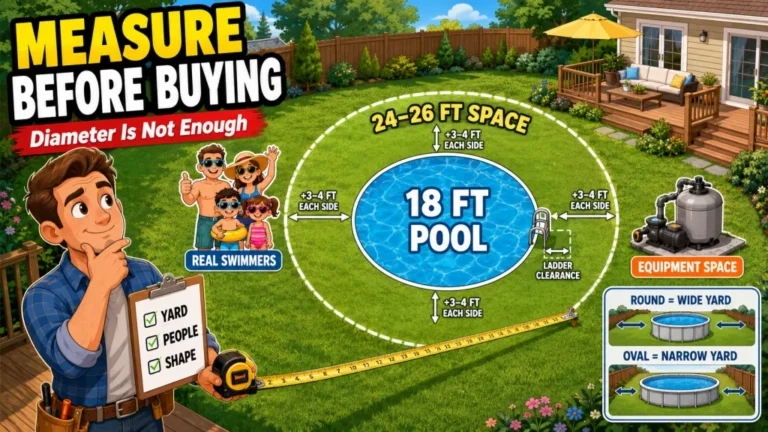
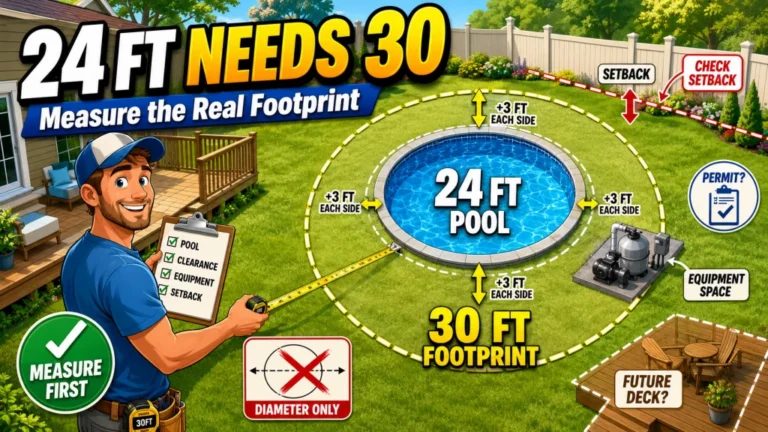
- Check your available yard space and required clearance before locking in a larger diameter. Our breakdown of how much yard space a given pool size needs covers the setback and clearance numbers you’ll want to confirm first.
- Remember that surface area, not gallons, is what predicts how crowded the pool will feel.
None of this means you need to max out your budget on the largest pool available. A 12 to 15-foot round pool is genuinely the right call for a couple with two young kids who mostly want a place to cool off. The sizing mistake isn’t buying small, it’s buying small while expecting large-pool capacity, or buying large without checking whether the yard and budget can actually support it long term. For a wider look at how pool size fits into total cost and yard planning, our complete breakdown of choosing the right above ground pool for your situation ties sizing back into budget and setup.

This 24-foot round pool holds 12,481 gallons and provides substantially more swimming room for larger households and regular guests. The set includes a sand filter pump, ladder, and pool cover. Its large round footprint makes it a better fit for families deliberately sizing beyond their minimum day-to-day swimming needs.
Check On AmazonIf you click this link and buy, we earn a commission at no additional cost to you.
Final Thoughts: Size for the Family You Actually Have
The gallon number on the box is useful for chemicals and pump sizing, but it is the wrong number to size a pool around for family use. Run the surface area math, be honest about how many people actually show up on a warm weekend, and size toward the larger end if your yard and budget allow it. That single adjustment prevents most of the regret I hear about from owners a year or two into ownership.
If you are still weighing diameter against your available yard space, that’s the next practical step before you buy. Getting the footprint and clearance right up front saves you from measuring twice after the pool is already on order.
FAQs
👨👩👧👦 What size above ground pool for a family of 4?
An 18-foot round pool is the practical minimum if the family actually wants to swim, not just wade. For lounging and occasional swimming without much crowding, a 21 to 24-foot round pool gives more comfortable room, especially if guests join regularly.
🏊 How many people fit in an above ground pool comfortably?
Use about 15 square feet of surface area per swimmer as a baseline, then reduce that number for floats, toys, and how people actually spread out. A 15-foot round pool works out to roughly 4 to 6 comfortable swimmers in real use, not the higher number the raw math suggests.
📏 What is an above ground pool size chart based on, gallons or people?
Most manufacturer charts are based on water volume in gallons, which reflects chemical and pump needs, not swimming room. A chart based on people should use surface area per swimmer instead, which is why the two numbers often disagree.
💧 Is a 24-foot above ground pool too big for a family of four?
Not if the family regularly hosts guests, kids’ friends, or extended family. For a household that only swims among themselves, an 18 to 21-foot round pool is usually enough, and the larger size is more about buffer room than necessity.
📐 How deep should an above ground pool be for adults?
Standard wall heights are 48, 52, or 54 inches, with actual water depth running a few inches below that. Any of the three works for adult swimming and floating; the difference is more about liner cost and structural stability than swimming comfort.
🌊 Should I size up if my family plans to grow or host more people later?
Yes, if your yard and budget can support it now. Owners who size exactly to their current household size are the ones most likely to be shopping for a second, larger pool within a couple of years.
Sources and References
1. Angi, above ground pool sizes and swimmer capacity by diameter, confirming 24-foot round pools as the common choice for up to five swimmers and 12×24 oval pools as the common fit for a family of four.
2. Watson’s comprehensive pool buying guide, confirming standard above ground pool depths of 48 to 54 inches and typical diameter ranges from 15 to 33 feet.
3. River Pools and Spas, above ground pool types, prices, and dimensions, confirming the 48 to 54-inch depth range as standard across above ground pool manufacturers.