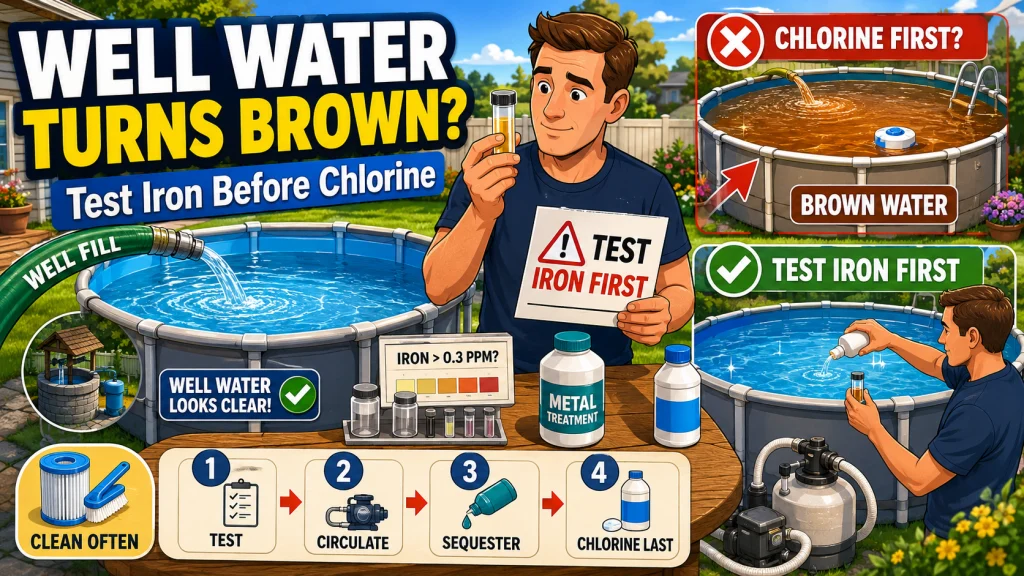
An above ground pool well water startup goes wrong the same way almost every time: the pool fills up looking perfectly clear, then the moment chlorine hits the water it turns brown or rust-colored. That reaction comes from dissolved iron in the well water, and it is preventable if you treat the water before any chlorine goes in. This guide covers what causes the discoloration, how to test the fill water first, and the pre-treatment sequence that keeps a well water fill from turning into a brown, cloudy mess. It does not cover municipal water startup, which follows a different sequence and is covered separately.
The Pool Was Clear, Then the Chlorine Went In
I have gotten this exact call more times than I can count: the pool filled up clean and clear off the well, the owner added the first dose of chlorine to get startup going, and within an hour the water turned brown or took on a rusty, tea-colored tint. It looks alarming, and it usually gets blamed on algae or a dirty hose. It is neither. This is what happens on an above ground pool well water startup when the fill water carries dissolved iron and the chlorine gets added before that iron is dealt with.
This is a well water problem specifically, not a municipal water problem. If your pool is filling from a city supply, the startup sequence and the chemistry concerns are different, and that process is covered in the full chemical startup sequence for a new above ground pool. What follows here applies when the source is a private well, because that is where iron, manganese, and hardness show up in concentrations that municipal treatment plants normally filter out before the water ever reaches a hose.
Why Well Water Turns Brown Once Chlorine Hits It
Well water often carries dissolved iron in a form chemists call ferrous iron. In that dissolved state, the iron is invisible. You can fill an above ground pool with well water that tests high in iron and the water will look completely clear, because the iron has not changed form yet. The color problem only starts once something oxidizes it.
Chlorine is an oxidizer, and that is exactly what it does to dissolved iron. The moment chlorine contacts ferrous iron, it converts it into ferric iron, which is basically rust. Ferric iron is not soluble in water, so it comes out of solution as fine reddish brown particles. Those particles are what turn the whole pool brown, and if the water sits long enough, the same particles settle onto the liner and fittings as a stain that is far more work to remove than the discoloration itself.
Manganese behaves the same way but looks different once it comes out of the water. Where iron leaves a rust-brown tint, manganese oxidizes into a darker brown or almost black discoloration, and it stains fittings and liners in a way that can be harder to tell apart from dirt at first glance. If your test shows manganese along with iron, the same pre-treatment approach applies. The sequestrant and the circulation steps below handle both metals together, you do not need a separate process for manganese.
Field Note: The pools I get called out to most often for this are new installs where the owner filled straight from a well hose, tested nothing, and added the starter chlorine kit that came bundled with the pool. The kit chlorine is not the problem. The untested iron in the fill water is.
Test the Well Water Before You Add a Single Chemical
Before any chlorine, shock, or balancer goes into a well water fill, test the water for iron, hardness, and pH. A comprehensive test kit will cover all three, or you can bring a sample to a pool store that tests for metals specifically, since some basic in-store kits only check chlorine and pH and will miss the iron entirely. Skipping this step is the single most common reason a well water startup ends in brown water.
The Environmental Protection Agency sets 0.3 mg per liter, which is the same as 0.3 ppm, as the level where iron starts causing staining and discoloration in water. That threshold works just as well for a pool as it does for household plumbing. If your test comes back above 0.3 ppm iron, plan on pre-treating before chlorine goes in. Hardness matters too: well water above roughly 300 ppm calcium hardness is already hard enough that you likely will not need to add calcium hardness increaser during startup, which simplifies that part of the sequence. Hard well water also makes the pool more prone to cloudiness or scale if pH and alkalinity get pushed too high early on, so resist the urge to add a hardness increaser out of habit just because a generic startup checklist calls for it. Check the actual number first and skip that step if the well water is already hard enough on its own.
| Iron test result | What it means for startup |
|---|---|
| Below 0.3 ppm | Low risk of discoloration. Normal chemical startup can proceed. |
| 0.3 to 1 ppm | Pre-treat with a metal sequestrant before adding chlorine. |
| Above 1 ppm | Expect a stronger reaction. Pre-treat and expect to run the pump longer before startup. |
Whatever the number comes back as, it tells you exactly how much pre-treatment time to budget before you touch the chlorine, which is the next step.

This kit uses 100 test strips to check 17 water parameters, including iron, hardness, chlorine, fluoride, lead, and other indicators, and also includes two bacteria tests. The strips come in five sealed pouches of 20 to help preserve freshness. A color-coded system supports quick at-home readings, while the bacteria tests provide results in 48 hours. Amazon lists it at 4.3 stars from 10,728 ratings.
Check On AmazonIf you click this link and buy, we earn a commission at no additional cost to you.
What to Have Ready Before You Start a Well Water Fill
Once the test results are in, the rest of the process goes a lot smoother if the right basics are already on hand instead of being a last-minute pool store trip in the middle of a brown water scramble. A well water fill is not the moment to reach for whatever chlorine and pH kit came in the box.
- A test option that actually checks iron and other metals, not just chlorine and pH.
- A metal sequestrant labeled for iron, metals, or stain prevention, with a startup dose listed on the label.
- A plan for cleaning or backwashing the filter more often during the first week.
- Two to three extra days of patience before the normal chlorine startup begins.
A basic chlorine and pH strip kit will not catch iron or manganese at all, which is exactly how so many well water fills go sideways in the first place. Having the right test on hand before the pool ever fills up is what turns this into a two or three day inconvenience instead of a week of brown water and staining.

This 1-quart liquid treatment is designed for hard-water scale and fresh metal stains caused by iron and copper. It helps protect pool surfaces and equipment from scale formation and metal staining. The formula is intended for treating hard-water conditions as well as existing fresh metal stains.
Check On AmazonIf you click this link and buy, we earn a commission at no additional cost to you.
The Pre-Treatment Sequence That Keeps the Water From Turning Brown
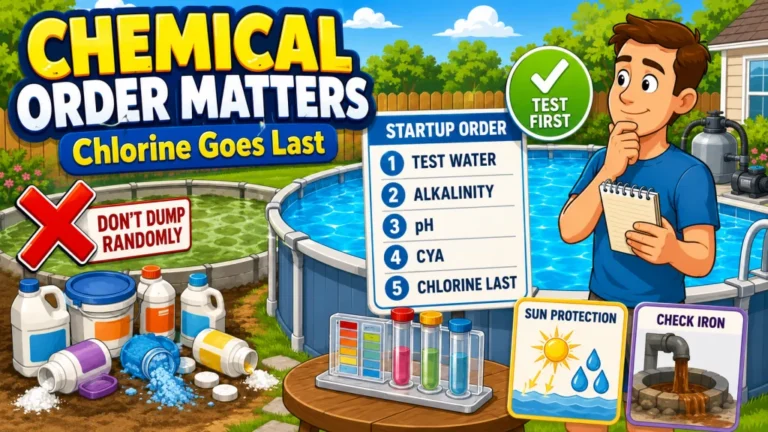
Once you know the iron number, the sequence is straightforward, and skipping steps is what causes the brown water in the first place. Fill the pool completely before adding anything. Then run the pump and filter for 24 to 48 hours with no chemicals in the water at all, just to circulate and let the system settle in. This step gets skipped constantly because owners want to start balancing chemistry the same day the pool fills, and that is exactly the wrong order for well water.
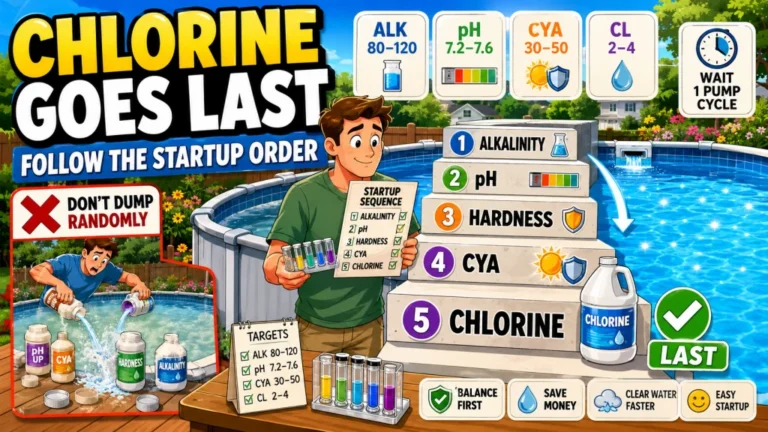
After that circulation period, add a metal sequestrant product at the rate listed on that product’s label. A sequestrant binds to the dissolved iron and holds it in solution instead of letting it oxidize into visible rust particles. Run the pump for another 24 hours so the sequestrant has time to distribute through the whole pool volume, not just the area near the return jets. Only after that circulation period should you move into the order you actually add each startup chemical, starting with total alkalinity before pH, calcium hardness, or chlorine.
- Confirm the iron, hardness, and pH test results before adding anything.
- Fill the pool completely first. Do not add chemicals mid-fill.
- Run the pump and filter for 24 to 48 hours with no chemicals added.
- Add a metal sequestrant product at the labeled rate, then run the pump another 24 hours.
- Begin the normal startup sequence with alkalinity once the sequestrant has circulated.
Follow that order and most well water fills never turn brown at all. The whole sequence takes an extra two to three days compared to a municipal water startup, and that patience is what separates a clear first week from a rust-colored one.
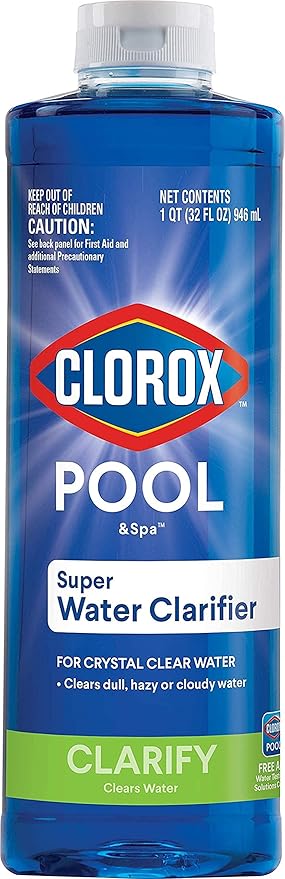
This 1-quart liquid clarifier is designed to clear dull, hazy, or cloudy pool water by combining small particles so filtration can capture them more easily. It is intended for weekly treatment as part of routine pool maintenance. Amazon lists it at 4.6 stars from 12,341 ratings.
Check On AmazonIf you click this link and buy, we earn a commission at no additional cost to you.
What Not to Do With a Fresh Well Water Fill
Warning: Do not add chlorine or shock to fresh well water before the sequestrant pre-treatment step. This is the exact action that causes the immediate brown discoloration, and once the iron has oxidized and dropped out of solution, undoing it is far more work than preventing it.
If the chlorine already went in and the water is already brown, the fix is mechanical, not chemical, and it goes in a specific order. Working through it out of sequence just pushes the iron back into suspension and restarts the whole problem.
- Stop adding any more chlorine. Additional chlorine oxidizes more of the remaining dissolved iron and makes the brown tint worse before it gets better.
- Keep the pump running so the precipitate has a chance to settle instead of staying stirred up.
- Vacuum the settled precipitate to waste rather than back through the filter, since pushing rust particles through a standard filter cycle just redistributes them.
- Add a clarifier if fine particles are still clouding the water, to help pull them together so the filter can catch what the vacuum missed.
- Clean or backwash the filter, then wait until the water clarity holds steady before going back to normal chemical balancing.
None of these steps undo iron that has already stained a liner or fittings, which is exactly why testing and pre-treating before the chlorine goes in the first time saves so much more work later.

This 17.5-inch vacuum head weighs 4 pounds and uses non-slip wheels plus side and bottom brushes for manual pool cleaning. A directional handle supports one-handed steering across pool surfaces. It works with 1.5-inch hoses and 1.25-inch pool poles, with the hose and pole sold separately. Amazon lists it at 4.4 stars from 762 ratings.
Check On AmazonIf you click this link and buy, we earn a commission at no additional cost to you.
What the Filter Actually Does With Well Water Iron
Both cartridge and sand filters will eventually trap some of the iron once it has precipitated out of the water, but neither filter type removes dissolved iron on its own. Filtration only works on the particles, which is exactly why the sequestrant and circulation steps have to happen first. A filter is a cleanup tool here, not a prevention tool.
During the first week after a well water fill, check and clean or backwash the filter more often than you would on a normal maintenance schedule. Iron particles clog media faster than typical dirt and debris, and a filter that is quietly losing flow will slow down the very circulation the pre-treatment sequence depends on. Once the water has stayed clear through a full week of normal chemical readings, you can drop back to a standard filter cleaning schedule.
Final Thoughts: Treat the Iron Before the Chlorine, Not After
The whole brown water problem on a well fill comes down to sequence. Test first, circulate before adding anything, sequester the iron, then start the normal chemical routine. Owners who skip straight to chlorine because the water looks clear are the ones calling me two hours later asking why their new pool looks like weak tea.
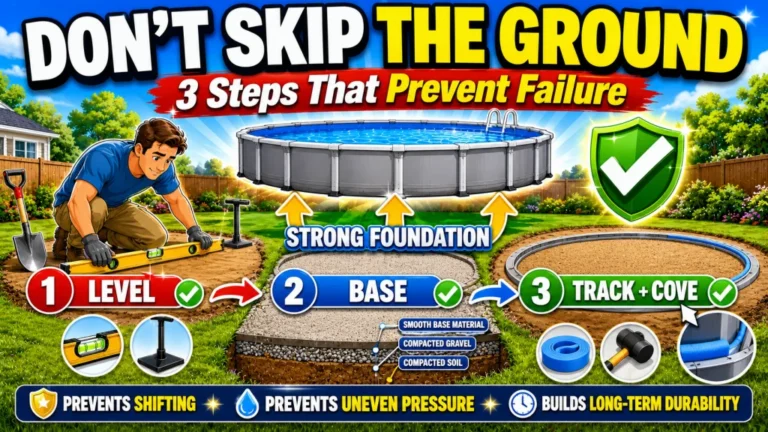
None of this is complicated once you know the order. It just takes patience for those first two or three days while the pump runs and the sequestrant does its job. If you have not gone through the full setup process yet, the complete walkthrough for getting an above ground pool ready from the ground up covers ground prep and assembly before you ever get to this chemical stage.
FAQs
🧪 Why did my above ground pool turn brown after I added chlorine?
Your well water almost certainly has dissolved iron in it. Chlorine reacts with that iron on contact, which is what causes the discoloration. Testing and pre-treating the fill water before chlorine goes in avoids the problem entirely.
💧 How much iron in well water is too much for a pool?
Above 0.3 ppm iron, plan on pre-treating with a metal sequestrant before adding any chlorine. Below that level, the risk of visible discoloration is low. A comprehensive test kit or a pool store metals test will give you that number.
⏱️ How long should I run the pump before adding chemicals to a well water fill?
Run the pump and filter for 24 to 48 hours after filling, with no chemicals added, before you do anything else. After adding a metal sequestrant, run the pump another 24 hours so it circulates through the full pool volume before starting the normal chemical sequence.
🔧 Can I fix brown pool water after it has already happened?
Yes, but it takes more work than preventing it. Vacuum the settled iron precipitate to waste rather than through the filter, and a clarifier can help pull remaining fine particles together. Stop adding more chlorine in the meantime, since additional chlorine oxidizes more iron and can make the color worse.
🛡️ Do I need a water softener to fill an above ground pool with well water?
Not usually. A softener addresses ongoing household water hardness, but for a one-time pool fill, testing the water and pre-treating with a metal sequestrant handles the iron issue without needing a whole-house system.
Sources and References
- U.S. EPA sets the secondary standard for iron in drinking water at 0.3 mg per liter due to rusty color and staining concerns, a threshold referenced in this article for well water iron testing: EPA secondary drinking water standards for nuisance chemicals.
- Well water owners on Trouble Free Pool describe the same recurring pattern of clear fill water turning brown once chlorine is added, confirming this as a widespread above ground pool startup issue: community discussion on brown iron in pool water.
- Trouble Free Pool’s explanation of how a metal sequestrant binds dissolved metals to prevent staining, used in this article to describe the pre-treatment mechanism: community explanation of what a sequestrant does.