An above ground pool chemical startup is not the same job as weekly maintenance. It is a short sequence of chemical adjustments that has to happen in a specific order before the water is actually safe to swim in, and getting that order wrong is the reason most first-season pools spend two weeks cloudy or green before anyone figures out why. This guide walks through the three parts of that sequence that trip up new owners the most: the order chemicals go in, the role of cyanuric acid outdoors, and what changes when the pool was filled from a well instead of a hose bib on city water. I have watched all three of these go wrong in real backyards, and each one has a fix that takes minutes once you know what you are looking at.
Why Your Above Ground Pool Chemical Startup Cannot Be Rushed
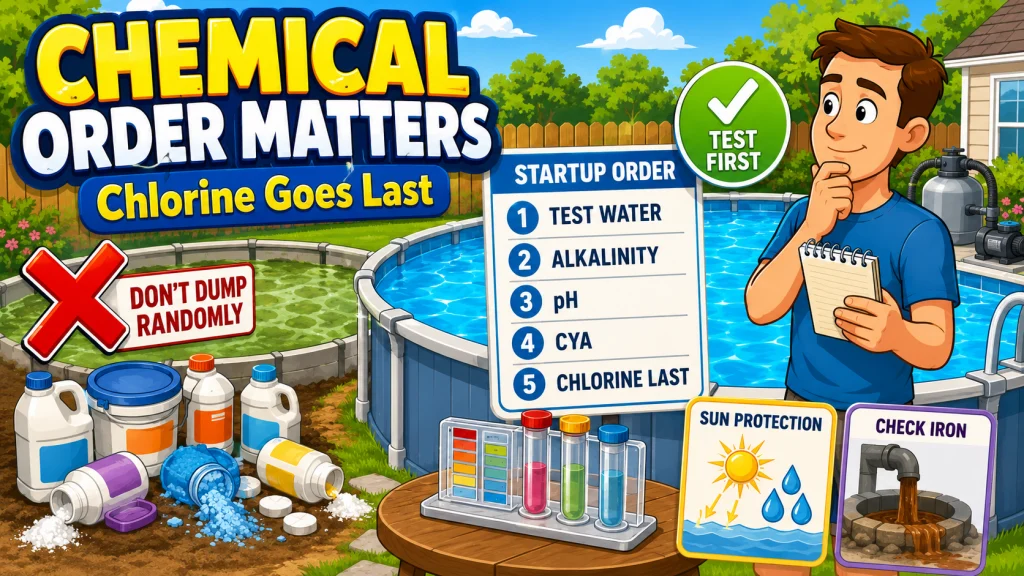
The pool is full, the pump is humming, and the natural instinct is to dump in whatever chemicals came with the kit and call it done. That instinct is where most first-season problems start. An above ground pool chemical startup is a sequence, not a checklist you can complete in any order, because each chemical changes the conditions the next one needs to work correctly. Add chlorine before the water is balanced and you waste product. Skip the stabilizer and the chlorine you did add can burn off in a single sunny afternoon.
I have shown up to service calls where the owner swears they “did everything right” and the pool is still cloudy three days after filling. Nine times out of ten, they added the right chemicals in the wrong order, or they left out the one chemical nobody mentions until the water has already gone green. If you are piecing together first-time above ground pool chemical advice from five different bottle labels and a YouTube video, the rest of this guide is meant to replace all of that with one sequence you can actually follow.
What to Have Ready Before You Add the First Chemical
Before touching a single bottle, it helps to know what categories of supplies a startup actually calls for. This is not a shopping list of specific brands, just the groups of things you will reach for at each stage so you are not running back and forth mid-sequence.
- A way to test pH, total alkalinity, free chlorine, and CYA, ideally a liquid drop kit or a multi-parameter strip that reads all four.
- pH and alkalinity adjusters, since both of those numbers get corrected before chlorine ever goes in.
- Cyanuric acid or stabilizer if your pool sits outdoors and your chlorine source is not already stabilized.
- Chlorine or shock for the final sanitizing step, once the earlier numbers are holding.
- A metal or iron test, and a treatment plan, if the pool is filled from a well rather than city water.
- Enough pump runtime and patience to retest between steps instead of adding everything the same afternoon.
Having these on hand before you start saves the most common headache in a first startup: getting halfway through the sequence and realizing the one chemical you need is still sitting in a shopping cart. With the groundwork in place, the actual order you add things in is what determines whether the water balances in a day or fights you for a week.

This 5-pound granular pool chemical is formulated to raise total alkalinity. It is designed to help stabilize pH fluctuation in swimming pool water. HTH lists it as a swimming pool chemical specifically for alkalinity adjustment and pH stabilization.
Check On AmazonIf you click this link and buy, we earn a commission at no additional cost to you.
The Startup Sequence That Prevents Most First-Week Problems
New water almost never arrives balanced. Whether it came from a garden hose or a well line, it needs to be tested and adjusted before any sanitizer goes in, and the order of those adjustments matters more than most first-time owners expect. Total alkalinity gets corrected first because it acts as a buffer for pH. If alkalinity is off, pH will not hold steady no matter how many times you adjust it, and you end up chasing the same number for days.
Once alkalinity sits in a workable range, pH comes next. Calcium hardness gets checked around the same stage, but it is a conditional step, not a mandatory one: most vinyl-liner pools do not need it changed dramatically unless the fill water tests unusually low or high. Only after pH and any needed hardness adjustment are handled does chlorine enter the picture. Adding chlorine before pH is balanced is one of the most common mistakes I see, and it is a waste of product: chlorine loses a large share of its sanitizing power once pH climbs above the mid-7 range. the exact order to add startup chemicals covers the full step-by-step with target ranges for each stage, which is worth reading in full before you touch the first bottle.
Field Note: The pool that took the longest to balance in my first few years wasn’t a bad water source. The owner had added chlorine, then shock, then alkalinity increaser, all in the same afternoon, because the kit came with everything and no instructions on order. It took nine days and three service calls to untangle. The chemicals were all correct. The sequence was backwards.
A practical way to keep the sequence straight without memorizing every number is to work through it as a short list, testing between each step rather than dumping everything in at once:
- Test the fill water first, before adding anything, so you know your starting point.
- Adjust total alkalinity into range and let the pump run before retesting.
- Correct pH once alkalinity is stable.
- Check calcium hardness only if the fill water tests unusually low or high, and adjust it if your test kit or product label calls for it.
- Bring cyanuric acid up to range before establishing a regular chlorine routine.
- Add chlorine or shock last, and only once the earlier numbers are holding steady.
Once that order is second nature, the rest of the startup gets a lot less mysterious, especially the one chemical people forget entirely, which is where the next issue usually shows up.

This 13.3-ounce Cal Hypo shock treatment sanitizes, clarifies, and helps prevent bacteria and algae. The fast-dissolving formula boosts chlorine without adding CYA, which helps avoid overstabilization. It is compatible with all swimming pool types, including vinyl-lined pools and saltwater systems.
Check On AmazonIf you click this link and buy, we earn a commission at no additional cost to you.
Cyanuric Acid: The Step Most Startup Guides Leave Out
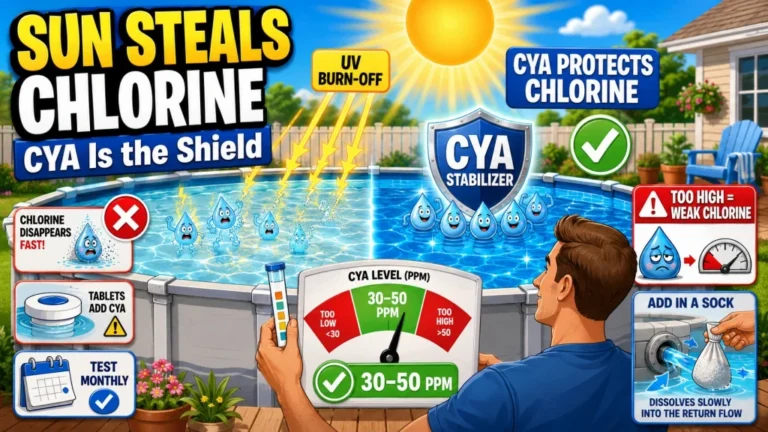
If there is one gap in almost every generic pool startup guide, it is cyanuric acid, usually called CYA or stabilizer. Outdoor above ground pools sit in direct sun for most of the day, and unstabilized chlorine breaks down under UV light in a matter of hours. An owner can add chlorine correctly, test it that evening and see a solid reading, then come back the next afternoon to a pool with almost no sanitizer left. That is not a chlorine problem. That is a missing CYA problem, and it is one of the most common calls I get in the first two weeks of a new setup.
For a standard outdoor above ground pool, a workable stabilizer range is roughly 30 to 50 ppm. Below that, chlorine loses effectiveness fast under sunlight. Well above it, chlorine starts to slow down even when the test strip reads fine, a condition pool techs sometimes call lock, where the sanitizer is technically present but not working at full strength. That is why CYA gets added once, early, and then checked periodically rather than added every time you add chlorine.
Adding chlorine tablets from day one and assuming the stabilizer inside stabilized tablets will handle CYA automatically, without ever testing where the level actually lands.
Testing CYA during startup, bringing it into the 30 to 50 ppm range deliberately, and rechecking it monthly if you are running stabilized tablets, since that level climbs on its own over the season.
This is the piece of the sequence that trips up more first-time owners than any other single step, largely because it is easy to skip when a kit does not call it out by name. If your fill water shows high hardness or any metal content, why cyanuric acid is non-negotiable for outdoor pools goes deeper into how much to add, how to test it accurately, and what happens when it climbs too high over a season of tablet use.
Once alkalinity, pH, and CYA are all in a workable range, most pools stabilize within a day or two of chlorine hitting target. The exception is a pool filled from a well, which starts the sequence with an extra variable most municipal-water pools never deal with.
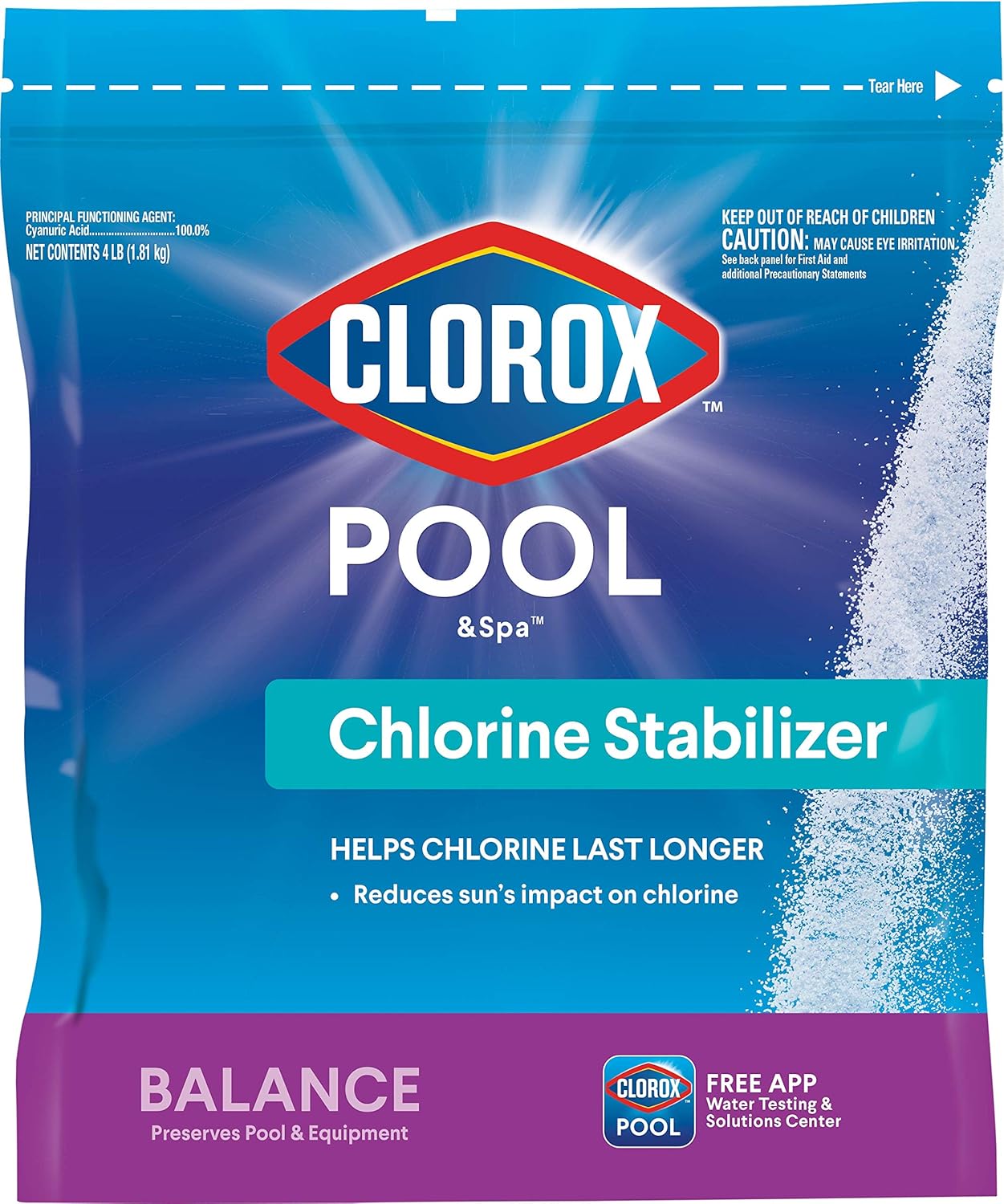
This 4-pound chlorine stabilizer helps protect pool chlorine from UV loss so sanitizer lasts longer in sunlight. It is designed to reduce chlorine burnoff and is compatible with saltwater pools. The formula supports longer-lasting sanitization and reduces the need for frequent chlorine application.
Check On AmazonIf you click this link and buy, we earn a commission at no additional cost to you.
Well Water Changes the Starting Point Before Chlorine Ever Touches It
City water tends to be fairly predictable: mild alkalinity, low metal content, and a pH that is usually close to workable. Well water is a different animal, and it is the one variable that turns an otherwise textbook chemical startup into a multi-day cleanup. If your well water carries dissolved iron, which is common on many rural and semi-rural properties, that iron may be invisible in the pool at first. It only becomes a problem once chlorine hits the water.
Iron in solution is generally clear or faintly tinted. Chlorine is an oxidizer, and oxidizing dissolved iron turns it into a visible, rust-colored precipitate almost overnight. Owners describe it as the pool “turning brown for no reason” the day after they shocked it, when the real cause was iron that had been sitting invisible in the water the entire time. Above ground pools with basic cartridge or sand filtration are not built to catch that kind of mineral load quickly, unlike inground systems with heavier filtration, so the discoloration tends to stick around until it is addressed directly rather than filtered out on its own.
Note: This is a well water issue, not a chlorine-brand issue. Switching sanitizer types will not fix it. The fix has to happen either before the iron oxidizes or by removing it once it has already turned visible, and the order you tackle that in changes the outcome.
The practical move is to test well water for iron and hardness before it ever reaches the pool, not after the water has already turned. If treating well water before it touches chlorine applies to your fill source, it walks through testing, sequestering, and what to do if the discoloration has already happened, which is a very different fix than a standard startup sequence.
Knowing where your water comes from changes how you approach every other step in this guide. Well water owners often need to slow down and treat the source before touching the alkalinity, pH, CYA, then chlorine order described above, while municipal water owners can usually move straight into that sequence.

This 25-count strip kit measures iron from 0 to 5 ppm and copper from 0 to 3 ppm. The strips use white plastic with colored paper pads and require no liquid reagents. They are intended for water-quality monitoring, including pool and spa water.
Check On AmazonIf you click this link and buy, we earn a commission at no additional cost to you.
Where Chemical Startup Fits Into the Rest of Your Setup
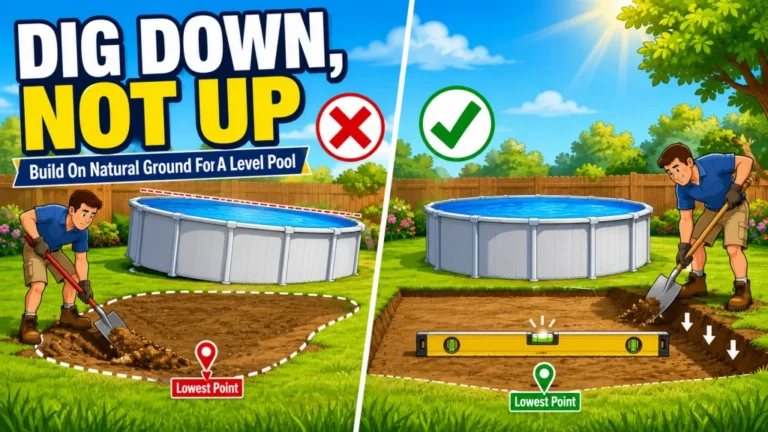
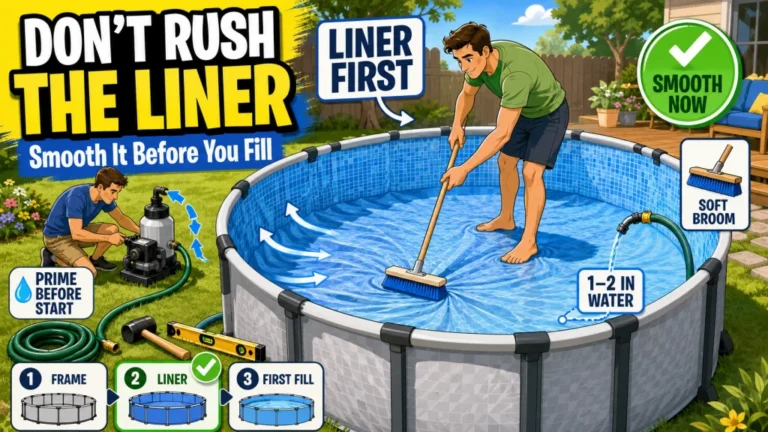
Chemical startup is the last stage of getting an above ground pool ready to swim in, not the first. If the ground was not leveled correctly or the frame and liner were assembled with shortcuts, those problems show up as liner stress, uneven water lines, or pump issues long before chemistry becomes the main concern. If you have not finished those earlier stages yet, getting the ground level and properly prepped and assembling the frame and liner correctly are worth reviewing before the pool is even full, since a mistake made there is much harder to fix once the water is in.
For the complete picture of every stage from ground prep through the first swim, the full above ground pool setup process ties all of these stages together in the order they actually happen in a real backyard.
This guide is scoped specifically to first-fill chemical startup for new above ground pool owners, meaning the sequence, CYA, and well water treatment that happen before regular swimming begins. It does not cover ongoing weekly maintenance once the pool is balanced, and it does not cover troubleshooting an already-established pool that has gone cloudy or green mid-season. Those are different situations with different fixes, and treating them the same way as a fresh startup usually makes things worse, not better.

This all-in-one kit tests for free and total chlorine, pH, acid and base demand, total alkalinity, calcium hardness, and cyanuric acid, working with any pool, hot tub, or spa. It includes a carrying case, water comparator, water balance calculator, base demand reagent, color-coded instructions, and a waterproof chemistry guide for quick reference. Taylor test kits are the only testing supplies recommended by the American Swimming Coaches Association, ensuring professional-level accuracy.
Check On AmazonIf you click this link and buy, we earn a commission at no additional cost to you.
Final Thoughts: Get the Order Right and the Rest Gets Easier
Above ground pool startup chemicals are not complicated on their own. Most of the confusion comes down to sequence and the one step, CYA, that generic instructions leave out. Get alkalinity, pH, and stabilizer right before chlorine, treat well water before it ever meets chlorine, and most first-week headaches simply do not happen.
If your water is still cloudy or the chlorine keeps disappearing after following this order, do not keep adding more of the same chemical and hoping it corrects itself. Retest, confirm which number is actually off, and adjust that one variable before moving forward. From here, each part of the sequence has its own deeper walkthrough if you want the full numbers behind it.
Explore More Above Ground Pool Startup Guides
Here is where each of those deeper walkthroughs lives, with full target ranges and step-by-step detail for whichever part of the sequence your pool actually needs right now.
| Guide | What it helps with |
|---|---|
| Above Ground Pool Startup Chemical Sequence | The full step-by-step order with target ranges for alkalinity, pH, hardness, and chlorine. |
| Above Ground Pool CYA and Stabilizer Guide | How much cyanuric acid to add, how to test it, and what happens when it climbs too high. |
| Above Ground Pool Well Water Startup | Testing and treating well water for iron and hardness before it ever touches chlorine. |
Start with whichever guide matches the problem in front of you, then work backward into the others if your water still is not holding steady.
FAQs
🧪 What is the correct order to add chemicals to a new above ground pool?
Test the fill water first, then correct total alkalinity, then pH. Check calcium hardness around the same stage and adjust it only if the fill water tests unusually low or high. Add cyanuric acid before settling into a regular chlorine routine, and add chlorine or shock last.
☀️ Why does my above ground pool need cyanuric acid if it already has chlorine?
Chlorine without stabilizer breaks down within hours in direct sunlight. Cyanuric acid protects it from UV loss, which is why outdoor pools need it and indoor pools generally do not.
🟤 Why did my pool turn brown after I filled it with well water and shocked it?
This usually points to dissolved iron in the fill water. Iron is invisible until chlorine oxidizes it, at which point it turns rust-colored almost overnight. Testing well water for iron before filling helps you catch this before it happens.
⏱️ How long after startup chemicals is it safe to swim?
Once free chlorine, pH, and alkalinity are all holding in range on a retest, most pools are safe within 24 to 48 hours of the first chemical treatment. Confirm with a test kit rather than swimming on a guess.
🔬 Can I skip a test kit and just follow the chemical instructions on the bottles?
Not reliably. Fill water varies too much between properties, and bottle instructions assume a starting point your water may not match. A test kit is what tells you whether alkalinity, pH, and CYA actually landed where they need to be.
💧 Does the startup sequence change if I filled from a hose instead of a truck delivery?
The chemical order stays the same either way. What changes is the starting chemistry: delivered water and hose-filled municipal water usually arrive closer to balanced, while well water more often needs iron and hardness addressed before the standard sequence begins.
Sources and References
- AquaDoc’s first 30 days above ground pool startup checklist, cited for the alkalinity-before-pH-before-CYA sequencing and the common mistake of skipping stabilizer during startup.
- Orenda Technologies’ guide to understanding cyanuric acid, cited for CYA’s role in protecting outdoor chlorine from UV degradation and general target-range guidance referencing CDC standards.
- TroubleFreePool forum thread on removing iron and rust from well-filled pools, cited for the pattern of dissolved well water iron oxidizing and turning visible once chlorine is introduced.