Above ground pool base material has two jobs: protect the liner from whatever is in the ground underneath it, and give you a comfortable, stable surface to stand on once the pool is filled. Getting the material right is not complicated. Getting the amount and placement wrong is what causes problems later. This guide compares the four real options, mason sand, foam padding, crushed limestone, and a poured concrete pad, with the honest trade-offs of each rather than a one-size-fits-all recommendation. It covers base material only, not how you got the ground level in the first place or how the track sits once the base is down.
The Four Above Ground Pool Base Material Options
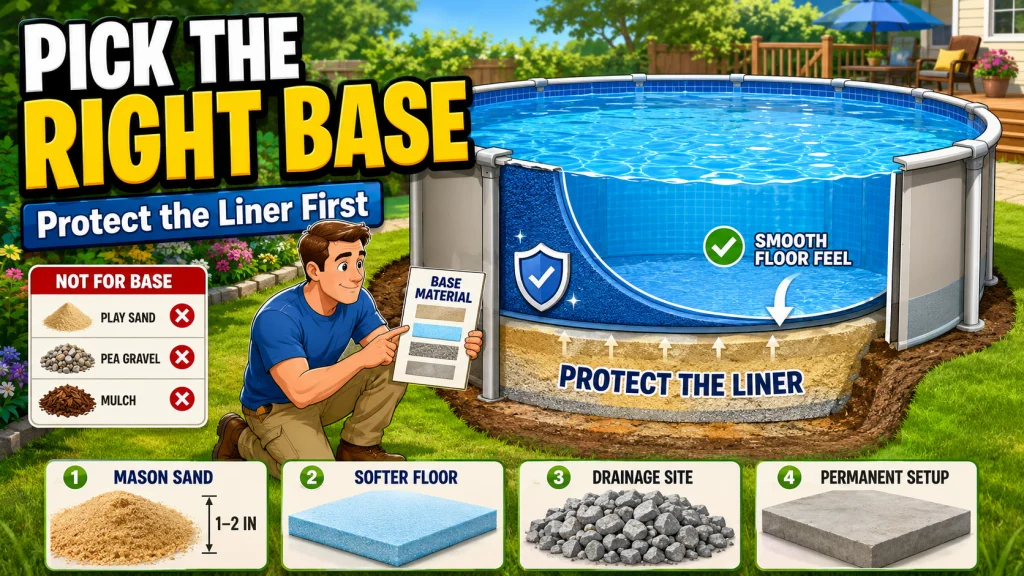
Above ground pool base material comes down to four realistic choices: mason sand, foam padding, crushed limestone, and a poured concrete pad. Each one has a situation where it is genuinely the better call, and none of them is a universal answer. Before any of this matters, the ground underneath has to already be level. If you have not worked through getting the site level before the base goes down, that step comes first, since no base material fixes ground that still has a low corner in it.
| Material | Best For | Main Trade-off |
|---|---|---|
| Mason Sand | Most residential setups, any pool size | Needs proper compaction or it creates divots |
| Foam Padding | Owners who want a softer, more stable floor feel | Costs more, requires cutting to fit, will not level anything |
| Crushed Limestone | Sites with drainage problems that would erode sand | Less comfortable underfoot, harder to shape |
| Concrete Pad | Permanent, semi-inground, or steel wall installations | Highest cost, needs to be poured before setup |
How to Choose the Right Base Material for Your Site
Most of the decision comes down to what you are trying to avoid, not just what is cheapest to buy. A wrong base fails one of three ways: it shifts, it feels uneven underfoot, or it leaves you fixing something after the pool is already full. Picking the material based on which of those three you are most worried about is a better approach than defaulting to whatever is easiest to find at the hardware store.
| Your Situation | Lean Toward | Why |
|---|---|---|
| Typical backyard, ground already level, want to keep cost down | Mason sand | Inexpensive, widely available, performs well when compacted correctly |
| Want a noticeably smoother, more stable floor underfoot | Foam padding | Better comfort and stability, at a higher material cost |
| Yard holds water or runoff cuts across the pool area | Crushed limestone | Handles a drainage problem sand cannot |
| Pool is a permanent steel wall installation, not moving | Concrete pad | Removes settling from the equation for good |
| Pool is seasonal or set up temporarily | Not concrete | Overkill for the cost and setup time involved |
Mason Sand: The Standard Choice
Fine mason sand under an above ground pool is the default for a reason. Not play sand, not coarse builder’s sand, specifically fine mason sand, which shapes easily and cushions the liner against small imperfections still left in the leveled ground. It is inexpensive, it is available at almost any building supply yard, and it does the job well when it is handled correctly.
The part that gets skipped is compaction. Sand under an above ground pool needs to go down with a plate compactor and then get hand-troweled to a smooth, even finish before the liner ever touches it. Skip the compaction step and the sand settles unevenly under foot traffic and water weight, which creates small divots. Those divots do not stay small. The liner conforms to them, and a liner sitting in a divot wrinkles at that exact spot, sometimes within the first season.
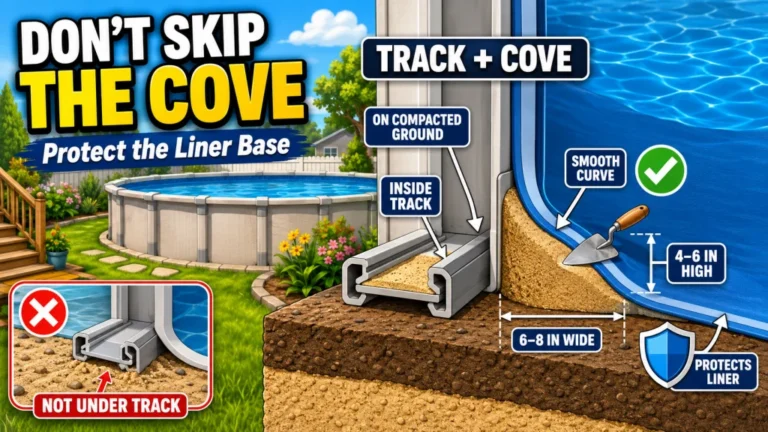
Depth matters as much as compaction. The correct amount of sand under an above ground pool is 1 to 2 inches inside the track, no more. Piling sand deeper than that does not add protection, it just adds more material that can shift before it is compacted properly.
Field Note: The callback that traces back to skipped compaction almost always shows up the same way: an owner notices a soft spot underfoot a few weeks in, and by the time they call me the liner already has a visible wrinkle sitting right on top of it. Compacting the sand properly the first time takes an extra twenty minutes. Fixing a wrinkled liner does not take twenty minutes.

Powered by a 196cc engine, this compactor delivers up to 3350 pounds of force at 5700 blows per minute, moving forward at speeds up to 125 feet per minute for efficient single-direction compaction. Built-in wheels and lifting handles make it easy to transport and store, while a low-oil shutdown, vibration dampers, and a powder-coated finish add durability. It comes backed by a two-year residential warranty, with 90 days of coverage for commercial use.
Check On AmazonIf you click this link and buy, we earn a commission at no additional cost to you.
Foam Padding: The Upgrade Worth Knowing About
Closed-cell foam padding, cut to the shape of the pool and laid inside the track under the liner, is the upgrade most first-time buyers never hear about. A 1-inch foam underlayment gives a noticeably better floor feel than sand, and it does not shift or develop divots the way sand can if compaction was rushed. For anyone weighing foam vs sand for a pool base, the honest answer is that foam wins on comfort and long-term stability, and sand wins on cost and availability.
Foam is not a shortcut around leveling or a substitute for sand’s job of smoothing tiny surface imperfections in an already prepared base. It has to go down on a surface that is already level and already prepared, not as a way to skip either step. It also costs more than sand and takes more time to cut and fit around the pool’s exact shape, which is the trade-off for the better floor feel it delivers. It earns that extra cost most clearly when the pool is staying in the same spot for several seasons and the owner actually cares about a smoother floor underfoot. For a one-season budget setup, sand still gets the job done.

This pad protects your pool liner from punctures caused by rocks, roots, and other debris on the ground below. Pre-cut to fit your specific pool size, it installs easily beneath the liner for a precise fit. It also adds a layer of cushioning underfoot and helps prevent bottom leaks, keeping your vinyl liner in better condition for longer.
Check On AmazonIf you click this link and buy, we earn a commission at no additional cost to you.
Crushed Limestone: The Structural Option
Crushed limestone is the most stable material of the four, but stability is not the only thing that matters underfoot, and it shows here. It requires tamping rather than hand-troweling, it does not shape as easily as sand around curves and edges, and it is noticeably less comfortable to stand on than either sand or foam.
Where crushed limestone earns its place is a site with a real drainage problem, ground that stays damp enough that sand would slowly erode or wash out from underneath the liner over a season or two. That usually shows up as runoff crossing the pool area after rain, soil that stays soft longer than the rest of the yard, or a previous sand base that has visibly washed thin near the edges. That is a specific situation, not a common one for most residential backyards, and it is worth reserving this material for that case rather than defaulting to it because it sounds more permanent.
Concrete Pad: The Permanent Option
A poured concrete pad only makes sense for a permanent, steel wall installation that is not going anywhere. Once it is down, settling is no longer a concern at all, and there is no annual ground inspection to worry about the way there is with a sand or limestone base. That certainty comes at a real cost, typically 500 to 2,000 dollars depending on pool size, and it has to be poured and cured before the pool goes up, not adjusted afterward.
For a seasonal or occasionally relocated pool, a concrete pad is overkill. It is the right call specifically when the pool is staying put for years and the owner would rather pay once than think about the base again. It is worth knowing what a slab does not do, too. Concrete solves settling, but it does not create a soft floor on its own, so the liner still needs whatever protective underlayment the pool manufacturer calls for directly on top of the slab.
What Not to Put Under an Above Ground Pool
A few materials show up in yards anyway, usually because they were already sitting around, and none of them belong under a liner.
- Play sand: too coarse and inconsistent, does not compact or trowel the way fine mason sand does.
- Pea gravel: too uneven underfoot and does nothing to smooth out small imperfections in the grade.
- Organic material like mulch or topsoil with plant matter mixed in: it decomposes under the liner over time, which creates the exact kind of soft spot compaction is supposed to prevent.
- Bare dirt with no base material at all: this is a leveling problem more than a base problem, and it is covered in the article on getting the ground itself right before anything goes down on top of it.
Final Thoughts: Match the Material to the Site, Not the Budget Alone
For most backyard pools, start with mason sand. Upgrade to foam when floor feel matters more than saving a little money. Move to crushed limestone only when drainage is the actual problem you are solving. Choose a concrete pad only when the pool is permanent. Once the base is down and compacted, setting the track and cove correctly is the next step, and it depends on the base underneath it being solid and even. For the fuller sequence from bare yard to filled pool, the complete above ground pool setup guide and the full ground preparation process for above ground pools both cover where this step fits against everything around it.
FAQs
🏖️ What is the best base material for an above ground pool?
Fine mason sand handles most residential setups well, as long as it is compacted with a plate compactor and troweled smooth before the liner goes on. Foam padding is a comfort upgrade, and crushed limestone or concrete fit specific site conditions rather than everyday use.
📏 How much sand do I need under an above ground pool?
1 to 2 inches inside the pool track. Going deeper does not add protection, it just adds material that is harder to compact evenly.
🧽 Can I use play sand instead of mason sand?
No. Play sand is too coarse and inconsistent to compact and trowel the way fine mason sand does, which makes it a poor liner protector.
🛋️ Is foam padding better than sand for an above ground pool base?
Foam gives a more comfortable, more stable floor feel and will not develop divots, but it costs more and has to go down on ground that is already level. Sand remains the more affordable, widely available option.
🧱 When does a concrete pad make sense for an above ground pool?
Only for a permanent, steel wall installation that will not be moved. It typically costs 500 to 2,000 dollars depending on pool size and eliminates ongoing settling concerns entirely.