An above ground pool weekly maintenance routine is the difference between a pool that stays clear all season and one that turns green within two weeks. It is almost entirely about consistency, not complexity. This guide lays out the specific weekly tasks in the order they actually work, including the pump run time above ground pools need that differs from standard inground pool advice. It covers the weekly routine only. It does not cover the correct chemical target numbers themselves or which test kit to buy, both of which are their own topics.
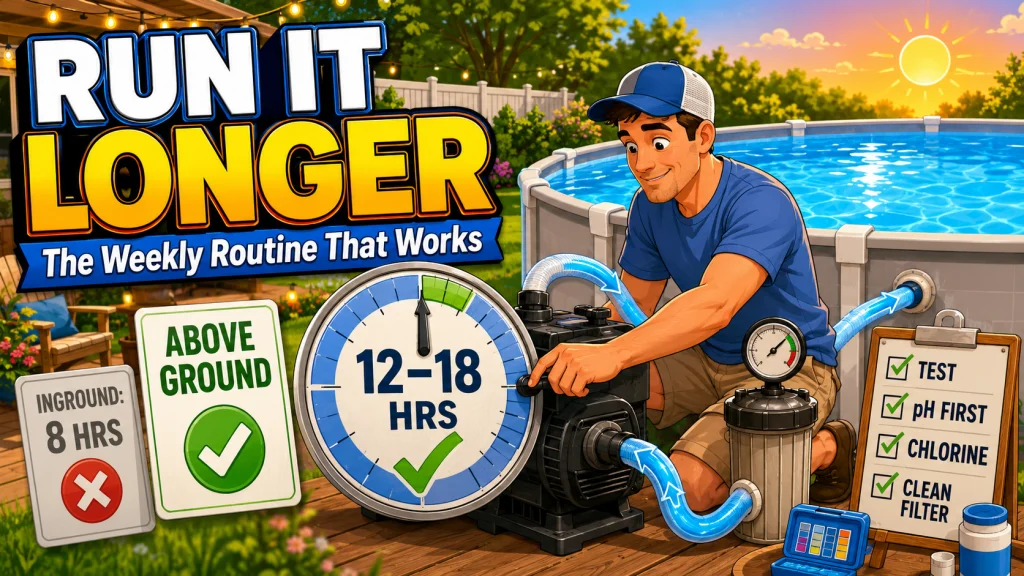
Why Pump Run Time Is Different for Above Ground Pools
A lot of maintenance advice for above ground pools gets copied straight from inground pool guidance, and the pump run time is where that copy-paste habit causes real problems. Inground pools typically run their filter around 8 hours a day. Above ground pools need 12 to 18 hours daily, and the reason is not a typo. Above ground pool filters, cartridge filters especially, are usually smaller relative to the pool’s total water volume than an inground system is. A cartridge filter on a 15-foot pool simply is not sized for the same efficiency an inground setup gets from a larger pump and filter combination, so it needs more hours running to move the same amount of water through it. This ties directly back to the chemical levels overview for above ground pools, since pump run time is what actually gives the chemicals below a chance to work.
| Pool Type | Typical Daily Pump Run Time |
|---|---|
| Inground pool | Around 8 hours |
| Above ground pool | 12 to 18 hours |
Field Note: The single most common cause of a cloudy above ground pool I get called out for has nothing to do with chemicals. It is an owner running the pump 4 to 6 hours a day to save on the electric bill, which sounds reasonable until the water turns hazy within a week because the undersized filter never got enough time to actually clear it.
Do a Quick Physical Check Before Testing the Water
Before any chemistry gets tested, a few minutes of physical upkeep keeps the rest of the routine from fighting an uphill battle. Skim leaves and floating debris off the surface, brush the waterline and ladder area where grime tends to build up first, and vacuum any visible dirt off the floor if it has settled. Empty the skimmer basket and pump basket if your setup uses them, since a clogged basket quietly reduces circulation all week without anything else looking wrong. While the pump is running, check the hoses, clamps, and return flow for anything obviously loose or leaking.
This step matters more than it looks like it should. Debris breaking down in the water eats into your chlorine before it ever reaches a swimmer, and weak return flow means the chemicals added later in this routine are not actually circulating evenly through the pool. Test the water after this quick pass, not before it.

This cordless vacuum runs on a rechargeable lithium-ion battery for up to 60 minutes of continuous cleaning, with no hoses or valves required. It features a 10.5 inch Omni Pivot vacuum head and a 0.227 gallon debris chamber to capture sand, silt, algae, and other fine particles that robotic cleaners miss. Built with UV-stabilized composites and stainless steel fasteners, it is safe for underwater use up to 16 feet and works with inground, steel-sided, and above ground pools. Backed by a 1-year warranty.
Check On AmazonIf you click this link and buy, we earn a commission at no additional cost to you.
The Above Ground Pool Weekly Maintenance Routine, in Order
This weekly routine works best when you follow the steps in this exact order, since some steps depend on the reading from the step before it. If you have not already locked in the correct numbers to adjust toward, the correct chemical target ranges for above ground pools is worth reading first, since every adjustment below is aiming at those specific numbers.
- Test the water. Check free chlorine, pH, and total alkalinity with test strips or a liquid test kit, at minimum once a week.
- Adjust pH first. pH affects how well your chlorine works immediately, so correct it toward 7.2 to 7.6 before touching chlorine levels at all.
- Adjust total alkalinity if needed. Alkalinity changes can shift pH in turn, so give it 4 to 6 hours before retesting pH, or the second reading will not reflect where the water actually settles.
- Add chlorine. A trichlor tablet in a floater or inline feeder maintains a baseline level between tests. If tablets alone are not holding the range, test and add liquid chlorine or dichlor granular to bring the reading back up.
- Shock weekly during heavy use. A non-chlorine shock once a week helps keep up with a pool that is seeing heavy bather load, rather than waiting for cloudiness to show up first.
- Clean the filter. Check a cartridge filter on a 15-foot pool weekly during peak season. A pressure rise of 8 to 10 PSI above the clean, just-rinsed pressure is the signal it needs cleaning, not a fixed number of days.
When this order gets skipped, the same issue tends to show up: chlorine gets added to water with pH already out of range, which wastes the chlorine before it can do its job. Follow the sequence and each step actually holds.

These test strips check pH, total chlorine, free chlorine, bromine, alkalinity, total hardness, and cyanuric acid using medical industry technology for accuracy comparable to liquid tests. Simply dip the strip, wait 15 seconds, and compare it to the color chart, with no drops or measuring involved. Each color pad uses paper designed to keep colors vibrant and prevent bleeding for reliable readings. AquaChek has over 35 years of experience helping maintain healthy pool and spa water.
Check On AmazonIf you click this link and buy, we earn a commission at no additional cost to you.
Why Timing Matters: Add Chemicals in the Evening
Sunlight breaks down chlorine, which is exactly what is happening all afternoon while a pool sits in direct sun. Adding chemicals in the evening keeps more of the addition working in the water. By then, direct sunlight is no longer burning it off as quickly. This is a small habit that costs nothing to change and noticeably improves how long a chlorine addition actually holds.

Made with 99% Trichloro-S-Triazinetrione and 90% stabilized chlorine, these tablets remove bacteria, algae, and organic contaminants to keep above ground or inground pools clean throughout the season. They dissolve slowly for consistent chlorination and are sun-stabilized to resist UV depletion, making them ideal for floaters or automatic feeders. Non-perishable, they are best used within 2 years of manufacture.
Check On AmazonIf you click this link and buy, we earn a commission at no additional cost to you.
Final Thoughts: Consistency Beats Correction
Almost every above ground pool problem that turns into an afternoon of shocking, scrubbing, and retesting traces back to a step in this routine getting skipped or done out of order, not to a single bad batch of chemicals. Run the pump the full 12 to 18 hours, test before you adjust anything, work pH before chlorine, and clean the filter by pressure rise rather than by calendar guesswork. A pool run this way rarely needs the dramatic fix, because it never gets far enough off track to need one. For how this weekly rhythm fits into the rest of a season’s upkeep, the complete above ground pool maintenance guide covers the full picture.

This Type B cartridge features 13.5 square feet of Dacron filament media with 63 pleats to help keep pool water clean and clear. It replaces the Intex 29005E cartridge and fits filter pumps that use Intex 59905 cartridges. Intex recommends replacing the cartridge about every 2 weeks for peak pump performance, while periodic rinsing can help extend its usable life.
Check On AmazonIf you click this link and buy, we earn a commission at no additional cost to you.
FAQs
⏱️ How long should I run my above ground pool pump each day?
12 to 18 hours daily. This is longer than the roughly 8-hour standard for inground pools because above ground pool filters, especially cartridge filters, are typically smaller relative to the pool’s water volume.
🧪 What is the correct order for a weekly pool maintenance routine?
Test the water first, adjust pH before anything else, adjust total alkalinity if needed and wait before retesting pH, add chlorine, shock weekly if bather load is heavy, then clean the filter based on pressure rise.
🌙 Why should pool chemicals be added in the evening?
Sunlight breaks down chlorine throughout the day. Adding chemicals in the evening, after direct sun is no longer hitting the water, keeps more of the addition working instead of degrading within hours.
🔧 How do I know when to clean my above ground pool filter?
Watch the pressure gauge rather than the calendar. A rise of 8 to 10 PSI above the clean, just-rinsed reading is the signal it is time to clean it, and that can happen faster or slower depending on bather load and debris.
⚠️ Is running the pump fewer hours to save electricity a bad idea?
Yes, for most above ground pools. Cutting run time to 4 to 6 hours a day is one of the most common causes of cloudy water, since the filter simply is not sized to clear the pool in that shorter window.