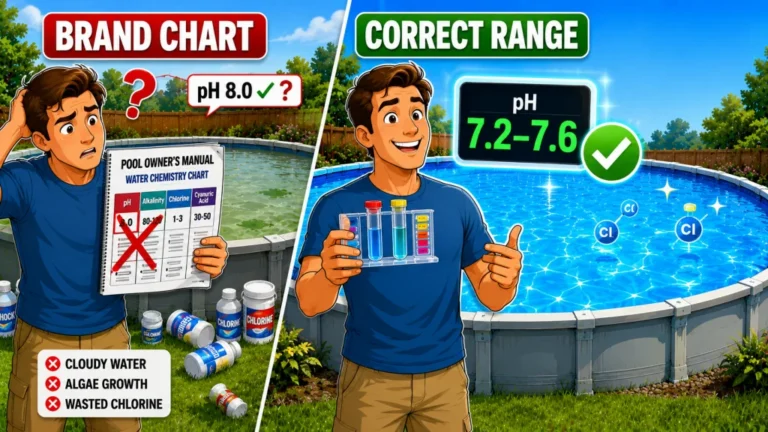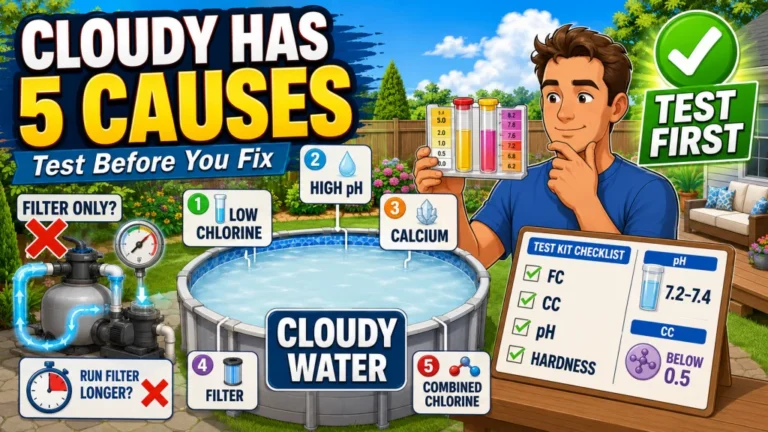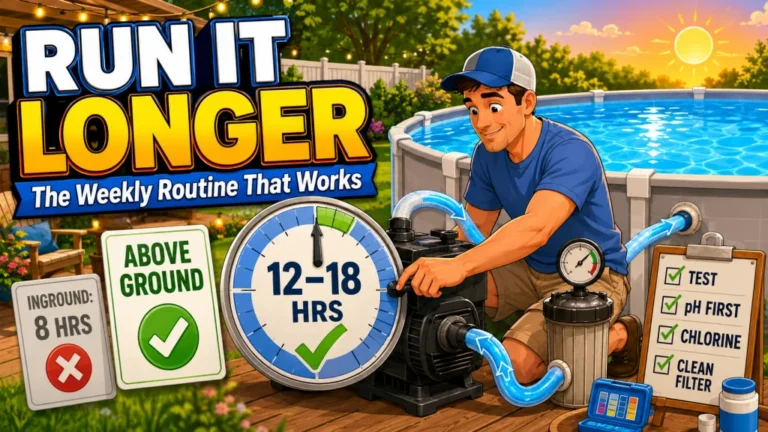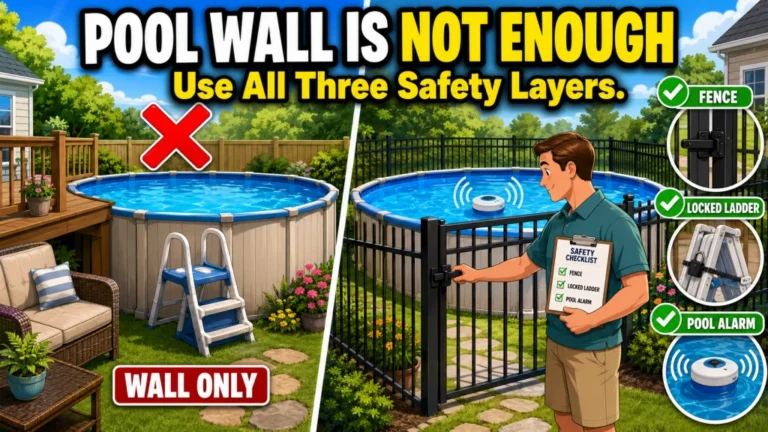
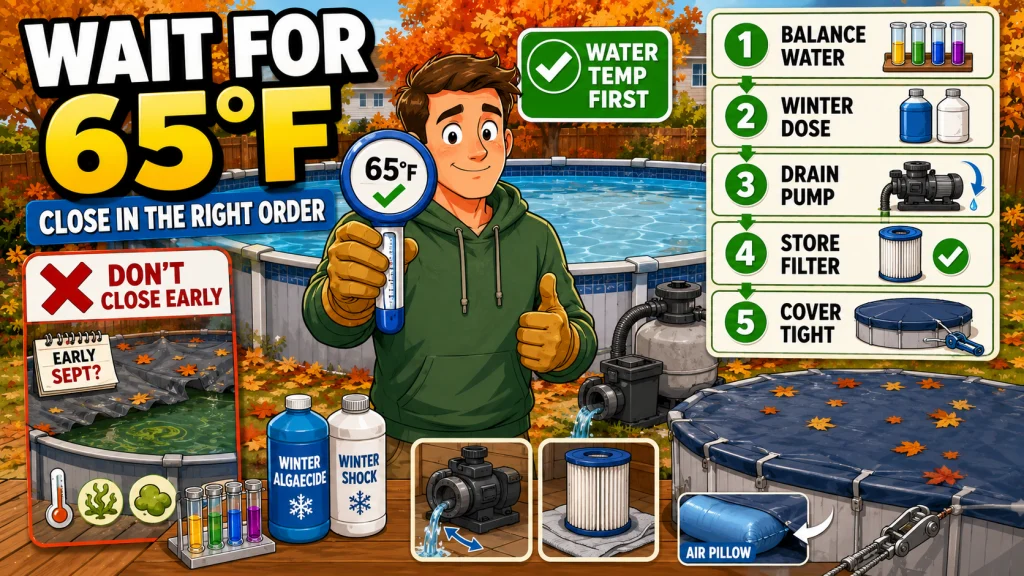
Closing an above ground pool too early does almost as much damage as closing it wrong. The rule I follow on every closing is simple: do not close until the water is consistently below 65 degrees Fahrenheit, because algae keeps growing in warmer water even after you add winterizing chemistry. Once the temperature is right, the sequence is clean the pool, balance the chemistry, add the winterizing dose, drain and store the equipment, then install the cover. Get the timing and the order right and spring opening is a short afternoon instead of a fight against a green pool.
Why Closing Too Early Causes the Same Problems as Closing Too Late
Most closing guides treat the timing question as an afterthought, something you glance at before jumping into the checklist. I put it first because it changes how well everything after it works. Closing an above ground pool while the water is still warm means algae has weeks of good growing conditions left before the cold actually slows it down, and winterizing chemistry is not designed to fight active algae growth the way a normal season dose is. You are essentially sealing a pool with algae still building momentum underneath the cover.
I have opened plenty of pools in spring that were closed the first week of September because the owner wanted the yard clear for a party. By April, the water under that cover looked like pea soup, and the owner assumed the winterizing chemicals had failed. They had not failed, they were just never going to keep up with water that was still in the 70s when it went under the cover. In most northern US climates, water does not drop consistently below 65 degrees until mid-to-late October, sometimes later depending on your region and how much shade the pool gets.
For everything that happens before this closing sequence, including how far to drop the water level ahead of freezing weather, the water level guide for winter closing covers that piece separately. This article is about timing, chemistry, equipment, and the cover, not how low to drop the water.
The 65-Degree Rule
Wait until your water tests consistently below 65 degrees Fahrenheit before you close, not just one cool morning reading. A single chilly night does not mean the water has settled into winter temperatures, and closing on a fluke cold snap can leave you right back in the same early-closing problem a week later when temperatures bounce back up. Check the water temperature over several days, not a single test.
Closing in cooler water works in your favor for a simple reason: algae growth slows dramatically once water temperature drops, so the winterizing chemistry you add has far less to fight against and a much better chance of holding through the winter. This is the difference between opening in spring to water that needs a normal startup and opening to green water that needs a full algae cleanup before anyone can swim in it.
If you live somewhere with a short, mild winter and the water never gets reliably cold, closing decisions get more situational, and that is a case where local climate and how the pool is used in the off-season matters more than a single fixed date on a calendar. Once the water is cold enough to close, the next job is making sure the water you are sealing under the cover is balanced first.
Clean the Pool Before You Balance the Water
Do not balance chemistry over a pool that still has leaves, debris, or a dirty floor. Anything organic sitting in the water when you close eats up sanitizer all winter and gives you a head start on the exact algae problem the 65-degree rule and winterizing chemistry are trying to prevent. A few minutes of cleaning before you test the water saves the winterizing chemicals from fighting a battle they should not have to fight.
Skim leaves, sticks, and floating debris off the surface, then brush the walls and floor so nothing settles in over the months the pool sits covered. Vacuum any debris that has already settled, especially in low-circulation corners where the pump does not pull much flow. Empty the skimmer basket, and pull any ladders, floats, or accessories that could rust, stain the liner, or trap moisture against the wall over winter.
This step takes longer on a pool that has been neglected for a few weeks than one that has been maintained all season, which is its own argument for closing on schedule instead of letting the pool sit unattended while you wait for the weather to cooperate. Once the pool is physically clean, testing and balancing the water actually means something, since you are not measuring chemistry against water that is still absorbing debris.
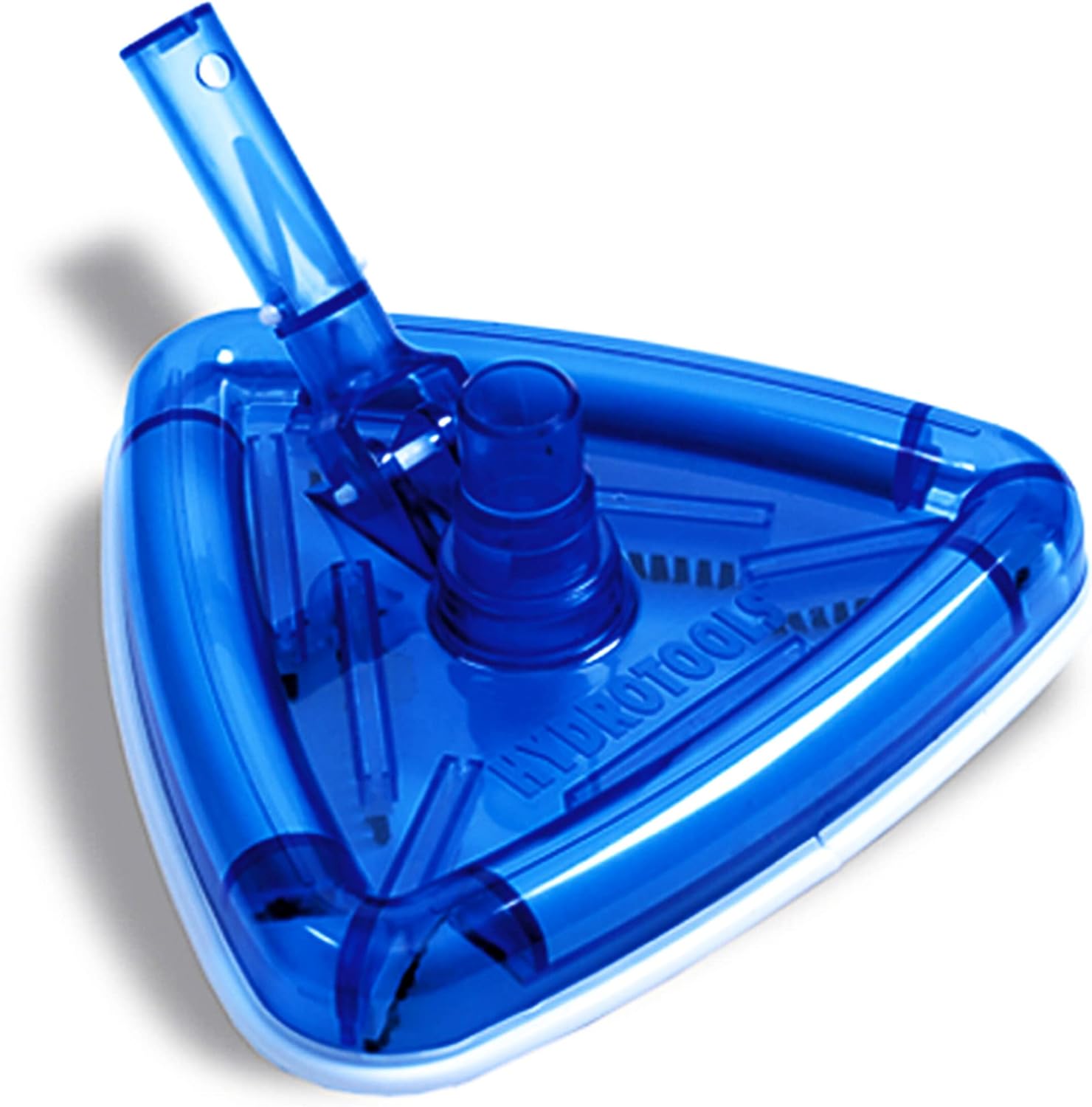
This weighted manual vacuum head is designed for deep cleaning above-ground and inground pools. Its triangular head uses integrated brush bristles to loosen and capture dirt and debris while staying submerged against the pool floor. The universal swivel connector fits 1-1/4-inch and 1-1/2-inch vacuum hoses, and the reinforced material is resistant to UV exposure, weather, and corrosion. It includes a 1-year guarantee against manufacturing defects.
Check On AmazonIf you click this link and buy, we earn a commission at no additional cost to you.
Balance the Chemistry Before You Close
Test and correct the water before you add a single winterizing chemical. Closing on unbalanced water locks in whatever problem you had going into winter, and you will not get a chance to fix it again until spring. These are the targets I check on every closing:
| Test | Target Range |
|---|---|
| Free chlorine | 2 to 4 ppm |
| pH | 7.2 to 7.6 |
| Total alkalinity | 80 to 120 ppm |
| Calcium hardness | 175 to 225 ppm |
Balancing these numbers before closing prevents staining, scaling, and corrosion to metal fittings and the pump housing over the off-season, and correct pre-close chemistry noticeably cuts down on the work you will have in spring. Water that goes under the cover already balanced tends to come out in spring needing a normal startup, not a full correction. Water that goes under out of range usually comes out worse than it went in, since nothing is actively managing it for months.

This all-in-one kit tests for free and total chlorine, pH, acid and base demand, total alkalinity, calcium hardness, and cyanuric acid, working with any pool, hot tub, or spa. It includes a carrying case, water comparator, water balance calculator, base demand reagent, color-coded instructions, and a waterproof chemistry guide for quick reference. Taylor test kits are the only testing supplies recommended by the American Swimming Coaches Association, ensuring professional-level accuracy.
Check On AmazonIf you click this link and buy, we earn a commission at no additional cost to you.
Adding Winterizing Chemicals
Once the chemistry above is balanced, add a winter algaecide and a chlorine shock. The winterizing shock gives the pool a stronger sanitizer reserve going into the off-season, instead of starting winter with chlorine already near the low end of the range. I add these chemicals at night, since sunlight breaks down chlorine fast and you want as much of that dose intact as possible before the pool goes dark under a cover for months.
Run the pump for 2 to 4 hours after adding the winterizing dose so it circulates fully through the water before you install the cover. Do not shock the pool and cover it in the same hour. That circulation window is what actually distributes the chemical evenly instead of leaving a concentrated dose sitting near the return jet while the rest of the pool stays untreated.
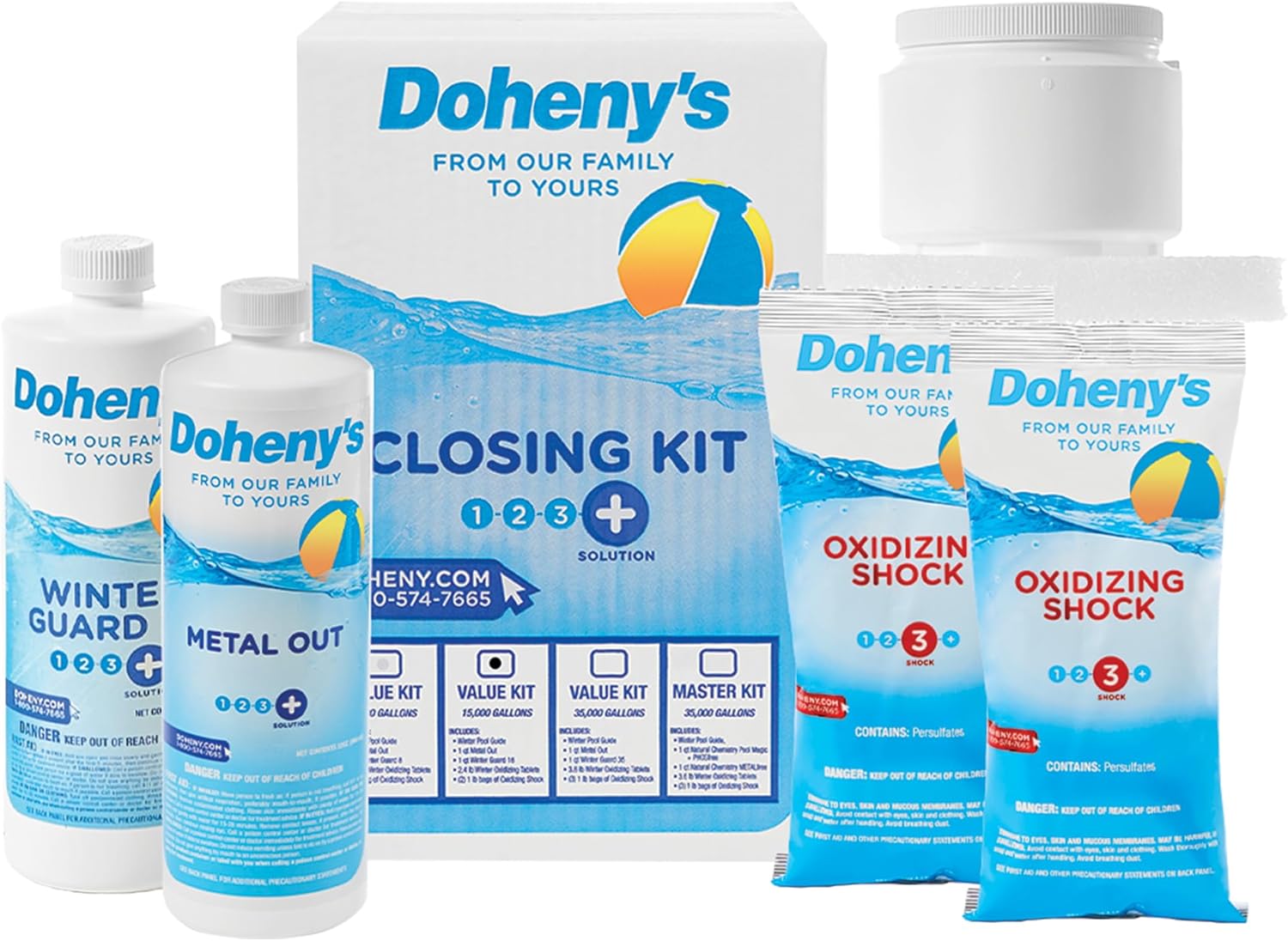
This winterizing kit is designed for above-ground and inground pools holding up to 15,000 gallons. It combines pool shock, algaecide, stain-prevention treatment, and a Winter Pill for seasonal closing. The kit includes closing instructions, and larger pools can be treated by using additional kits. It is rated 4.7 out of 5 stars from more than 1,200 Amazon ratings.
Check On AmazonIf you click this link and buy, we earn a commission at no additional cost to you.
Winterizing the Pump and Filter
Drain the pump completely. Any water left sitting in the pump housing over winter will freeze, expand, and crack the housing, and a cracked pump housing is one of the most common repair calls I get every spring, almost always traceable to a closing that skipped this step. Disconnect the hoses, tip the pump to fully empty it, and store it somewhere it will not sit in standing water.
Filter winterizing depends on what type you are running. For a cartridge filter, pull the cartridge, clean it thoroughly, and store it dry indoors where it will not freeze or sit in moisture all winter. For a sand filter, backwash it, drain the tank, and remove the drain plug so any residual water has somewhere to go instead of sitting and freezing inside the tank.
Field Note: I have replaced more cracked pump housings from incomplete draining than from actual pump failure. The pump itself is usually fine. It is the water nobody thought to fully drain out that splits the housing the first hard freeze of the year.
Store every removable component inside rather than leaving it connected outdoors, even in a garage that gets cold. A garage that dips below freezing overnight will still crack a housing with water trapped inside it, so “inside” here means somewhere that reliably stays above freezing, not just out of direct weather.
Installing the Cover
Install the air pillow before the cover goes on. The pillow sits in the center of the pool and relieves pressure from ice as it forms, which matters most on pools that see hard, sustained freezes rather than a few scattered cold nights. Sizing the pillow correctly for your pool diameter is its own decision, so I am not going to get into pillow sizing here.
Once the pillow is in place, install the winter cover using the cable and winch system that comes with most above ground pool cover kits. Tighten it fully. A loose cover is an invitation for wind to get underneath it, and a cover that lifts partway through winter lets debris, sunlight, and cold air in exactly where you spent the last several steps keeping them out.
- Confirm water temperature has stayed below 65 degrees Fahrenheit for several consecutive days.
- Skim, brush, and vacuum the pool, and remove ladders or accessories before testing the water.
- Test and balance free chlorine, pH, total alkalinity, and calcium hardness.
- Add the winter algaecide and chlorine shock at night, then run the pump for 2 to 4 hours.
- Drain the pump completely and store it somewhere that stays above freezing.
- Winterize the filter based on type: cartridge cleaned and stored dry, sand filter backwashed and drained.
- Install the air pillow, then install and fully tighten the winter cover.
Work through that list in order and you have covered every piece that actually causes spring headaches: timing, chemistry, equipment, and a cover that stays put through the season.
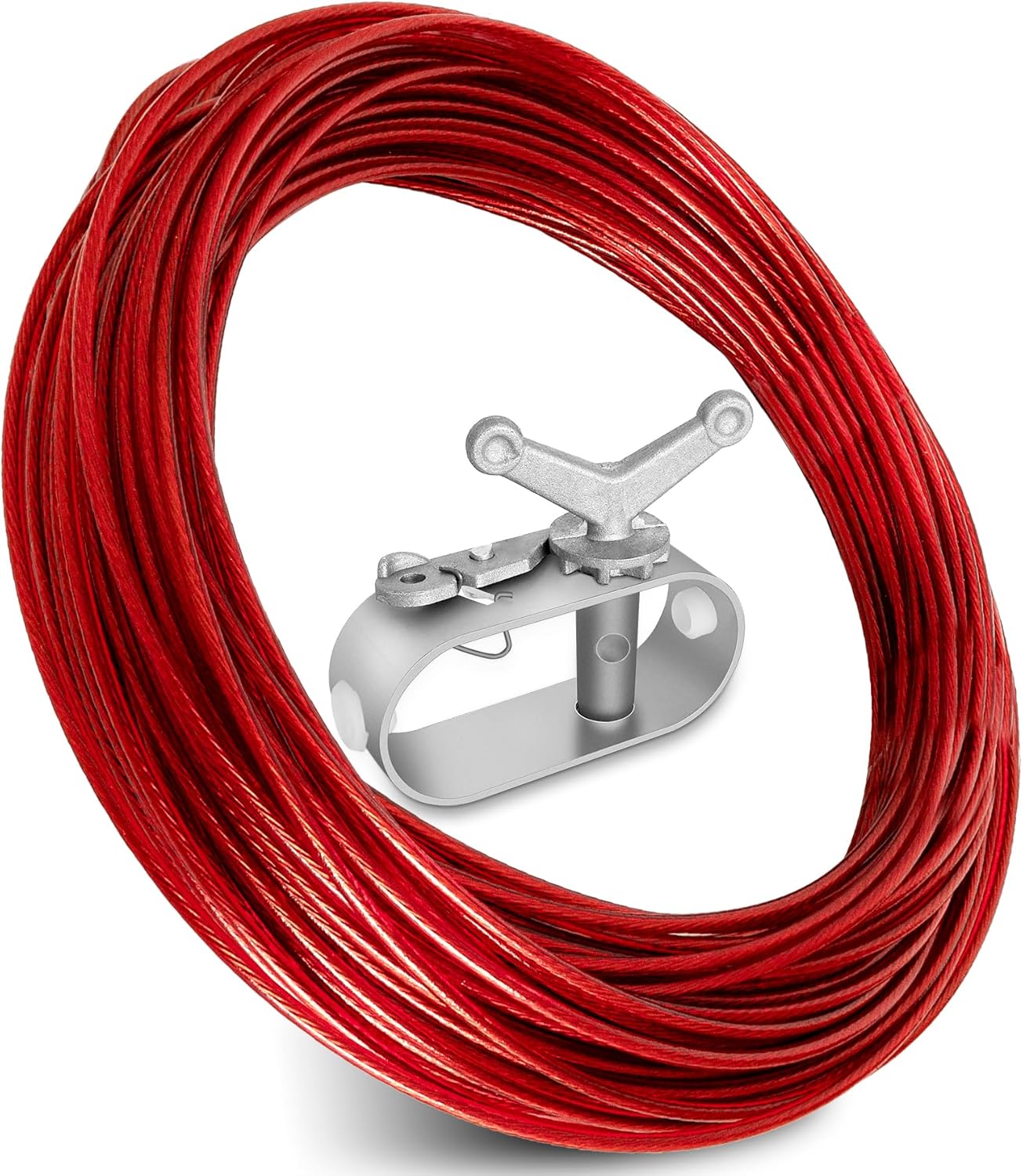
This winter cover kit combines a 100-foot plastic-coated steel cable with an aluminum spring-loaded ratchet. It fits round above-ground pools up to 30 feet in diameter and oval pools up to 18 by 38 feet. The cable and winch provide the tightening hardware needed to secure a compatible winter cover around the pool perimeter.
Check On AmazonIf you click this link and buy, we earn a commission at no additional cost to you.
Final Thoughts: Patience on Timing Pays Off in Spring
Of everything in this sequence, the 65-degree rule is the step most owners rush past, and it is the one that decides how much work you are doing in spring. Check the water temperature over several days before you commit to closing, clean and balance the water before adding anything, and do not leave water trapped in the pump or filter. Get those three things right and spring opening becomes much easier. For the bigger seasonal routine, the full above ground pool maintenance guide explains how regular chemical checks and seasonal upkeep connect to closing.
FAQs
🌡️ What temperature should the water be before I close my above ground pool?
Wait until the water tests consistently below 65 degrees Fahrenheit over several days, not just one cool morning. Closing on a single cold snap can leave the water still warm enough for algae to keep growing.
❄️ What happens if I close my pool too early?
Algae keeps growing in water that is still warm, and winterizing chemistry is not strong enough to stop active growth the way a normal season dose can. You typically open in spring to green, cloudy water that needs a full correction instead of a routine startup.
🧪 Do I need to balance chemistry before adding winterizing chemicals?
Yes. Test and correct free chlorine, pH, total alkalinity, and calcium hardness before adding algaecide or shock. Closing on unbalanced water locks in that imbalance until spring and increases staining, scaling, and corrosion risk.
🔧 Why do I need to drain the pump completely before winter?
Any water left in the pump housing will freeze, expand, and crack the housing over winter. This is one of the most common spring repair calls, and it is almost always preventable by fully draining the pump before storage.
🌬️ How tight should the winter cover be?
Tighten the cable and winch system fully. A loose cover lets wind get underneath it, and a cover that shifts during winter allows debris, sunlight, and cold air in, undoing the work you just did on chemistry and equipment.
🗓️ When does water usually drop below 65 degrees in the fall?
In most northern US climates, this happens mid-to-late October rather than early September. Your exact timing depends on regional climate, shade, and how the pool is situated, so test the water instead of going by a fixed date.
Sources and References
- Leslie’s Pool Supplies closing guidance, confirming the 65-degree Fahrenheit threshold for closing timing.
- Swim University’s pool closing resource, confirming that closing should wait until water is consistently below 65 degrees Fahrenheit.
- Watson’s pool closing guidance, confirming that balancing chemistry before closing helps prevent staining, scaling, and equipment corrosion over the off-season.
- Liner World’s pool closing resource, confirming that correct pre-close chemistry levels reduce the amount of work needed at spring opening.
- Zager’s Pool & Spa winterizing guidance, confirming that storing pump and filter components indoors prevents freeze damage.