Learning how to open an above ground pool the right way is the difference between swimming the same day and spending one to two weeks fighting chemistry before the water is safe. A pool that was closed correctly opens fast because you are adjusting an established baseline, not building chemistry from a fresh fill. This guide walks through the opening sequence in order: clearing the cover, reconnecting equipment before you test anything, the chemistry adjustment order, and when to shock. Follow the order and most pools are swim-ready within 24 hours.
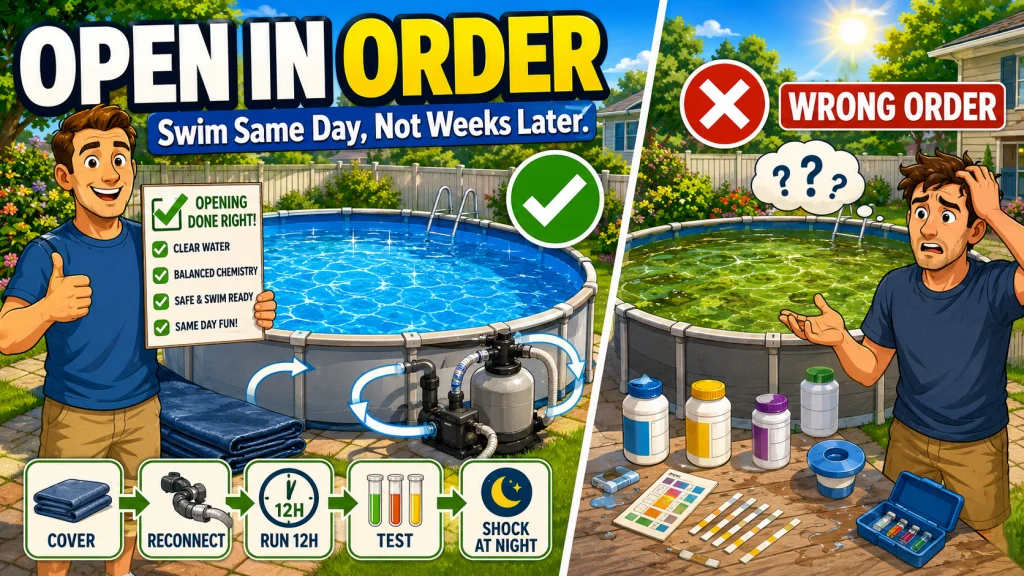
A Correctly Handled Opening Gets You Swimming the Same Day
Here is the gap I see every spring: two owners open their above ground pools on the same weekend, and one is swimming by evening while the other is still fighting cloudy, algae-tinted water two weeks later. The difference is almost never luck. It is whether the pool was closed properly last fall and whether the opening steps get done in the right order this spring.
A properly closed pool opens in about a day, because the water chemistry was already close to target when it went under the cover and the winter algaecide kept things from drifting far. An improperly closed pool, or one opened in the wrong sequence, can take one to two weeks of chemistry corrections before it is swim-ready. The sequence below is what produces the same-day result, and it applies whether this is your first above ground pool spring opening or your tenth.
Clear the Cover Before You Touch It
Before the cover comes off, pump or scoop any standing water off the top and sweep away leaves and debris. This step gets skipped constantly by owners eager to see the water, and it is one of the most common above ground pool opening steps people rush past. Whatever is sitting on top of that cover is about to end up in the pool the second you pull it, and every leaf and bit of debris that falls in adds to the chemistry correction you will need later.
Manufacturer guidance from ARM & HAMMER backs up this order specifically: clear debris and pump off standing water before removing the cover, rather than dragging a loaded cover across the pool and hoping the skimmer catches everything. A cover that goes into storage clean also means less scrubbing and fewer stains to deal with next fall when it goes back on.

This 75W submersible pool cover pump moves up to 10 gallons per minute and uses a durable plastic housing designed to avoid weighing down the cover. It includes a drainage hose and accessories for removing standing water without requiring a separate garden hose. The flat-base design handles shallow water and works with above-ground pools, in-ground pools, spas, and ponds.
Check On AmazonIf you click this link and buy, we earn a commission at no additional cost to you.
Clean and Store the Cover the Right Way
Once the cover is off, hose it down, lay it flat, and let it dry completely before folding it away. A wet cover folded and stuffed into a bag or bin will grow mildew over the summer and come out brittle and stained by the time you need it again next fall. This is a small step that gets ignored because everyone wants to move straight to the water, but it is the reason some covers last five seasons and others need replacing after two.
Store the dry cover in its bag in a spot that stays cool and out of direct sun. If you already have a solid routine for the other end of the season, the full walkthrough for closing an above ground pool correctly each fall is worth reviewing now, since how the pool gets closed in October is what determines whether this opening takes one day or two weeks.
Reconnect Everything Before You Test a Drop of Water
Reconnect the pump, filter, and any plumbing lines you disconnected for winter before you test anything. Then run the filtration system for at least 12 hours before making a single chemistry adjustment. I know the instinct is to test the water the moment the cover is off, but a test taken before the system has circulated is not testing the pool. It is testing whatever settled near the surface over the winter, and that reading will send you chasing numbers that are not accurate.
That initial 12-hour run does two things: it circulates the stored winter water so the whole pool volume is represented in your next test, and it gives you a real baseline instead of a guess. ARM & HAMMER’s own opening guidance confirms this same order, reconnecting plumbing and running the system before testing, rather than testing first and adjusting on the fly.
- Reconnect the pump, filter, and any hoses or fittings removed for winter.
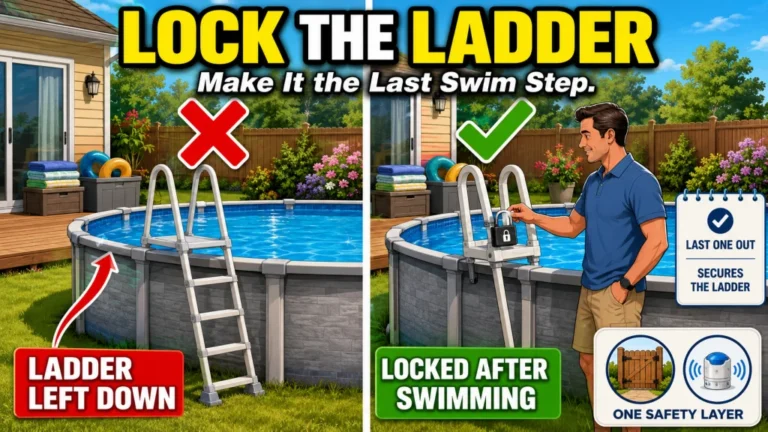
- Reinstall ladders, handrails, and any winter plugs pulled from the skimmer.
- Top off the water level if it dropped over the winter.
- Run the filter for at least 12 hours before testing anything.
- Only then pull a water sample and start the chemistry sequence below.
Warning: Do not add chemicals based on a test taken before the pump has had time to circulate the pool water. An inaccurate baseline leads to overcorrecting, which is exactly how a one-day opening turns into a two-week one.

This 2-pack contains 1.5-inch threaded winterizing plugs with O-rings for above-ground and in-ground pools. The plugs are compatible with many Hayward, Pentair, Waterway, and other pool filter drain plug applications. They are designed for 1.5-inch all-purpose male threaded plug replacements.
Check On AmazonIf you click this link and buy, we earn a commission at no additional cost to you.
The Opening Chemistry Test and Adjustment Order
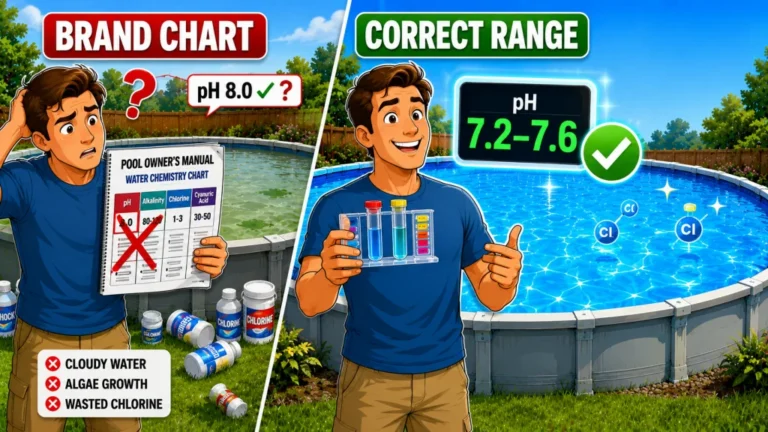
Once the pump has circulated for 12 hours, test free chlorine, pH, total alkalinity, CYA, and calcium hardness. Adjust them in the same order you would use for any above ground pool chemical startup: alkalinity first, then pH, then calcium hardness, then CYA if it has dropped below target, then chlorine last. Let the water circulate after each major adjustment, follow the product wait time, and retest before making the next change so you are reading the actual result, not a number still in flux.
This order matters because each parameter affects how accurately you can read the next one. Adjust pH before alkalinity is settled and it may not hold well. Add calcium before pH is stable and the reading can mislead you into adding too much or too little. The same alkalinity-first sequence is the standard approach used across pool chemistry education, and following it here is what keeps a spring opening from turning into a guessing game.
| Parameter | Typical target range | Adjustment order |
|---|---|---|
| Total alkalinity | 80 to 120 ppm | 1st |
| pH | 7.2 to 7.6 | 2nd |
| Calcium hardness | 200 to 400 ppm | 3rd |
| CYA | 30 to 50 ppm | 4th, if low |
| Free chlorine | 2 to 4 ppm to swim | Last |
If the pool comes out from under the cover green despite a solid winterizing routine, do not try to balance chemistry in a green pool. Green water means active algae, and normal balancing steps will not catch up to it. Treat that situation as its own project using a shock-based algae recovery method rather than working through the sequence above, then come back to this order once the water is clear again.

This all-in-one kit tests for free and total chlorine, pH, acid and base demand, total alkalinity, calcium hardness, and cyanuric acid, working with any pool, hot tub, or spa. It includes a carrying case, water comparator, water balance calculator, base demand reagent, color-coded instructions, and a waterproof chemistry guide for quick reference. Taylor test kits are the only testing supplies recommended by the American Swimming Coaches Association, ensuring professional-level accuracy.
Check On AmazonIf you click this link and buy, we earn a commission at no additional cost to you.
Shock the Pool the First Evening, Not Before
Once alkalinity, pH, calcium hardness, and CYA if needed are in range, add chlorine shock on the first evening, after the sun is down so UV does not burn it off before it can work. Run the pump overnight so the shock circulates through the entire pool rather than sitting concentrated near where it was poured in.
Test again the next morning. If free chlorine is sitting in the 2 to 4 ppm range and the water looks clear, the pool is ready to swim. That is the whole point of doing the earlier steps in order: by the time you get to shock, you are making one small correction to water that was already close to balanced, not trying to fix five things at once in the same evening.
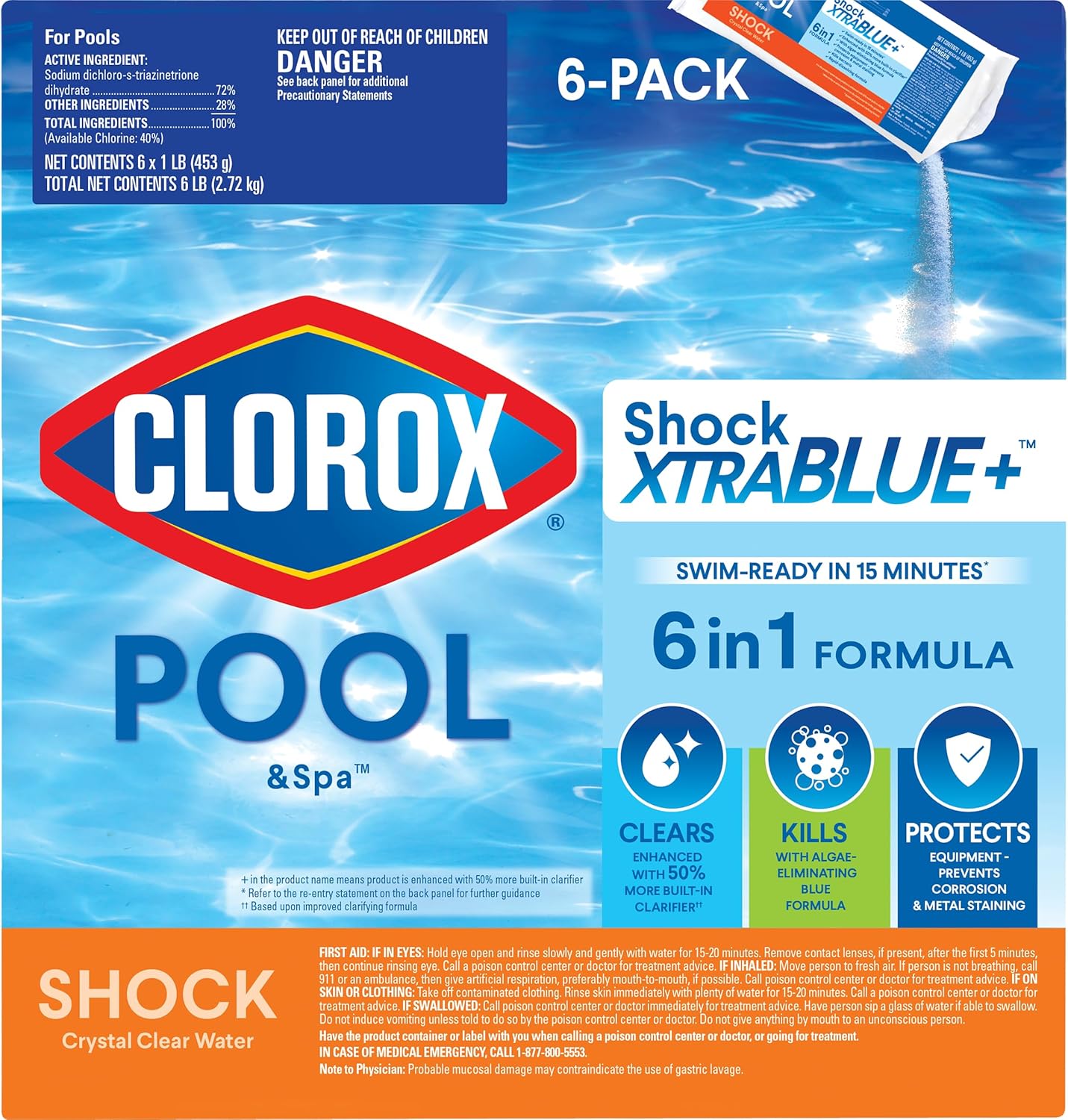
This 6-pack granular pool shock uses a 6-in-1 formula to kill bacteria and algae, help prevent algae, clear cloudy water, and support filter performance. The fast-dissolving treatment is listed as swim-ready in 15 minutes and is compatible with vinyl, plaster, fiberglass, and tile pool surfaces. Amazon lists a dose of 1 pound per 12,000 gallons.
Check On AmazonIf you click this link and buy, we earn a commission at no additional cost to you.
Why Opening Chemistry Is Different From Startup Chemistry
A brand new pool being filled and started up for the first time has no established pool chemistry baseline to work from. The source water already has its own pH, alkalinity, and mineral profile, but it has not been balanced as pool water yet. Each parameter has to be tested, adjusted, and stabilized from the beginning, which is why a first-time startup often takes longer than a seasonal opening. An above ground pool being reopened for the summer is a different situation entirely.
The pool was closed with chemistry that was already balanced and a winter algaecide doing its job through the off-season. The chemistry targets themselves do not change. Alkalinity, pH, and the rest still aim for the same ranges either way, but the size of the adjustment is smaller because you are correcting an established baseline rather than building one from a fresh fill. That is the real reason a well-handled spring opening moves so much faster than a first fill, and it is why rushing the reconnect-and-test order above costs you more time than it saves.
Final Thoughts: The Order Is What Makes It a One-Day Job
Clear the cover before it comes off, reconnect and run the system before testing, work the chemistry in the same order every time, and shock once everything else is in range. Skip a step or do them out of order and you are the owner still fighting the water two weeks later instead of swimming the same weekend.
If you want the bigger picture on keeping an above ground pool through both ends of the season, the full seasonal care routine for above ground pools covers opening, mid-season upkeep, and closing together, and the broader above ground pool maintenance overview is a good next stop once the water is clear and you are just keeping it that way.
FAQs
🏊 How long does it take to open an above ground pool for summer?
A pool that was closed correctly and opened in the right order can be swim-ready the same day. An improperly closed or improperly opened pool can take one to two weeks of chemistry corrections before the water is safe to swim in.
🔧 Do I need to reconnect the pump before testing the water?
Yes. Reconnect the pump and filter and run the system for at least 12 hours before testing anything. A test taken before the water has circulated will not give you an accurate reading, which leads to overcorrecting.
🧪 What order should I add chemicals when opening my pool?
Adjust total alkalinity first, then pH, then calcium hardness, then CYA if it is low, then add chlorine shock last. Let the water circulate after each major adjustment and retest before making the next change so you are working from a stable reading.
💧 What if my above ground pool is green when I take the cover off?
Do not try to balance chemistry in a green pool. Green water means active algae, and normal alkalinity and pH adjustments will not catch up to it. Treat it as a shock-based algae recovery instead, then move into the normal opening sequence once the water clears.
⏱️ When should I shock the pool during opening?
Shock on the first evening after alkalinity, pH, calcium hardness, and CYA if needed are already in range, once the sun is down so UV does not burn it off. Run the pump overnight and test again in the morning before swimming.
Sources and References
- ARM & HAMMER’s spring pool opening guidance confirms clearing debris and pumping standing water off the cover before removal, and reconnecting equipment with at least a 12-hour filter run before testing: ARM & HAMMER steps to open your pool in spring.
- Leslie’s closing guidance confirms that cleaning and balancing a pool before winter closing makes the following spring opening easier: Leslie’s top tips for closing your pool.
- Trouble Free Pool’s chemistry primer confirms the standard adjustment order of total alkalinity, then pH, then calcium hardness, then chlorine, used in this article’s opening sequence: Trouble Free Pool’s ABCs of pool water chemistry.