How to Close an Above Ground Pool: The 65-Degree Rule and Step-by-Step Sequence That Makes Spring Opening Easy

How To Close Above Ground Pool

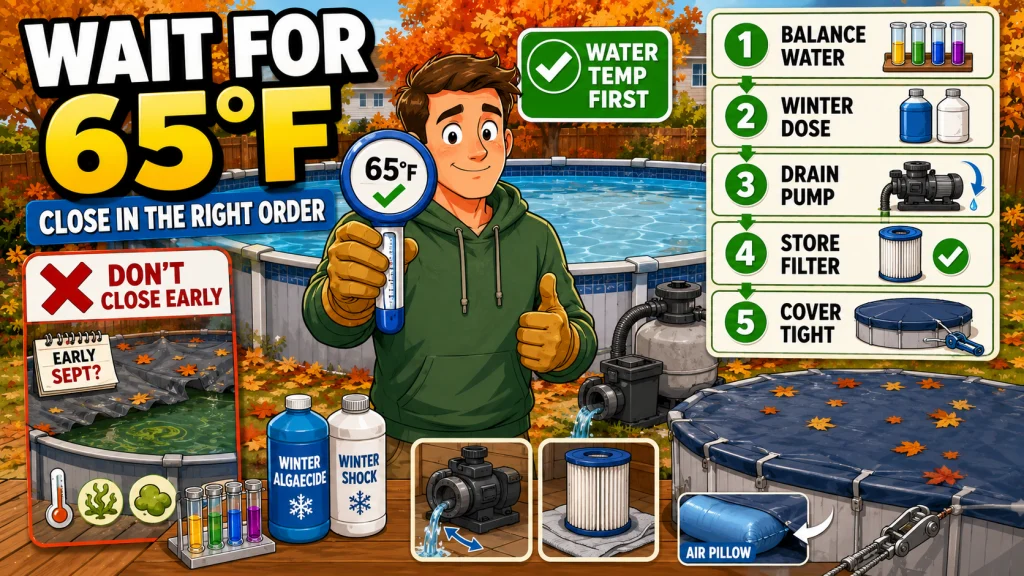
Closing an above ground pool too early does almost as much damage as closing it wrong. The rule I follow on every closing is simple: do not close until the water is consistently below 65 degrees Fahrenheit, because algae keeps growing in warmer water even after you add winterizing chemistry. Once the temperature is right, … Read more

Above Ground Pool Startup Chemical Sequence: Why the Order Matters and What Happens When You Add Chemicals Wrong

Above Ground Pool Startup Chemical Sequence

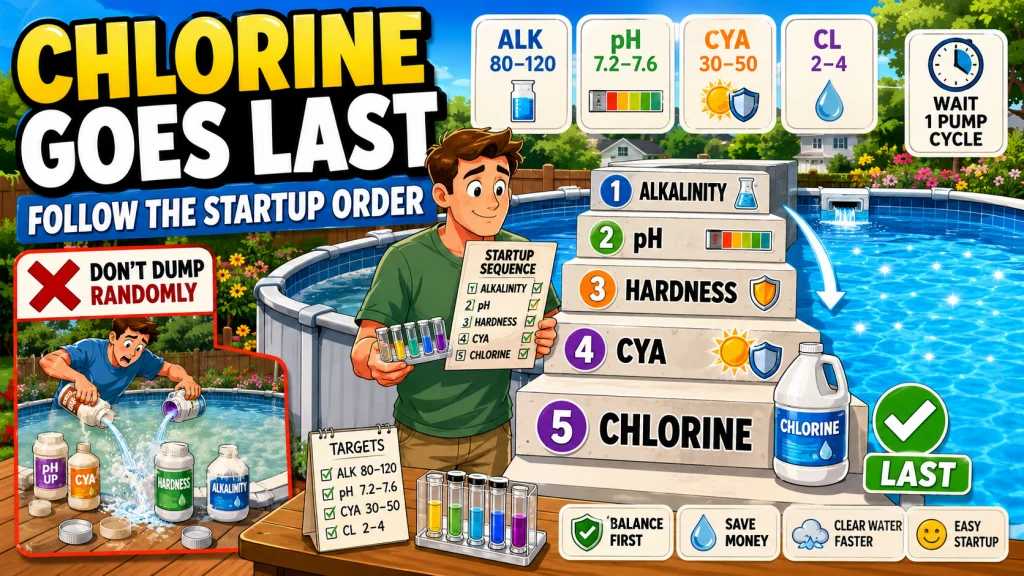
If you just filled a new above ground pool and you are staring at five different chemical bottles, the order you add them in actually changes how well each one works. On every install, I follow the same startup sequence: total alkalinity first, then pH, then calcium hardness, then cyanuric acid, and chlorine last. Skip … Read more

Above Ground Pool First Fill: How to Manage the Liner During Filling and Connect the Pump Correctly

Above Ground Pool First Fill

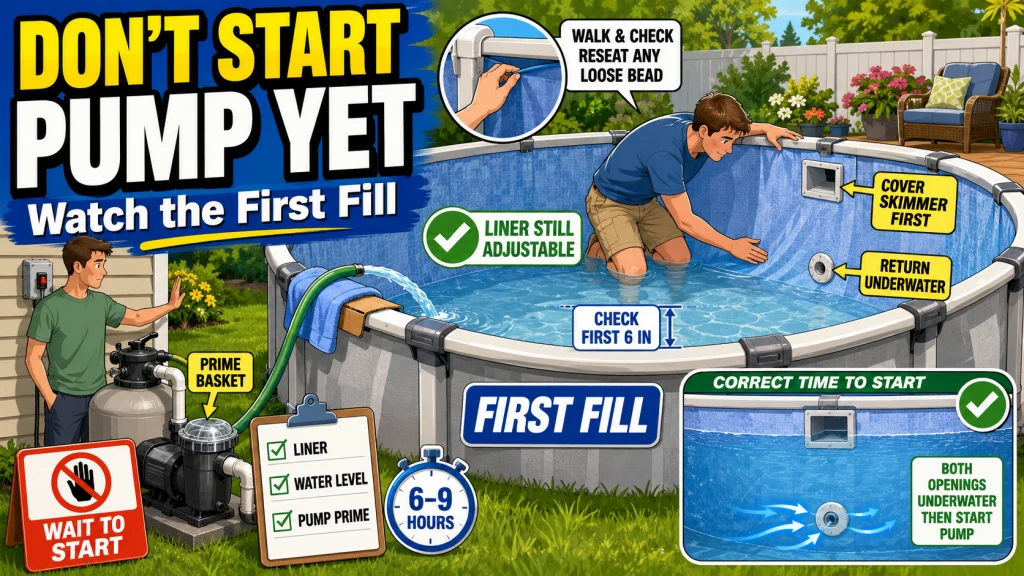
The above ground pool first fill is the step where a rushed setup either holds together or shows every mistake made underneath the liner. I walk through how fast to fill, how to check the liner as the water rises, when it is actually safe to connect and start the pump, and how long the … Read more

Above Ground Pool Cloudy Water: The Five Causes With Different Fixes and Why Running the Filter Longer Makes Some Worse

Above Ground Pool Cloudy Water

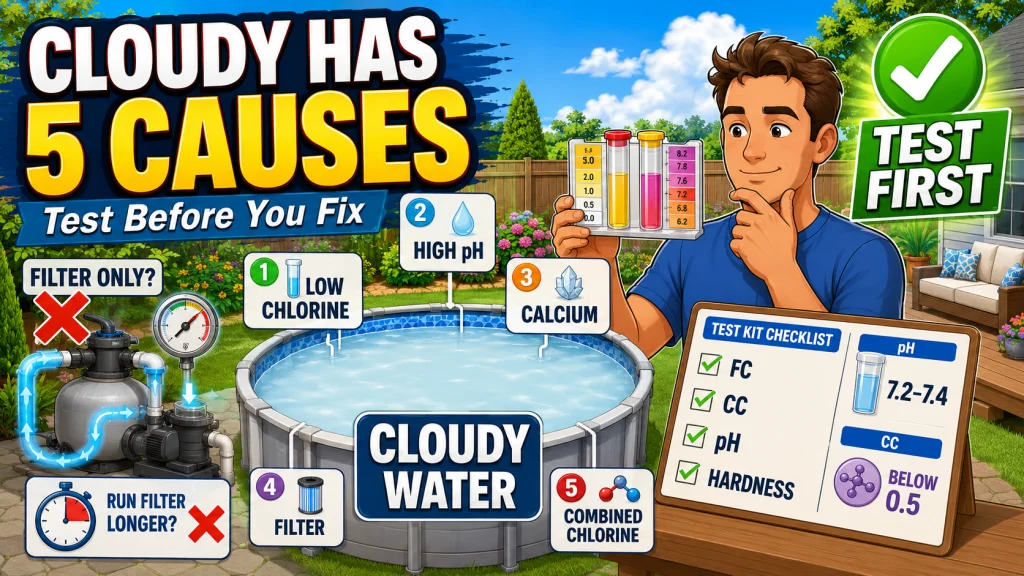
Above ground pool cloudy water almost always comes down to one of five separate causes, and each one needs a different fix. Low chlorine, high pH, an imbalanced calcium hardness reading, a filter that has stopped doing its job, and combined chlorine that has built up past 0.5 ppm all produce the same milky look … Read more

Above Ground Pool Green Water: Why Filtration Will Not Fix It and How the SLAM Method Does

Above Ground Pool Green Water

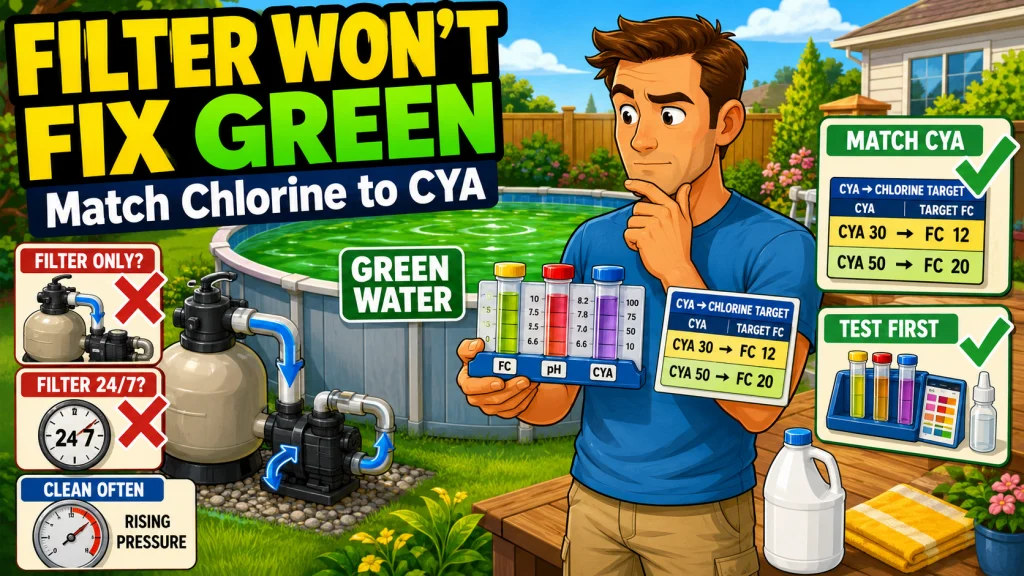
Above ground pool green water is not a filtration problem, it is a chlorine problem, and no amount of extra filter run time fixes it on its own. Green means algae has taken hold because chlorine dropped below the level needed to kill it, and the only reliable fix is the SLAM method: raising free … Read more

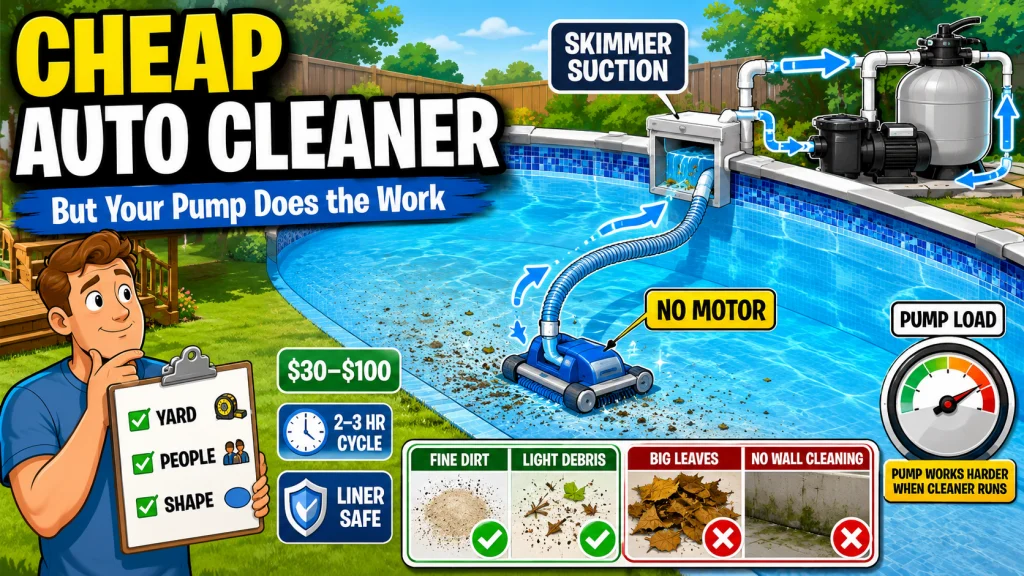
Above Ground Pool Suction Cleaner: How It Works, What It Cleans, and When It Is Enough

Above Ground Pool Suction Cleaner

An above ground pool suction cleaner connects to the skimmer opening and rides on the suction your existing pump already produces, so it needs no extra electrical connection and usually costs somewhere between 30 and 100 dollars. It is the cheapest automatic cleaning option for an above ground pool, and for a lot of yards … Read more

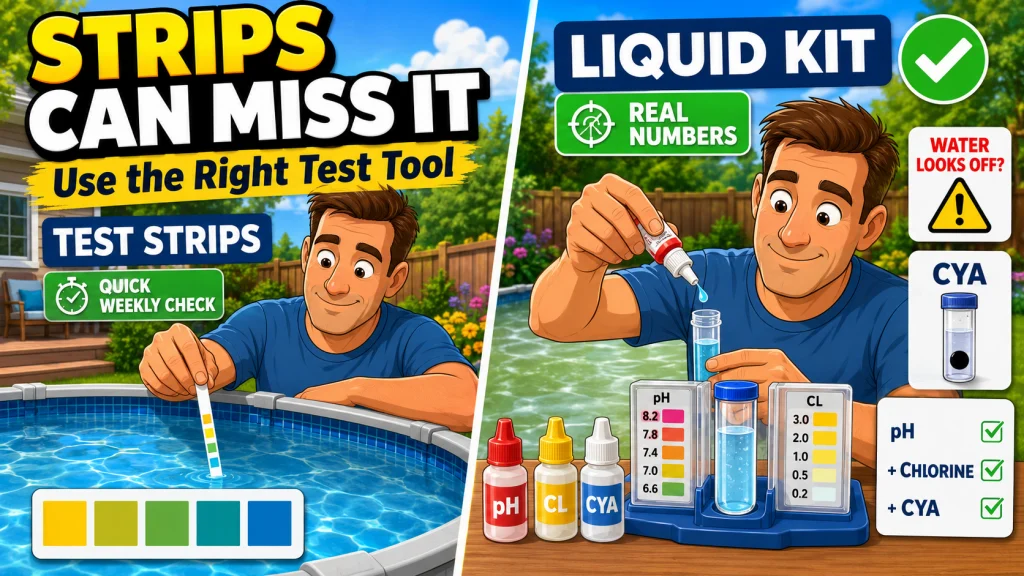
Above Ground Pool Test Kit: Why Test Strips Miss What Liquid Tests Catch and When Each Is Adequate

Above Ground Pool Test Kit

Test strips and a liquid test kit are not interchangeable tools for an above ground pool, even though most owners treat them that way. Test strips are built for a quick weekly check on a pool that is already stable. A liquid test kit is built for the moment something is wrong and you need … Read more

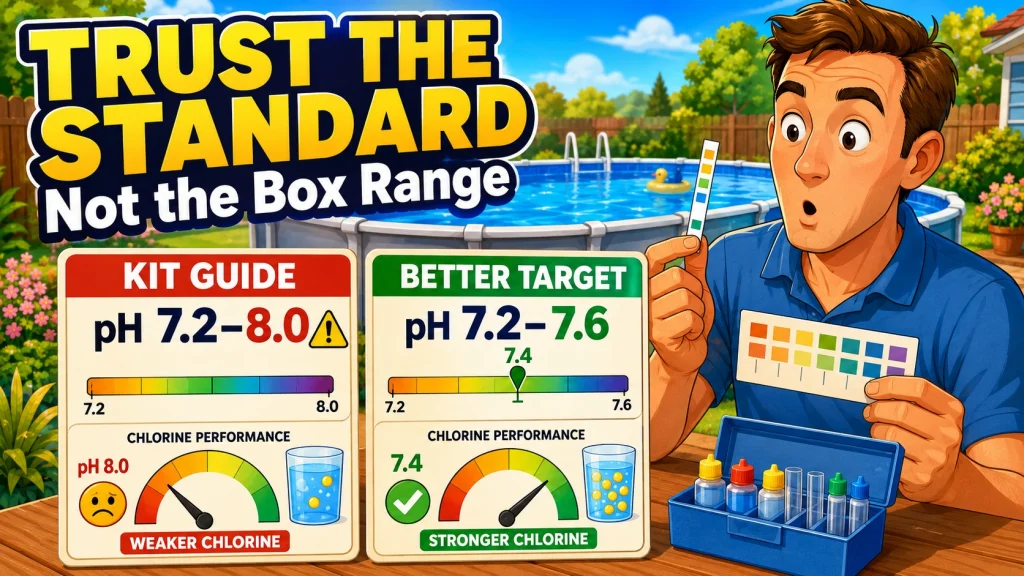
Above Ground Pool Chemical Target Ranges: The Correct Numbers and Why Your Pool Kit Guide May Be Wrong

Above Ground Pool Chemical Target Ranges

The correct above ground pool chemical target ranges are the same six numbers used for any residential pool, but the packaging that comes with most above ground kits does not always print them accurately. This guide lays out the six parameters that actually matter, free chlorine, pH, total alkalinity, cyanuric acid, calcium hardness, and combined … Read more