Most robotic pool cleaners sold at pool stores are built for inground pools, and dropping one into a vinyl-lined above ground pool is one of the more expensive mistakes I see owners make. An above ground pool robotic cleaner needs a different brush system, a lighter frame, and often a cordless design to work without damaging the liner or relying on plumbing most above ground setups don’t have. This article covers why inground robots are the wrong tool for a vinyl pool, what actually separates an above ground-compatible model, and where a robotic cleaner is worth the extra cost over a suction cleaner.
Why an Above Ground Pool Robotic Cleaner Is Not the Same Machine as an Inground Robot
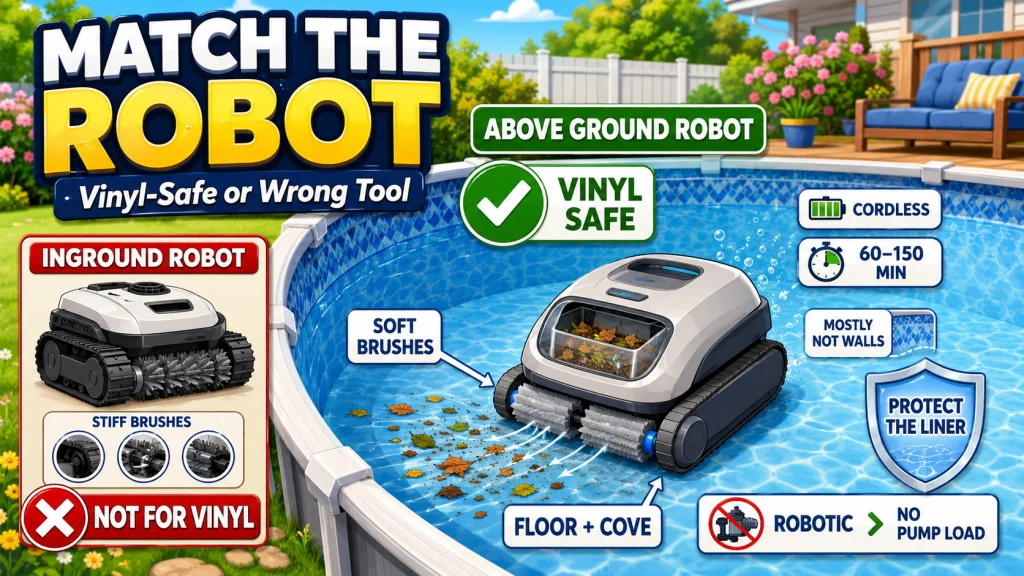
I have had more than one owner buy a robotic cleaner off the shelf at a big box store, drop it into their above ground pool, and call me a few weeks later asking why the liner has fine scuff marks near the cove. In almost every case, the cleaner they bought was built for inground surfaces like plaster, gunite, or fiberglass, not for vinyl. Those inground robots use stiffer scrubbing brushes designed to break loose algae from a rough concrete surface. Vinyl doesn’t need that kind of scrubbing, and it can’t take it without showing wear.
The fix isn’t avoiding robotic cleaners altogether. It’s knowing what actually separates a robot built for an above ground vinyl pool from one built for a plastered inground pool, because the two aren’t interchangeable in most cases, even though they sit on the same store shelf. A cleaner marketed for both pool types is fine as long as the listing explicitly says it’s rated for vinyl surfaces; the risk is in assuming any robot works everywhere.
Why Most Inground Robotic Cleaners Are Not Built for a Vinyl Liner
Inground robotic cleaners are built to handle plaster, gunite, fiberglass, and tile, all of which are hard, textured surfaces that can take an aggressive brush without any real risk. Vinyl liners are the opposite. They’re a flexible, relatively soft material, and a brush system designed to scrub concrete can scratch, scuff, or gradually wear down that liner over repeated cleaning cycles. According to The Pool Factory, a retailer that specializes in above ground pool equipment, robots built for above ground pools are designed around the vinyl floor and cove specifically, while inground robots are engineered to handle a broader range of harder surfaces including concrete, gunite, and fiberglass, which is a very different target than a dedicated vinyl-safe machine.
I have seen this play out the same way more than once. An owner picks up a robot on sale that’s clearly labeled for inground use because it was the cheapest option in the aisle, runs it in their above ground pool for a season, and starts noticing thin scuff lines where the brush contacts the cove and lower wall. By the time it’s noticeable, the damage is already done, and a liner replacement runs into real money years before it should. Checking whether a cleaner is rated for vinyl surfaces before buying is a five-minute step that avoids a multi-year problem.

Designed for above-ground and in-ground pools up to 33 feet, the Dolphin Escape supports vinyl, fiberglass, and gunite surfaces. Its oversized debris cartridge holds up to 60% more debris, while HyperBrush scrubs and vacuums contaminants from the pool. Continuous tracks and dual 24-volt motors provide more than 4,000 GPH of filtration. The 14-pound cleaner also includes a two-year quality assurance.
Check On AmazonIf you click this link and buy, we earn a commission at no additional cost to you.
What Actually Separates an Above Ground Robotic Cleaner
A robotic cleaner built for above ground pools differs from an inground model in a few specific ways, and none of them are marketing fluff. The brush system is softer, usually rubber or foam rather than a stiffer bristle, so it loosens debris from vinyl without abrading it. The unit itself tends to be lighter, since above ground pool walls and floors don’t need to support the heavier frame that an inground robot uses to grip textured concrete. And a growing share of above ground models run cordless on a rechargeable battery instead of plugging into a dedicated outlet near the pool the way older corded units do.
Runtime on cordless models generally falls somewhere between 60 and 150 minutes per charge depending on the pool size and debris load, which is usually enough to cover a full cleaning cycle on a typical 15 to 24-foot above ground pool. None of this means every cordless model is automatically the right choice, and I’ll get into where cordless actually falls short further down, but the core point stands: an above ground robot cleaner is purpose-built around vinyl, not adapted from an inground design. If you’re still deciding what type of cleaning equipment your setup even needs, our broader rundown of the full lineup of above ground pool cleaning equipment is a good place to see how robotic cleaners fit alongside skimmers, filters, and manual tools. And if you want the bigger picture on how a cleaner fits into total equipment cost, our complete guide to outfitting an above ground pool covers that alongside pumps, filters, and covers.
The Cordless Advantage, and Where It Falls Short
Most above ground pools were never plumbed with a dedicated return port for a robotic cleaner connection the way some inground setups are. That’s one reason cordless battery-powered robotic cleaners have become the default choice for many above ground pool owners: they don’t depend on the pool’s plumbing at all. You plug the unit into a standard outlet to charge it, then drop it in the water and let the battery do the work. Pricing on cordless above ground models varies widely by brand and features, and shopping the category shows a real spread from budget units around a hundred dollars up to several hundred for higher-capacity models with stronger motors and larger filter baskets.
The trade-off is suction power and runtime. Battery-powered units have to ration energy, and that limits how much suction they can sustain compared to a corded robot pulling continuous power from an outlet. I tell owners considering a cordless cleaner for an above ground pool to think of it as trading some cleaning power for freedom from plumbing and cords, not as a strictly better version of a corded robot. For a smaller above ground pool with light to moderate debris, that trade is usually worth it. For a larger pool that collects heavy leaf debris every week, a corded model or a suction cleaner tied into stronger, continuous filtration may actually keep up better over a full season.
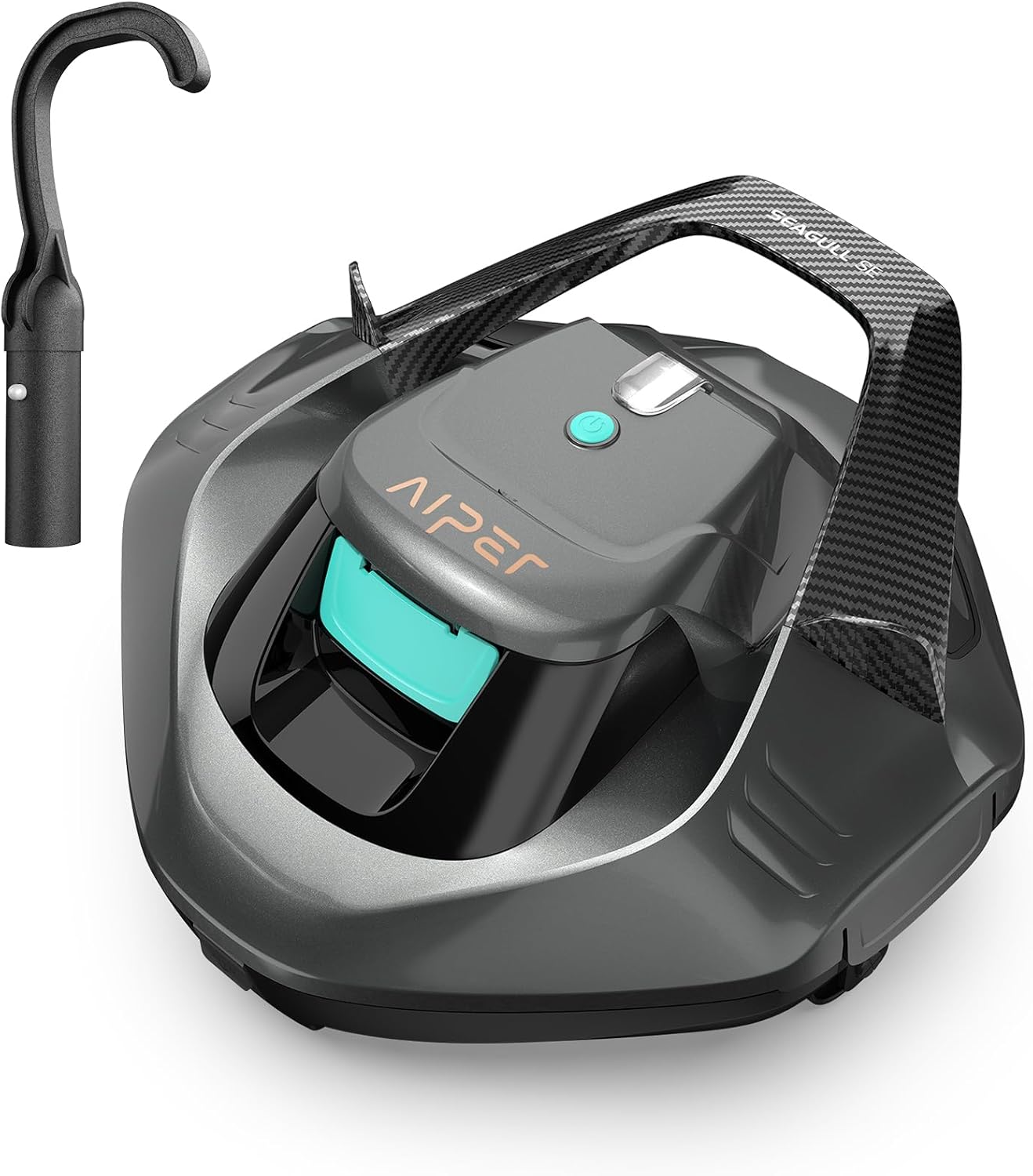
The Seagull SE 2025 combines dual-drive motors and two independent brushes with 1,200 GPH suction for above-ground pool cleaning. Its cordless design includes automatic self-parking near the wall when battery power runs low. A full charge takes about 2.5 hours and provides up to 90 minutes of operation. The cleaner also includes a three-color LED indicator and a one-year warranty.
Check On AmazonIf you click this link and buy, we earn a commission at no additional cost to you.
Wall Climbing Is Mostly an Inground Feature
Inground robots are often built to climb walls and scrub the waterline, which matters on a plastered pool where oils and sunscreen residue build up along the tile line. Above ground robotic cleaners, in most models, are designed to clean the floor and cove only, not the vertical wall. Part of this comes down to physics: above ground pool walls are flexible vinyl rather than a rigid surface, and the shallower angle plus the give in the liner makes consistent wall climbing much harder than it is on a hard-sided inground pool.
This isn’t necessarily a downside once you understand what it means for your maintenance routine. Floor and cove debris, which is where leaves, sand, and heavier particles settle, gets handled automatically. The waterline ring that forms from oils and sunscreen still needs a quick wipe with a rag, or an occasional manual pass with a pole and vacuum head for spots the robot skips entirely. Our step-by-step walkthrough of manually vacuuming an above ground pool covers that quick manual routine if you want to pair it with a robotic cleaner rather than replace manual cleaning altogether. Knowing that going in prevents the disappointment of expecting a robot to do a job it was never built to do on your specific pool type.
Robotic vs Suction: Where the Extra Cost Pays Off
Suction cleaners remain the more budget-friendly option, and for pools with fine, light debris and a healthy filtration system already doing most of the work, that lower cost is often the right call. Robotic cleaners cost more because they carry their own motor, brush, and self-contained filter bag, and that combination handles larger debris and the transition between floor and cove more thoroughly than a suction cleaner riding off your pump’s flow.
- Choose a suction cleaner if your main debris is fine sand or light dirt and your pump and filter are already handling the load.
- Choose a robotic cleaner if you get heavier leaf or twig debris regularly, or if you want a cleaning cycle that doesn’t depend on your pump running.
- Confirm the model is rated for vinyl before buying, regardless of which type you choose, since suction cleaners can have the same brush mismatch problem as robots.
- Budget for the difference: suction cleaners typically run less than robotic models, while robotic cleaners built specifically for above ground vinyl pools cost more but remove the pump dependency entirely.
The extra cost of a robotic cleaner is easiest to justify for owners who want cleaning to happen on a schedule without thinking about it, or whose pool sits under trees and collects more debris than a suction cleaner comfortably keeps up with between filter cleanings. If your setup is fairly clean season to season and your filtration is already solid, there’s no real need to pay for capability you won’t use. If you haven’t settled on the suction side option first, our breakdown of how above ground suction cleaners compare on cost and coverage is worth reading before you decide between the two.

Built for above-ground pools up to 33 feet, the Dolphin Nautilus AG uses an active scrubbing brush that is gentle on pool surfaces while removing debris. Its top-load filter basket lifts out for easier cleaning. The plug-and-play system completes a cleaning cycle in about 1.5 hours, while Smart Navigation scans the pool to choose an efficient route.
Check On AmazonIf you click this link and buy, we earn a commission at no additional cost to you.
What to Check Before Buying an Above Ground Robotic Cleaner
Everything above explains why above ground and inground robots aren’t the same category, but the actual buying decision comes down to a handful of specifics on the listing itself. I walk through the same short list with owners every time they ask me to help pick one out, and it catches most of the mismatches before they become a returned box or a scuffed liner.
- Confirm the listing explicitly states the cleaner is rated for vinyl or above ground use, not just “compatible with most pools.”
- Check the pool size rating against your actual diameter or length, since a cleaner built for a 15-foot pool can struggle to cover a 24-foot one in a single cycle.
- Know whether it cleans floor only or floor and cove, and don’t expect wall or waterline coverage unless the listing specifically says so for above ground use.
- Match runtime to your debris load. A pool under trees needs more than the minimum 60-minute cycle some budget cordless units offer.
- Look at how the filter basket comes out and rinses clean, since a hard-to-access filter turns into a chore you’ll skip.
- Consider the weight once it’s full of water and debris, not just the dry spec sheet number, since that’s what you’re actually lifting out of the pool.
- Be skeptical of “wall climbing” claims on listings aimed at both pool types. That feature is far more reliable on a rigid inground surface than on a flexible vinyl wall.
None of these checks take more than a minute once you know to look for them, and together they do more to prevent a bad purchase than any single spec on its own.

Built for in-ground and above-ground pools, the Hinice cordless robotic cleaner uses a 9,000mAh battery for up to 150 minutes of operation and covers pools up to 2,153 square feet. Its 40W motor drives dual brushes to collect sand, leaves, and small debris from the pool floor. A dual-layer precision filter provides additional filtration for captured debris.
Check On AmazonIf you click this link and buy, we earn a commission at no additional cost to you.
Final Thoughts: Match the Cleaner to the Liner, Not the Store Shelf
The single most avoidable mistake in this category is buying based on what’s cheapest or most prominently displayed rather than what’s actually rated for vinyl. An above ground pool robotic cleaner built for your liner type costs a little more up front than grabbing whatever’s on the shelf, but it protects a liner that’s already one of the more expensive parts of the pool to replace.
Before you buy, confirm the model is rated for vinyl, decide whether cordless freedom or corded suction power matters more for your debris load, and be realistic about whether you need wall and waterline cleaning or just reliable floor and cove coverage. Getting those three answers right before you order saves you from a return shipment or, worse, a liner that needs replacing years ahead of schedule.
FAQs
🧽 Can I use a regular robotic pool cleaner in an above ground pool?
Only if it’s rated for vinyl surfaces. Above ground pool owners should look for a robotic pool cleaner that uses soft rubber or foam brushes instead of the stiffer bristles built for concrete and gunite, which can scuff or scratch a vinyl liner over time.
🔌 Do above ground pool robot cleaners need to be plugged into the pool’s plumbing?
No. Most above ground pools don’t have a dedicated return port for a robotic cleaner, so these models either plug into a standard outlet while charging or run corded from a nearby outlet. They don’t tie into your pump or filter system at all.
🔋 How long does a cordless cleaner for an above ground pool last on one charge?
Most cordless above ground models run between 60 and 150 minutes per charge, depending on the pool size and how much debris the unit is dealing with. That’s usually enough for a full cleaning cycle on a typical 15 to 24-foot pool.
🧗 Do above ground robotic pool cleaners climb the walls?
Most do not. Above ground robotic cleaners are generally built to clean the floor and cove, not the vertical wall, since flexible vinyl walls and shallower angles make consistent wall climbing much harder than it is on a rigid inground surface.
⚖️ Is a robotic cleaner worth it over a suction cleaner for an above ground pool?
It depends on your debris load. Suction cleaners are cheaper and fine for light, fine debris with solid filtration already in place. Robotic cleaners cost more but handle heavier debris and don’t depend on your pump running, which matters more for pools under trees.
Sources and References
1. The Pool Factory, above ground automatic pool cleaners: robotic vs suction, confirming that above ground robotic cleaners are built to clean the vinyl floor and cove, while inground robots are designed for a wider range of harder pool surfaces.
2. Leslie’s Pool Supplies, best automatic cleaners for vinyl pools, confirming that vinyl-lined pools are more sensitive to surface damage and that cleaners built for vinyl use soft, smooth brush and wheel systems to prevent scrapes and tears.
3. Walmart, above ground pool vacuum and robotic cleaner listings, confirming the retail price spread for cordless above ground robotic cleaners across budget and higher-capacity models.