Above ground pool heaters are not sized the same way inground pool heaters are, because the pools they serve usually hold far less water. In this guide I break down the three heater types I get asked about on almost every service call: solar panels, heat pumps, and gas heaters. None of them is the automatic right answer. The one that makes the most sense depends on your climate, how many months a year you actually swim, and whether you would rather absorb a bigger upfront cost or a bigger monthly bill.
Why Above Ground Pool Heaters Get Sized Differently
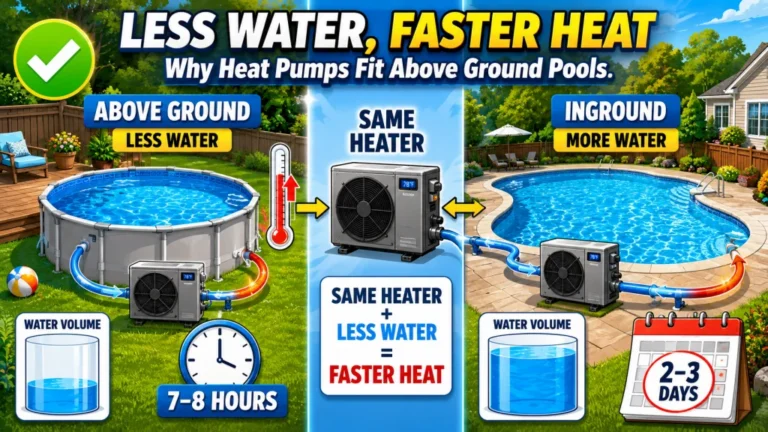
Most above ground pools hold somewhere between 4,000 and 15,000 gallons. An inground pool is usually 15,000 to 30,000 gallons or more. That gap matters more than most buyers expect when they start shopping for above ground pool heaters, because a smaller body of water generally takes less energy to move a few degrees. A heater sized for a big inground pool can be plenty for a 15-foot frame pool, and a high-output heater designed for a much larger pool can be complete overkill for a setup that fits in a suburban backyard.
The tradeoff runs both directions, and it is not just about volume. An above ground pool’s walls sit exposed to open air on all sides instead of being thermally buffered by the surrounding soil the way an inground pool’s shell is, and a frame or soft-sided wall does very little to slow that heat loss compared to earth. Add wind moving across an uncovered surface, which speeds up evaporation and convective cooling, and a smaller pool with a higher surface-area-to-volume ratio can lose overnight warmth faster than the heater gained the day before. I am not covering covers in this guide, since that is its own topic with its own tradeoffs (solar covers and safety covers for above ground pools gets into that separately), and I am not covering pump and filter sizing here either, since that turnover rate math deserves its own explanation (matching pump GPH to your pool’s turnover rate is the place for that). What this guide does cover is the three practical ways to add heat to an above ground pool, and which one actually fits your situation.
Solar Heater Panels: The Lowest Running Cost
Solar pool heating works by routing pool water through a collector, usually a dark, unglazed panel mounted on a nearby roof or a ground rack, before sending it back into the pool. How much that raises the temperature depends on collector area relative to the pool’s surface area, flow rate, sun exposure, starting water temperature, and how much heat the pool loses back overnight, so I do not put a single number on it upfront and neither should any box claiming a guaranteed degree gain. Given enough collector area and consistent sun over several days, the gain becomes noticeable and can meaningfully extend comfortable swim weeks. There is no gas line and no dedicated 240-volt circuit, but once it is installed there is still an ongoing electricity cost, since running water through the collector loop can mean longer pump runtime and, in some setups, an additional circulation pump.
The catch is exposure. A solar setup depends on unobstructed sun for a big chunk of the day, and it will not push through a stretch of cloudy weather the way a gas heater can. I have installed solar panel setups on above ground pools where the owner had a perfect south-facing roof section right next to the pool, and the temperature gain was noticeable within the first week. I have also seen owners buy the same kit for a yard with a tall privacy fence shading half the pool by early afternoon, and the results never matched what they expected from the box.
Field Note: The most common mistake I see with solar heater panels on above ground pools is undersizing the collector area relative to the pool’s surface area. A collector that is too small for the pool it is heating will show a temperature bump on paper but never keep up once the pool is in regular use.
Solar heater panels make the most sense for owners in sunny climates who are trying to stretch the swim season by a few weeks on each end, not for someone trying to swim comfortably through a cold snap in October. That distinction alone saves a lot of buyer’s remorse.

This solar heater uses a 4-foot by 20-foot collector designed for above-ground pools. It uses a connected-tube design and comes with a starter kit. The listing describes it as a universal solar heating setup for above-ground pools.
Check On AmazonIf you click this link and buy, we earn a commission at no additional cost to you.
Heat Pumps: Efficient Heating for Mild-Weather Seasons
An above ground pool heat pump does not burn fuel. It pulls ambient heat out of the surrounding air and transfers it into the pool water, the same basic idea as a home heat pump moving warmth between indoor and outdoor air. That process is efficient in mild conditions, but it depends on the air actually holding heat to pull from. Once outdoor air temperatures drop into the 40s, a heat pump’s output falls off, and in genuinely cold weather it can struggle to keep up at all, so this is not the pick for someone chasing a warm swim deep into a cold climate winter.
Equipment cost compared to a gas unit varies by brand and output size, and total installed cost for either option can shift once you add electrical work, a gas line, or venting to the estimate, so I would not assume one is always cheaper than the other before getting quotes for your specific setup. Where a heat pump tends to earn its keep is the owner who runs the pool most of the season rather than just on hot weekends. Because it transfers heat rather than generating it through combustion, monthly operating cost often lands between solar and gas, though your local electric rate can move that comparison either way.
- Confirm your electrical panel can support the heat pump’s amp draw before buying, since many models need a dedicated circuit an older panel was never wired for.
- Expect slower initial warm-up than a gas heater, since a heat pump is built for steady maintenance heat, not a fast temperature jump before a weekend party.
- Plan for reduced output once nighttime air temperatures start dropping into the 40s, which matters most for owners trying to extend into early fall.
- Compare the unit’s rated output against your pool’s surface area, expected temperature rise, and climate rather than just the “up to X gallons” marketing line, since above ground pool volumes vary a lot between a 12-foot and an 18-foot setup.
Once that electrical and climate math checks out, a heat pump is the option I point most owners toward if they want the pool usable from late spring through early fall without babysitting the weather forecast every morning.

This 115-volt heat pump delivers 22,000 BTU, with the listing specifying use with pool systems up to 7,000 gallons. It heats from 47 to 104°F and cools from 47 to 83°F with app and panel controls. Connection options support 1.25-inch and 1.5-inch pool plumbing, and the unit includes a 3-year warranty.
Check On AmazonIf you click this link and buy, we earn a commission at no additional cost to you.
Gas Heaters: When You Need Heat Now, Not Eventually
A gas pool heater for an above ground pool burns propane or natural gas to heat water on demand, and its rated heat output does not depend on warm ambient air the way a heat pump’s does. That is the core appeal. The actual time to reach a target temperature still depends on your starting water temperature, wind, air temperature, and how much heat the pool is losing while the heater runs, but a gas heater keeps producing that rated output on a cold, overcast morning without the same dependence on sunlight or mild ambient air that solar and heat pump systems have, which makes it a strong fit for anyone who swims irregularly rather than every day.
The tradeoff is operating cost. A basic gas unit’s equipment price is often lower than a comparable heat pump, though a full installed cost still depends on whether you already have a gas line, propane setup, or venting in place, so get quotes before assuming it is the cheapest path overall. Where the ongoing fuel cost adds up fast is running one constantly instead of in short bursts. I usually see gas heaters work best as a “turn it on Friday night, swim all weekend, shut it off” tool rather than a heater left running for months at a time. For an owner closing the pool by early October anyway, or one who only wants heat for a specific event, that lower equipment cost and fast recovery time can outweigh the higher per-hour running cost.
Buying a gas heater and running it continuously all season the way you would a heat pump, then being surprised by the fuel bill.
Using a gas heater in short, planned bursts around specific swim windows, and reserving continuous seasonal heating for solar or a heat pump instead.
Matching the heater to how you actually use the pool, not how you imagine using it, is the difference between a heater that earns its place in your setup and one that sits half-used by August.

This natural gas heater delivers 105,000 BTU for above-ground pools and spas. Polymer headers help prevent rust staining, while the heat exchanger is made from a single piece of extruded copper. Its design maintains heating performance through wind, rain, leaves, and airborne debris without requiring a fan.
Check On AmazonIf you click this link and buy, we earn a commission at no additional cost to you.
Comparing All Three Side by Side
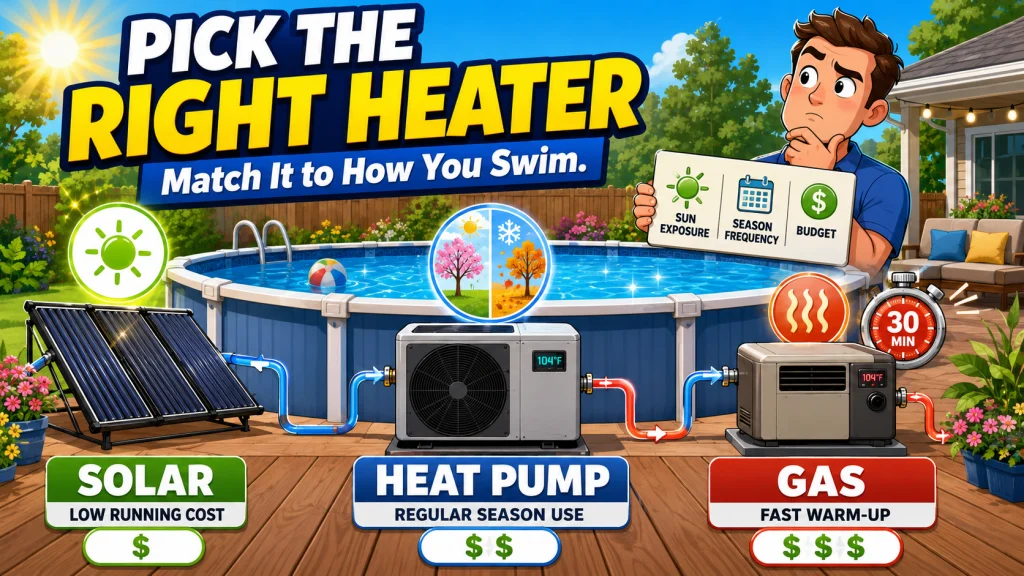
Laid out next to each other, the tradeoffs between these three above ground pool heaters get a lot easier to see. None of them wins on every category, which is exactly why the right choice depends on your specific pool and how you use it.
| Heater Type | Heating Speed | Typical Running Cost | Best Fit |
|---|---|---|---|
| Solar heater panels | Slow, sun-dependent | Lowest | Sunny climate, extending the season by a few weeks |
| Heat pump | Moderate, air-dependent | Middle | Regular use across most of the swim season |
| Gas heater | Fast, not dependent on sun or warm air | Highest per hour | Occasional use or a fast warm-up before a specific weekend |
If two of these look equally appealing on paper, the deciding factor is usually how consistently you plan to use the pool rather than which heater sounds the most advanced.
Matching the Heater to Your Pool and Your Climate
Pool size, sun exposure, and your local climate all push the decision in different directions, and I have watched owners buy the wrong heater type more often because they skipped this step than because any one heater was defective. A smaller pool in a sunny southern yard is a strong candidate for solar heater panels, since the volume is easy to move a few degrees and the sun exposure is already there. A larger frame pool in a climate with mild but not hot fall weather usually does better with a heat pump, since that steady, moderate heat source matches steady, moderate air.
Budget priority matters too. An owner who would rather pay more upfront and very little to run the heater month to month tends to lean solar. An owner who wants the lowest possible equipment price and is fine paying more per hour of actual use tends to lean gas. A heat pump often sits in between on both counts, which is why it comes up so often for owners who have not already ruled out one extreme or the other based on their own installation and usage.
Rule Out the Wrong Heater Before Comparing Prices
Before you get deep into price comparisons, a few quick questions can eliminate an option outright, and that saves more time than reading another spec sheet:
- How many gallons does your pool actually hold, and are the walls exposed to steady wind that would speed up overnight heat loss?
- Does the spot you would mount a solar collector get unshaded sun for most of the day, or does a fence, roofline, or tree line block it by early afternoon?
- Can your electrical panel support the dedicated circuit a heat pump needs, or would that mean an electrician visit before you even buy the unit?
- Do you already have natural gas or propane access and a place to vent a gas heater safely, or would that require new lines run to the pool?
- Do you want the pool held at a steady temperature all week, or are you mainly heating up for a handful of planned swim days?
Any question above that rules out an option does more for your decision than a side-by-side price comparison would, since a heater that cannot physically work in your yard is not a real option regardless of cost.
Your first choice does not lock you into the same setup forever. I have serviced pools where an owner started with a gas heater for weekend use, then added a heat pump the following season once they realized they were swimming three or four nights a week instead of just Saturdays. Sizing the first heater around how you actually swim today still beats guessing at how you might swim two summers from now.

This 240-volt electric heat pump delivers 55,000 BTU for above-ground and inground pools up to 10,000 gallons. Its titanium heat exchanger supports saltwater and chemically treated pools, while an enamel-coated steel cabinet protects the unit outdoors. A digital control panel provides temperature adjustment and monitoring.
Check On AmazonIf you click this link and buy, we earn a commission at no additional cost to you.
Final Thoughts: Pick the Heater That Matches How You Swim
There is no single best above ground pool heater, only the one that fits the ruling-out questions above. Whichever direction you go, size it using your pool’s surface area, volume, expected temperature rise, wind exposure, and local climate rather than a generic “fits most pools” claim on the box. Your heater is only one part of the pool’s total equipment and operating cost, and the rest of that picture is covered in the complete guide to above ground pool equipment.
Explore More in This Section
Each heater type covered above has its own dedicated guide with sizing detail, install notes, and the specific mistakes I see most often for that option.
| Guide | What it helps with |
|---|---|
| Above Ground Pool Solar Heater Panels | Sizing collector area to pool surface and picking a mounting spot that actually gets sun. |
| Above Ground Pool Heat Pump Guide | Matching heat pump BTU output to gallon count and checking electrical panel requirements. |
| Above Ground Pool Gas Heater Guide | Propane versus natural gas tradeoffs and sizing for fast weekend warm-ups. |
Start with whichever heater type matched your situation in the comparison above, since each guide goes deeper into the exact sizing math for that option.
FAQs
☀️ Is a solar heater enough for an above ground pool in a cooler climate?
It depends on sun exposure more than climate label. A cooler region with consistent direct sun can still see a real temperature gain, while a warmer region with heavy shade over the collector often disappoints. Check how many hours of direct sun your mounting spot gets before buying.
⚡ Do above ground pool heat pumps need a special electrical circuit?
Most models need a dedicated circuit sized to the unit’s amp draw, and many older home panels were never wired for that additional load. Confirm your panel’s available capacity before purchasing, since this is the most common install delay I see.
🔥 How fast can a gas heater warm up an above ground pool?
Gas heaters generally raise temperature faster than solar or heat pump options because their rated output does not fall off in cold or cloudy conditions the way those two do. Actual speed still depends on your pool’s gallon count, the heater’s BTU rating, and starting water temperature, so check those before expecting a specific number of degrees per hour.
💰 Which above ground pool heater has the lowest running cost?
Solar heater panels typically have the lowest ongoing cost since there is no fuel or major electricity draw beyond running the existing pump. The tradeoff is that output depends heavily on sun exposure, so a shaded install will not deliver that same low-cost benefit.
🌡️ Can I run more than one heater type on the same above ground pool?
Yes. One possible setup is to use solar panels for baseline heating and keep a gas heater in reserve for a fast warm-up before a specific swim day. Confirm your pump and plumbing can support both before installing them together.
❄️ Do above ground pool heaters work once fall temperatures drop?
Gas heater output does not depend on warm ambient air the way a heat pump’s does, while heat pump output drops once outdoor air falls into the 40s and solar output drops with shorter days and a lower sun angle. Pick based on how late into fall you actually plan to swim.
Sources and References
- U.S. Department of Energy, Swimming Pool Heating and Maintenance
- U.S. Environmental Protection Agency, Renewable Pool Heating
- International Energy Agency Solar Heating and Cooling Programme, Solar Pool Heating