Most people price an above ground pool by the sticker on the box, then get surprised every year after that. Above ground pool cost breaks into three separate layers: what you pay to buy and install it, what it costs to run and maintain every season after, and whether the whole thing pencils out compared to just joining a community pool or paying for a few beach weekends. I have watched buyers budget for the first layer and completely skip the other two, then call me in July asking why a “cheap” pool is eating fifty dollars a week in chemicals. This guide lays out all three layers so you know the full above ground pool total cost before you commit, not after.
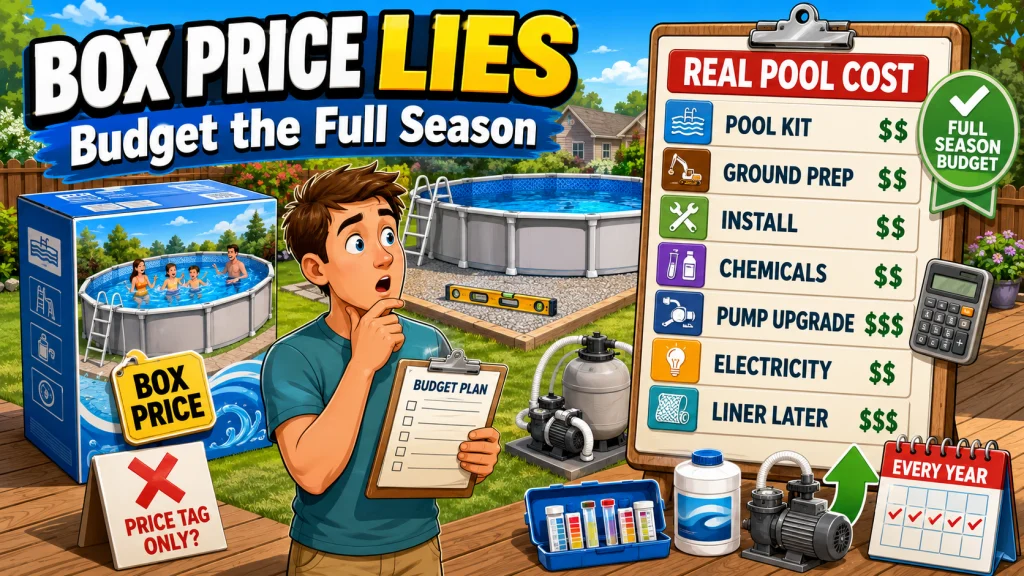
The Sticker Price Is the Smallest Number You’ll See
Ask someone what an above ground pool costs and they will usually quote the box price: three hundred dollars for an inflatable kit, maybe fifteen hundred for a steel wall setup. That number is real, but it is only the entry fee. Installation, ground prep, chemical startup, and the first season of equipment problems usually add more than the pool itself costs, and none of that shows up on the retail listing.
I have set up hundreds of these pools across the Midwest, and the pattern is almost always the same. A buyer compares two pools by sticker price, picks the cheaper one, then spends the difference and more on a pump upgrade, a delivery fee, or a liner repair kit within the first year. Above ground pool cost only makes sense when you look at purchase, installation, and the first year of ownership together, which is exactly what the rest of this guide walks through.
Quick Above Ground Pool Cost Snapshot Before You Choose a Tier
Here is the above ground pool cost breakdown in the form most people actually want first: a realistic first-year number by tier, not just a purchase price. Treat this as first-year setup plus a normal season of running the pool, not the box price alone. It will not match every yard or every climate exactly, but it gives you a real range to plan around before you dig into a specific tier.
| Pool Tier | Realistic First-Year Total | Common Surprise Cost | Risk If Under-Budgeted |
|---|---|---|---|
| Inflatable / ring-top | $300 to $700 | Pump running nonstop in heat, early seam wear | Torn liner or collapsed ring within one season |
| Soft-sided frame (12 to 18 ft) | $900 to $2,200 | Base material and dig-down leveling on sloped yards | Liner bulging or leaking at the seam |
| Steel or hybrid frame | $2,000 to $4,500 | Stock pump undersized for actual pool volume | Chronic algae from poor turnover |
| Permanent steel wall | $4,500 to $9,000+ | Professional-grade leveling and engineered base | Wall or panel damage from improper base prep |
Costs Buyers Forget: A pump upgrade when the stock unit can’t hit turnover rate, a cover to cut chemical loss, a basic test kit, a skimmer net, and closing supplies each fall. None of these show up on the pool’s price tag, and together they routinely add a few hundred dollars a buyer never planned for.
These numbers set the frame for everything below. The next two sections break that first-year total into what you pay to buy and install the pool, then what it costs to keep running every season after that.

The Poolmaster 22260 is a five-way kit for checking chlorine, bromine, pH, acid demand, and total alkalinity in pool or spa water. It includes a clear-view test block with integrated color chips, testing solutions, and a storage case. The kit is designed for routine pool and spa water checks and carries a 1-year limited warranty against manufacturer defects.
Check On AmazonIf you click this link and buy, we earn a commission at no additional cost to you.
What It Actually Costs to Buy and Get a Pool Into the Ground
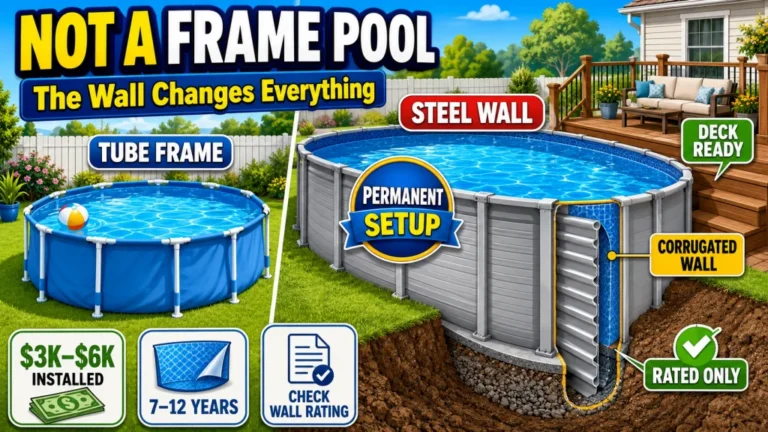
Purchase and installation cost depends almost entirely on which tier of pool you’re buying: inflatable, soft-sided frame, steel or hybrid frame, or a permanent steel wall pool. An inflatable ring-top kit can run as little as a few hundred dollars and needs no real groundwork beyond raking the grass flat. A 15-foot steel frame kit with a sand filter and ladder typically lands in the low thousands once you add delivery and a base layer of sand or a solid pad. Permanent steel wall pools, the kind meant to stay up for a decade or more, push well past that once you include professional leveling and a proper sand cove.
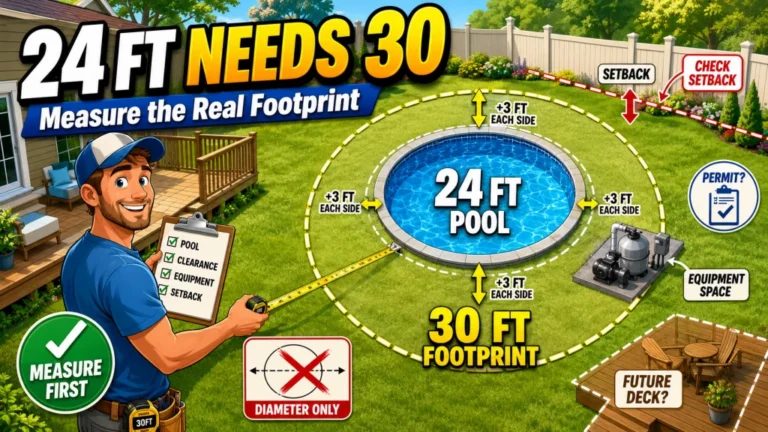
The part buyers underestimate is ground prep. A pool that looks level to the eye rarely is, and skipping a dig-down leveling method on sloped yards is one of the most common reasons a liner starts bulging at the seam within the first season. That correction, done right the first time, is cheap. Done as a repair after the pool is already full of water, it is not. I go through the full purchase and installation cost breakdown, tier by tier, in the above ground pool purchase and installation cost guide, including what changes when you’re buying a semi-inground rated pool instead of a standard frame kit.
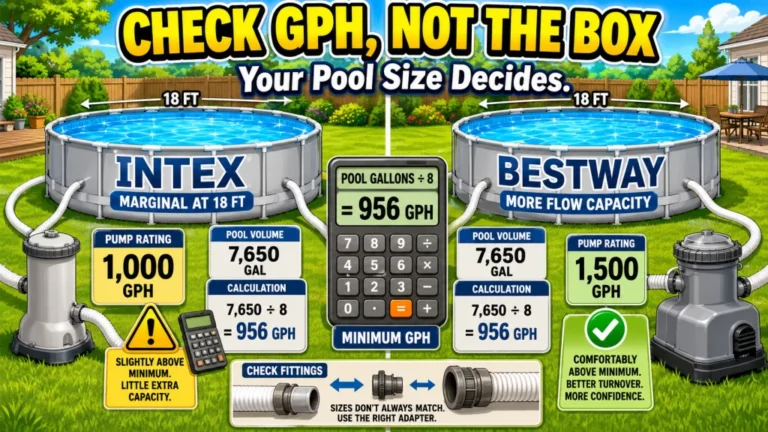
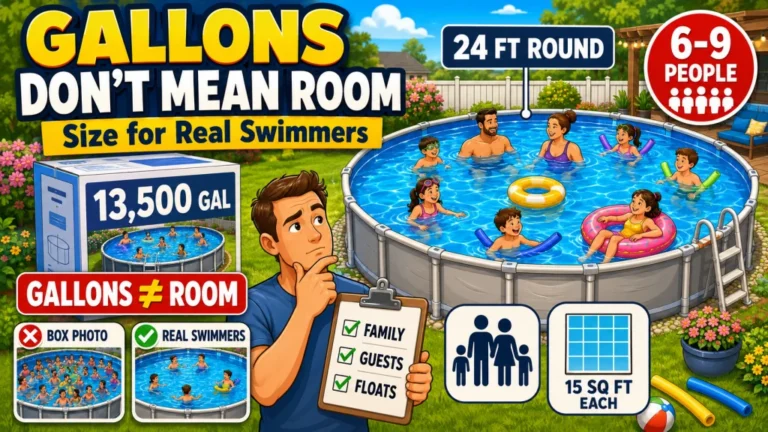
Notice that pool type from the buying stage and pool size both move this number. A jump from a 15-foot to an 18-foot pool doesn’t just cost more upfront, it changes the base material needed and, in most cases, the pump required to keep up with the added volume. If you haven’t settled on a type or size yet, that decision happens before cost planning, not after.

This 10-foot by 30-inch round pool holds 1,185 gallons and uses a powder-coated steel frame with puncture-resistant 3-ply material. The set includes a 330 GPH cartridge filter pump. It is designed for above-ground use and can be ready for water in about 45 minutes.
Check On AmazonIf you click this link and buy, we earn a commission at no additional cost to you.
What an Above Ground Pool Costs to Maintain Every Year After That
This is the number that surprises people, because it’s the one nobody puts on the box. The annual cost of an above ground pool comes from chemicals, electricity to run the pump, replacement parts, and eventually the liner itself. Chemical costs alone during peak swim season commonly run $50 to $100 per month depending on pool size, sun exposure, and how consistently you’re testing the water, and that’s before a green pool forces a full SLAM sequence that burns through shock in a weekend.
Field Note: The stock pump that comes in most kit boxes is sized for the smallest pool in that product line, not the one most people actually buy. I have replaced more stock pumps during owners’ first seasons than in every season after combined, and that upgrade alone can run a couple hundred dollars that a first-time buyer never planned for.
Then there’s the liner. A soft-sided frame pool liner typically lasts five to nine years, while a steel wall pool liner runs closer to seven to twelve years with proper winterizing. Replacement isn’t optional when it goes, and it’s rarely cheap, so that cost needs to sit somewhere in your long-term ownership budget even if it feels distant in year one. Add in a cover, a basic test kit, a skimmer net, and the occasional filter cartridge or sand replacement, and the running total for a typical season lands well above what most buyers expect walking in.
- Chemicals and shock during active swim season
- Electricity to run the pump on a normal daily cycle
- Pump or filter replacement if the stock unit underperforms
- Liner replacement on a five to twelve year cycle depending on pool type
- Winterizing supplies and closing costs each fall
None of these costs are optional if you want the pool to stay usable and the water to stay clear. I break down the full annual maintenance cost, month by month and tier by tier, in the annual maintenance cost guide for above ground pools, including where owners with well water tend to spend more on chemical correction than owners on a municipal supply.

This 2,100 GPH sand filter pump is designed for above-ground pools up to 12,800 gallons. Its six-function valve handles filtering, backwashing, rinsing, recirculating, draining, and closing the system. A built-in 24-hour timer supports automatic 2 to 12-hour filtration cycles, while system flow is rated at 1,600 GPH. The unit includes two 1.5-inch connector hoses and a 2-year limited warranty.
Check On AmazonIf you click this link and buy, we earn a commission at no additional cost to you.
Is an Above Ground Pool Actually Worth the Money?
Once you add purchase, installation, and a realistic annual number together, the honest question becomes whether an above ground pool is worth it for your family compared to the alternatives: a community pool membership, a handful of paid swim days at a local facility, or just not having a pool at all. There isn’t one universal answer here, and I’d be lying if I told a family of two the same thing I’d tell a family of six who swims four nights a week from May through September.
A quick way to see the real math: take a mid-size steel frame pool with a first-year setup around $3,200, then a normal annual maintenance cost of about $500 to $700 for chemicals, electricity, and small parts. Over three seasons that lands around $4,700 to $5,300 total, before setting aside anything for the liner down the road. Spread across a season where the pool gets used three or four times a week from May through September, that works out to just a few dollars per swim, which is where above ground pool ownership usually starts looking like a good deal instead of an expensive one.
What tends to tip the math in the pool’s favor is frequency of use and how many years you keep it running well. A pool that gets used most weekends across a full season, for several seasons in a row, spreads that first-year cost thin. A pool that gets set up once, fights algae all summer because the pump was undersized, and gets drained and forgotten by August is the expensive outcome, and it’s avoidable with the right sizing and setup from day one. I walk through the full cost-benefit case, including where a soft-sided pool for a season or two beats committing to a permanent installation, in the guide on whether an above ground pool is worth it.
Buying the cheapest kit available and assuming the sticker price is close to the real first-year cost.
Pricing purchase, installation, and a realistic first season of chemicals and equipment together before deciding on pool type and size.
That comparison matters more once pool type enters the picture. An inflatable kit and a permanent steel wall pool are not competing for the same buyer, and the honest cost-benefit answer looks different depending on which one you’re actually choosing between. If you’re still weighing types against each other, that decision belongs in the guide to above ground pool types, and if size is the open question, the above ground pool sizing guide covers how gallons and footprint change the equipment cost that follows.
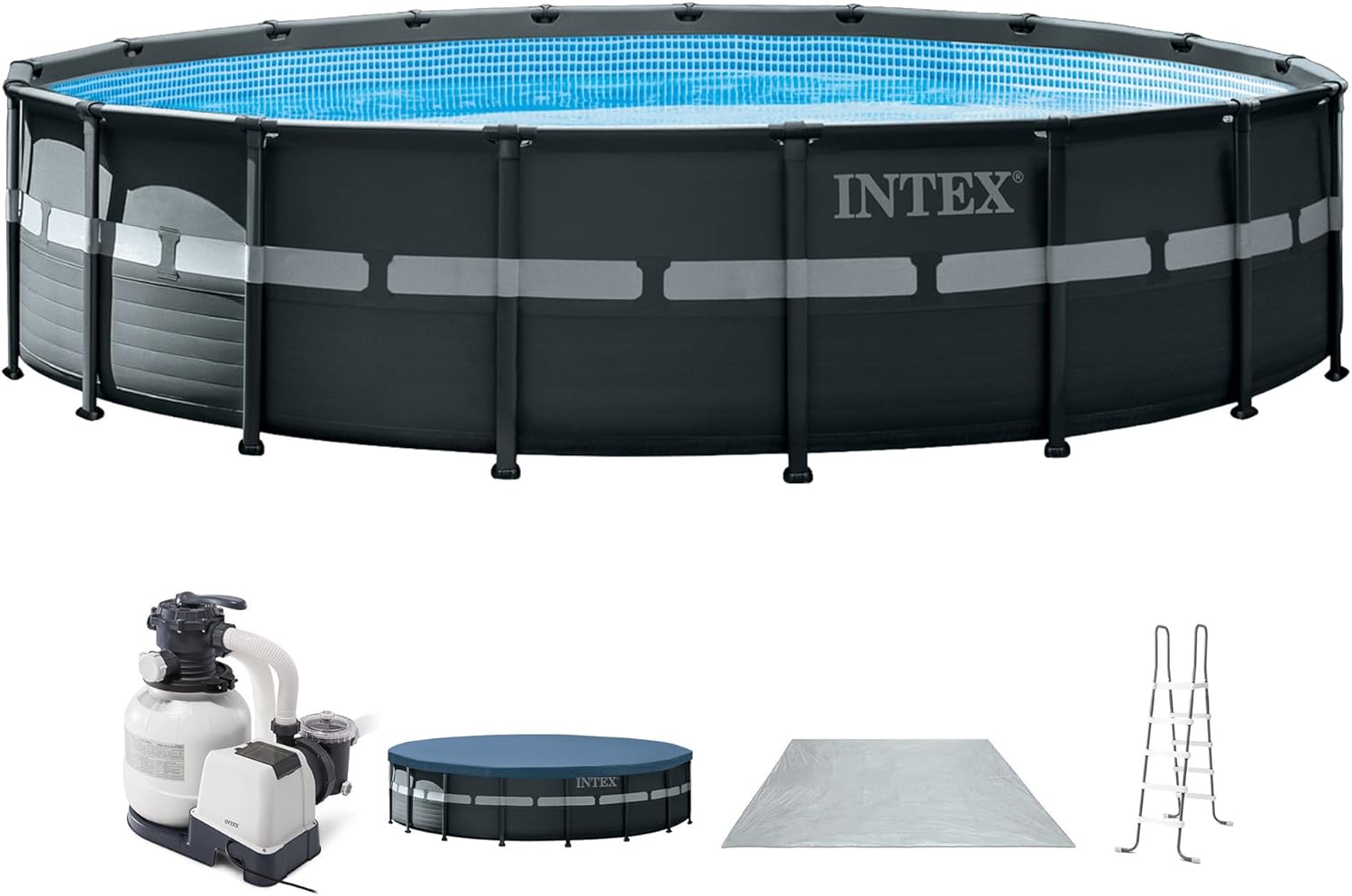
This 18-foot by 52-inch round pool holds 6,981 gallons and uses a galvanized steel frame with inner and outer powder coating for rust resistance. The set includes a 2,100 GPH sand filter pump, removable ladder, debris cover, and ground cloth. Its liner uses PVC construction designed for above-ground pool use. The set carries a 2-year manufacturer warranty.
Check On AmazonIf you click this link and buy, we earn a commission at no additional cost to you.
Final Thoughts: Price the Whole Season, Not Just the Box
If there’s one rule to walk away with, it’s this: never let the box price set your budget by itself. Add a realistic install cost and one season of running the pool before you decide what tier you can actually afford, then treat the liner reserve as a future bill you already know is coming. Buyers who size their budget this way rarely get blindsided in July. Buyers who don’t are the ones calling me about a green pool and an empty wallet at the same time.
If you’re comparing pool tiers or brands as part of that decision, the Intex versus Bestway cost comparison is a reasonable next stop once you know your size and budget tier. For the full buying picture beyond just cost, the complete above ground pool buying guide ties this cost math back into type, size, and equipment decisions.
Explore More in This Section
Each guide below breaks down one layer of the cost picture in more detail than fits here, so you can go straight to the number you actually need.
| Guide | What it helps with |
|---|---|
| Purchase and Installation Cost | Tier-by-tier pricing for the pool itself, delivery, and ground prep before it holds water. |
| Annual Maintenance Cost | Month-by-month chemical, electricity, and equipment costs once the pool is running. |
| Is an Above Ground Pool Worth It | The honest cost-benefit case against a pool membership or skipping a pool altogether. |
Start with whichever layer matches the decision in front of you right now, then come back here if the other two numbers still need filling in.
FAQs
💰 How much does an above ground pool cost in total?
In most cases, a realistic first-year total runs from a few hundred dollars for a small inflatable pool up to several thousand dollars for a steel, hybrid, or permanent steel wall pool. The pool kit itself is only one part of that number: installation, base prep, chemicals, and basic equipment usually push the total above the box price.
🛠️ Does the purchase price include installation?
No. The listed price covers the pool kit itself. Ground leveling, a sand or foam base, delivery, and any professional setup are separate costs that vary by yard condition and pool tier.
🧪 What does it cost to maintain an above ground pool each year?
Chemicals during active swim season typically run $50 to $100 per month depending on pool size and sun exposure, plus electricity for the pump and occasional filter or part replacement. Well water sources usually add extra chemical correction cost compared to municipal water.
📆 What should I budget for the first year specifically?
Budget for the purchase price, installation and base materials, a full chemical startup, and a buffer for a pump upgrade if the stock unit turns out undersized for your pool volume. First-year cost is almost always higher than every year after.
🔧 Does a bigger pool always cost more to run?
Usually, yes. More gallons means more chemical volume, a pump that has to work harder to hit the turnover rate, and a larger liner to eventually replace. Size affects both the upfront and the annual number.
🧵 How much does a liner replacement add to long-term cost?
Soft-sided frame pool liners typically last five to nine years, while steel wall pool liners run closer to seven to twelve years with proper winterizing. Replacement cost varies by pool size but should be planned for as a recurring line item, not a surprise.
Sources and References
- Installation and ground prep cost patterns referenced from Angi’s home installation cost data.
- Annual chemical and maintenance cost patterns referenced from AquaDoc’s pool care resources.
- General above ground pool pricing tiers referenced from Royal Swimming Pools’ product and buying information.
- Home improvement cost benchmarking referenced from Bob Vila’s home cost guides.